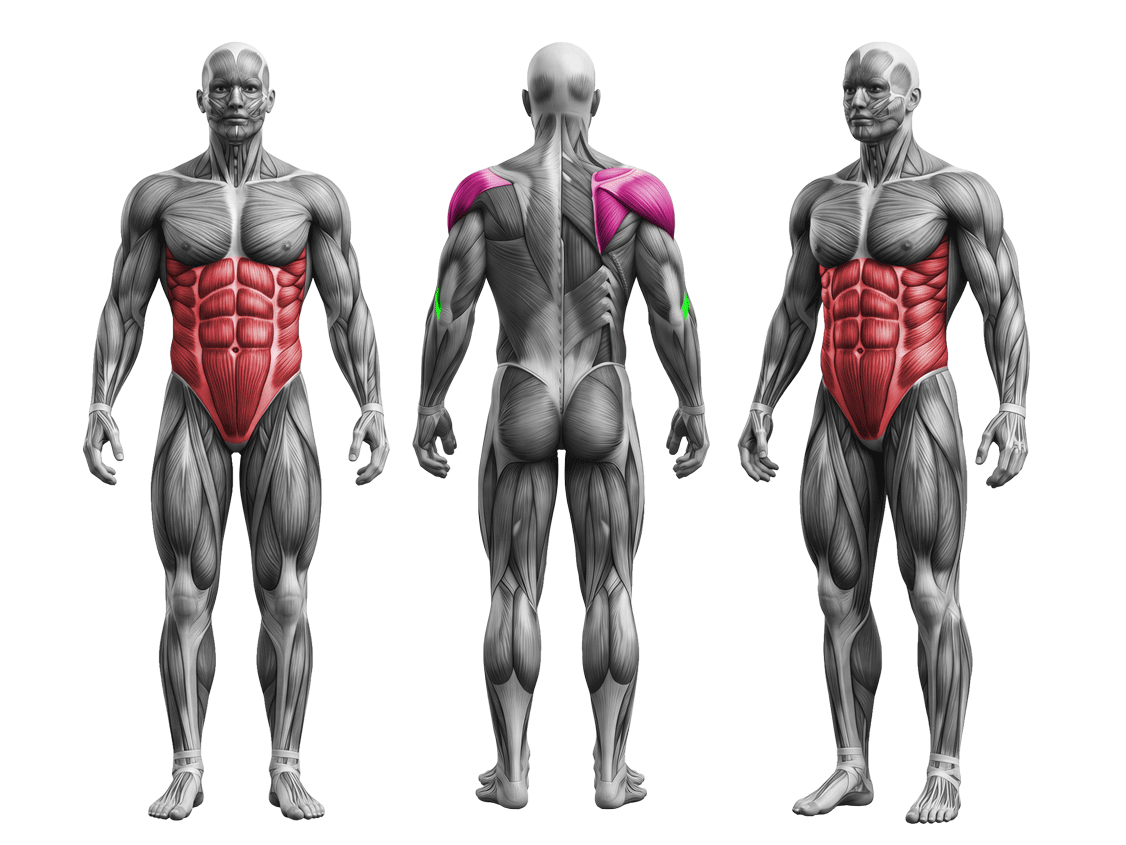
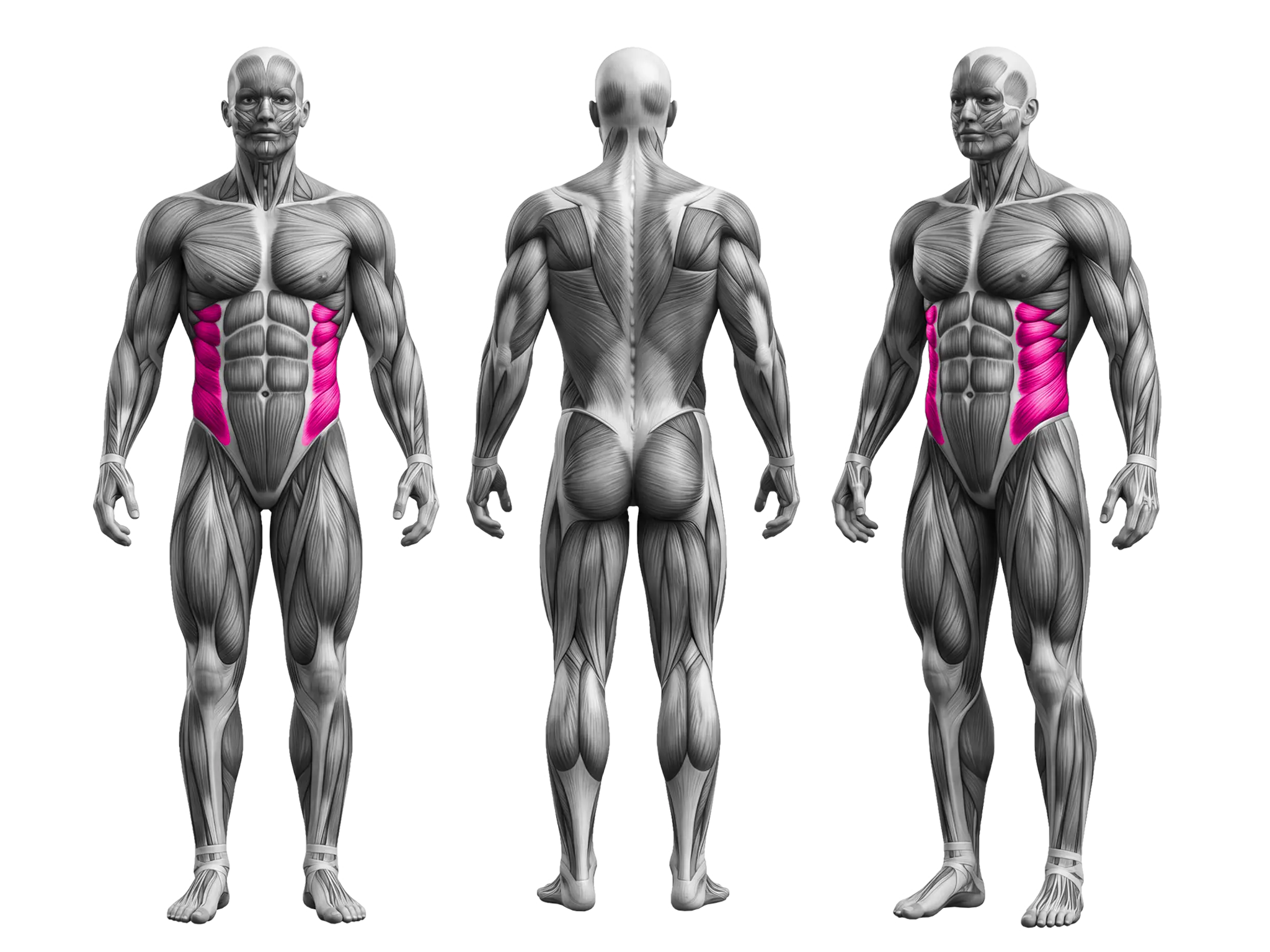
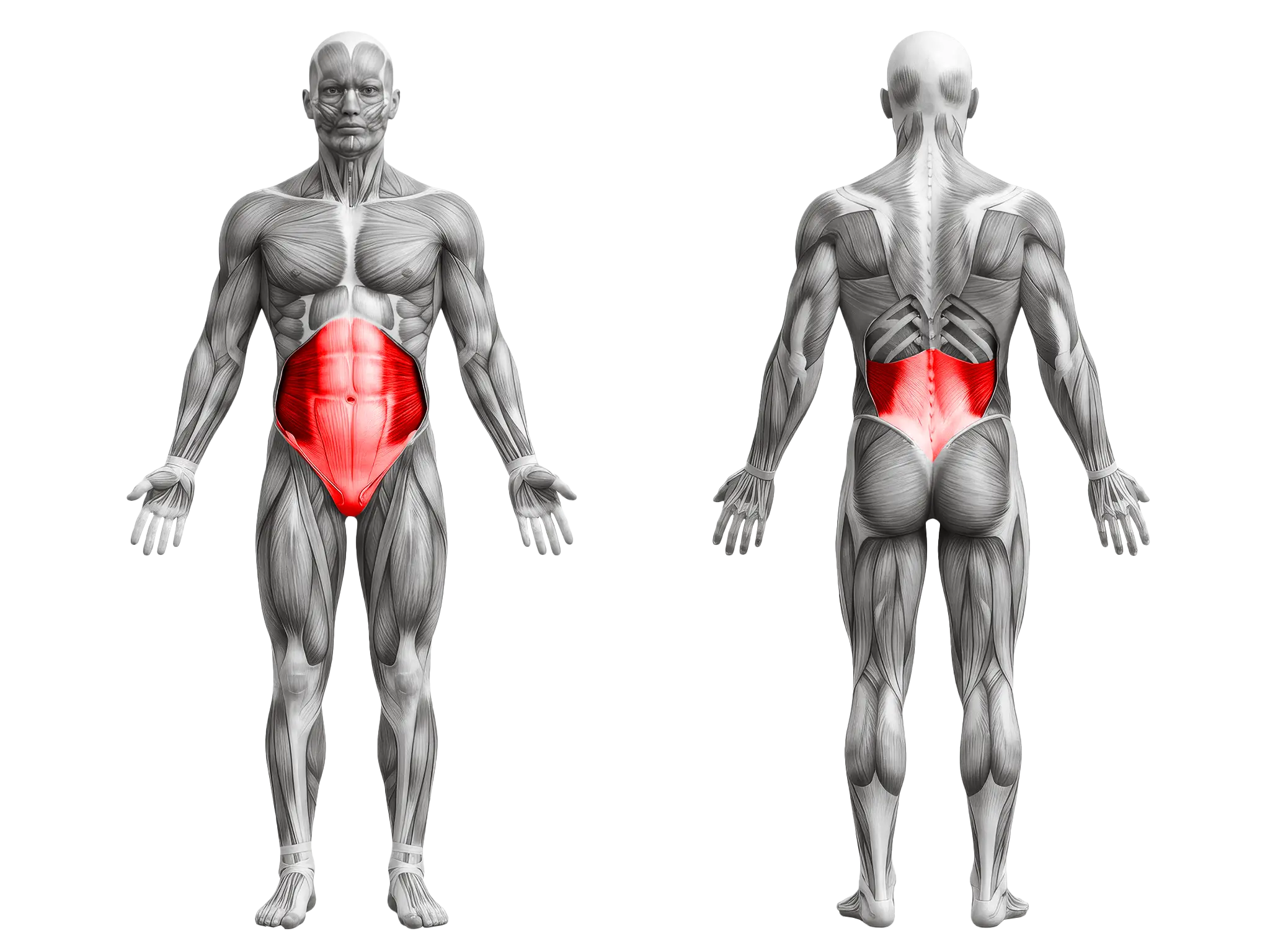
Exercise Instructions
Crunches

Setup
Lie flat on your back on the floor. Bend your knees so your feet stay flat, hip-width apart. Don't hook your feet under anything and don't let anyone hold them.
Cross your arms over your chest. If you'd rather put your hands near your head, rest your fingertips lightly on the sides of your head — fingertips only, never laced behind the skull.
Press your lower back gently into the floor before your first rep. Eyes on one spot on the ceiling. That's your starting position.
Why the setup does the work here
Everything in this setup exists to take your hip flexors out of the exercise.
Bent knees put slack in the muscles that run from your thighs to your spine. Free feet stop you from pulling yourself up with your legs. The second someone holds your feet, your hip flexors take over and your abs get a break — same movement, far less result.
Pressing your lower back down sets your spine so it can curl. If your back is arched off the floor, you'll swing from the hips instead of bending your spine, and the hips are not what you came to train.
Fingertips on the head, not hands behind it, so you can't yank your neck to finish a rep.
Technique
Curl your ribs down toward your hips. Your shoulder blades come off the floor — that's it. Your lower back never leaves the ground.
Breathe out hard as you curl up. Squeeze the stomach for half a second at the top.
Lower one second down, until your shoulder blades almost touch the floor. Stop just short. Don't rest on the floor between reps.
Your head stays in line with your chest the whole time. Don't punch your chin into your chest, and don't throw your head back. If your head moves on its own, your neck is doing the work.
The whole movement of neck is small. A few inches. That's correct.
Why technique decides everything here
Your abs only bend the spine, and the spine only bends so far. Their real working range is short — shoulder blades up, ribs toward hips, done. Everything past that point is your hips folding, not your abs shortening.
So you can't make this exercise better by moving further. You make it better by moving slower and squeezing harder inside that short range.
That's why the breath out and the one-second squeeze matter. Blowing the air out pulls your ribs down and puts the abs in their fully shortened position — the hardest place for them to hold. That top second is where most of the growth is hiding.
And that's why you don't rest on the floor. Touch down and the tension disappears. Stop an inch short and the muscle carries the load the whole set.
Common Mistakes
Pulling on your head. Hands laced behind the neck, elbows dragging the skull forward. You get a sore neck and a rep that never happened. Fingertips only, or arms crossed on the chest.
Sitting all the way up. Once your lower back leaves the floor, the set moved to your hips. Shoulder blades up is the whole rep.
Bouncing. Slamming the shoulders into the floor and rebounding up. The floor is doing the lifting, not you.
Holding your breath. No exhale, no full contraction. Breathe out on the way up, every rep.
Anchoring the feet. Feet under a couch, or a partner holding your ankles. Feels stronger, works the abs less.
Racing the clock. Fast reps with a straight-up-and-down rhythm and no pause anywhere.
Where people lose results
People treat crunches as a rep-counting exercise instead of a lifting exercise.
Fifty fast, sloppy crunches feel like something. They're not. Fifteen slow reps with a three-second lowering and a hard squeeze at the top will do more for your stomach than a hundred bounced ones — and you'll feel the difference the next day.
The second loss is progression. Everyone understands that a curl has to get heavier over time, then they do the exact same bodyweight crunch for two years and wonder why nothing changes. Your abs are a muscle. They follow the same rule as everything else on this site: the work has to get harder.
When you can hit the top of your rep range clean, slow, and with a real pause, it's time to add load — a plate on your chest or a light dumbbell. Not more reps. More resistance.
Third loss: quitting when it burns. The burn shows up early in this one and it isn't failure. Failure is when your shoulder blades won't come off the floor with clean form. That's usually several reps later than where most people stop.