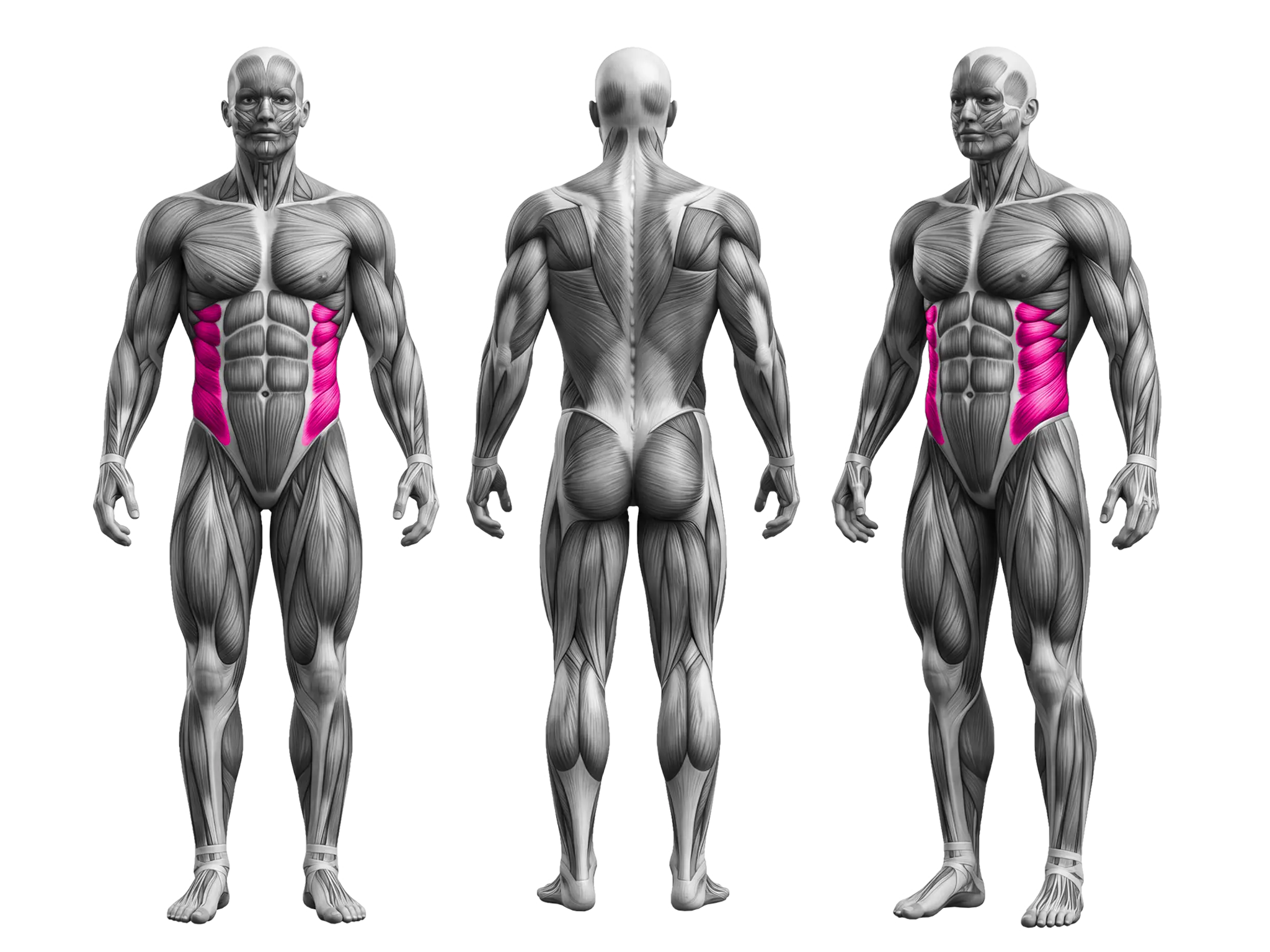
Exercise Instructions
Oblique V-Ups

Setup
Lie on your side with your legs stacked and straight. Rest your bottom arm on the floor in front of you for support, and place the fingertips of your top hand lightly at the side of your head, elbow pointing up. Keep the side of your hip planted on the floor — that's your anchor for the whole set.
Why the setup does the work here
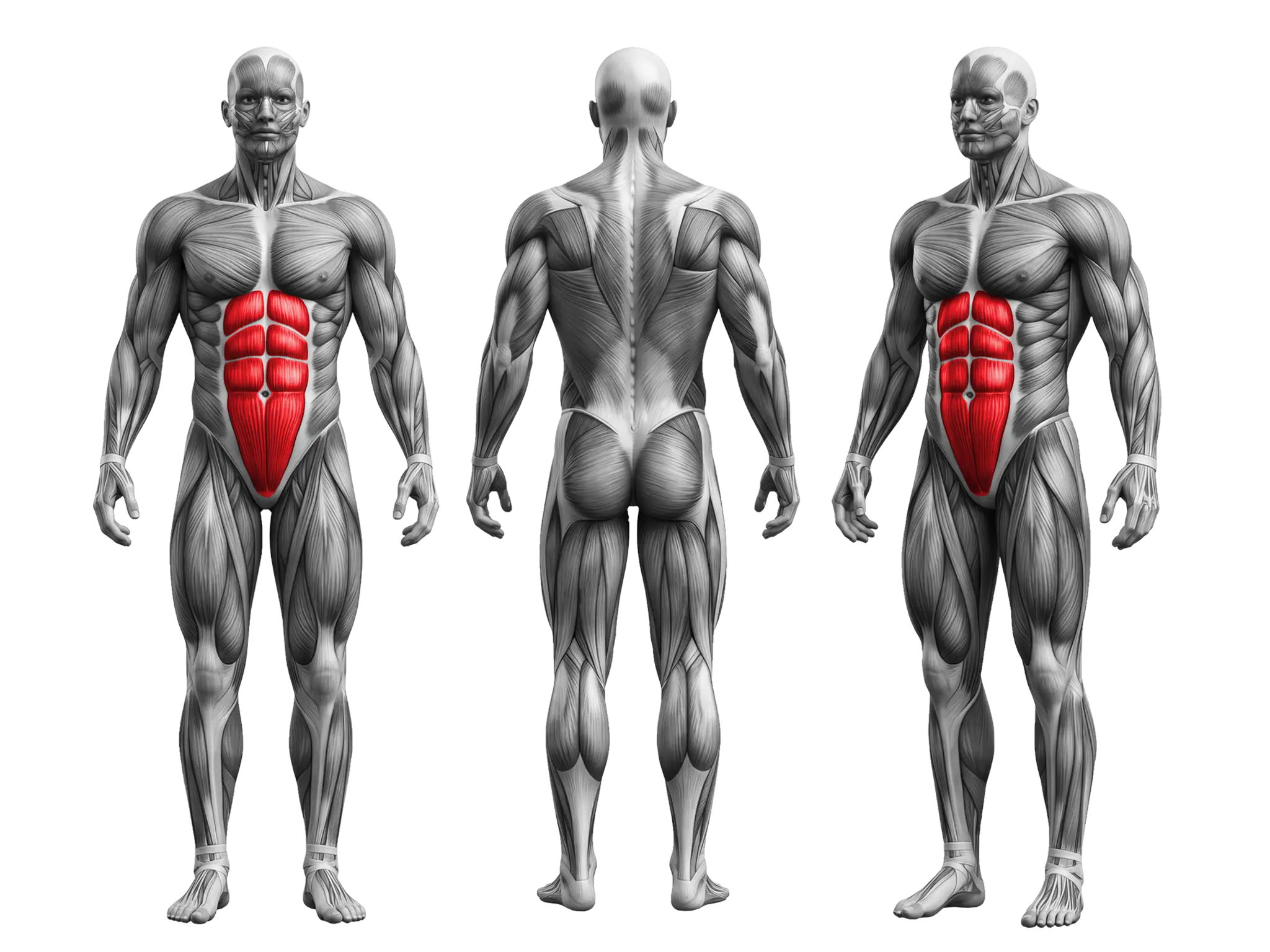
The hip staying down is what makes this an oblique exercise instead of a whole-body wobble. With that one point fixed, both ends of your body can fold toward it and the only muscle that can do that is the side of your waist. Legs stacked and straight keeps you from twisting; the moment you roll onto your back, the front of your stomach takes over and your sides get a rest.
Technique
Lift your top leg and your upper body at the same time, bending sideways so your elbow and knee travel toward each other. Squeeze the side of your waist hard at the top for a second. Lower both ends under control without letting your shoulder or foot rest on the floor, then go again. Keep your chest facing sideways the whole time and breathe out as you fold.
Why technique decides everything here
Both ends have to move or it isn't a V. Lift only the leg and it's a hip exercise; lift only the shoulder and it's a weak side crunch. Fold both toward the fixed hip and your obliques shorten from the top and the bottom at once, which is where the whole effect comes from. The other rule is staying on your side. Rolling back even slightly feels easier for a reason — the work moved to a different muscle.
Common Mistakes
Rolling onto your back as the set gets hard. Pushing off the floor with the bottom arm instead of lifting with the waist. Pulling on the head with the top hand. Letting the leg and shoulder drop and rest between reps. And bending the knee, which shortens the movement and makes it easier without you noticing.
Where people lose results
The range here is short and people try to make it bigger by twisting. Don't. Keep the hip down, stay on your side, squeeze at the top, and finish the set when the fold gets shallow. Train both sides equally — whichever one is weaker is the one that needed it. When it gets easy, pause longer at the top rather than adding reps.