Exercise Instructions
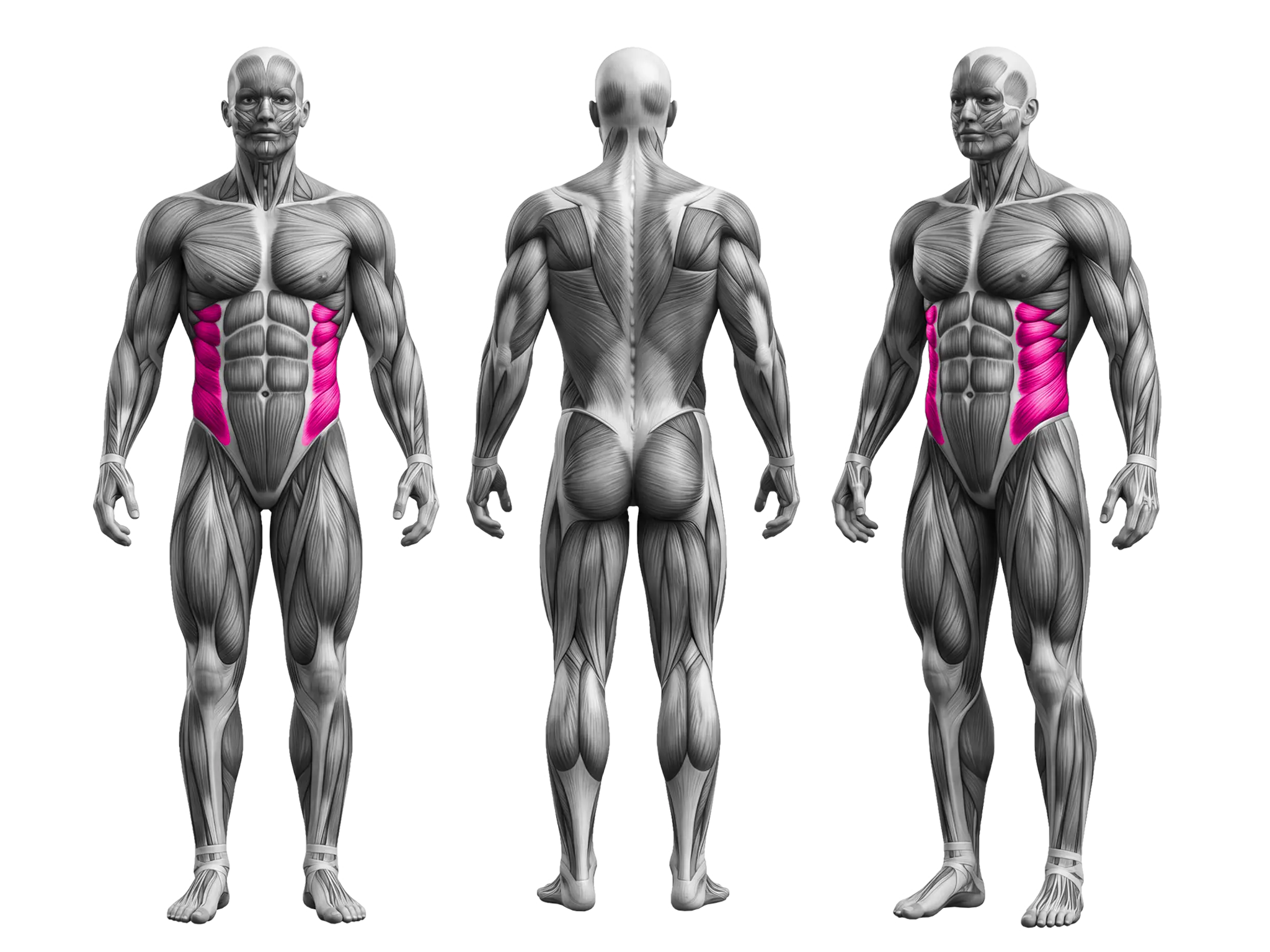
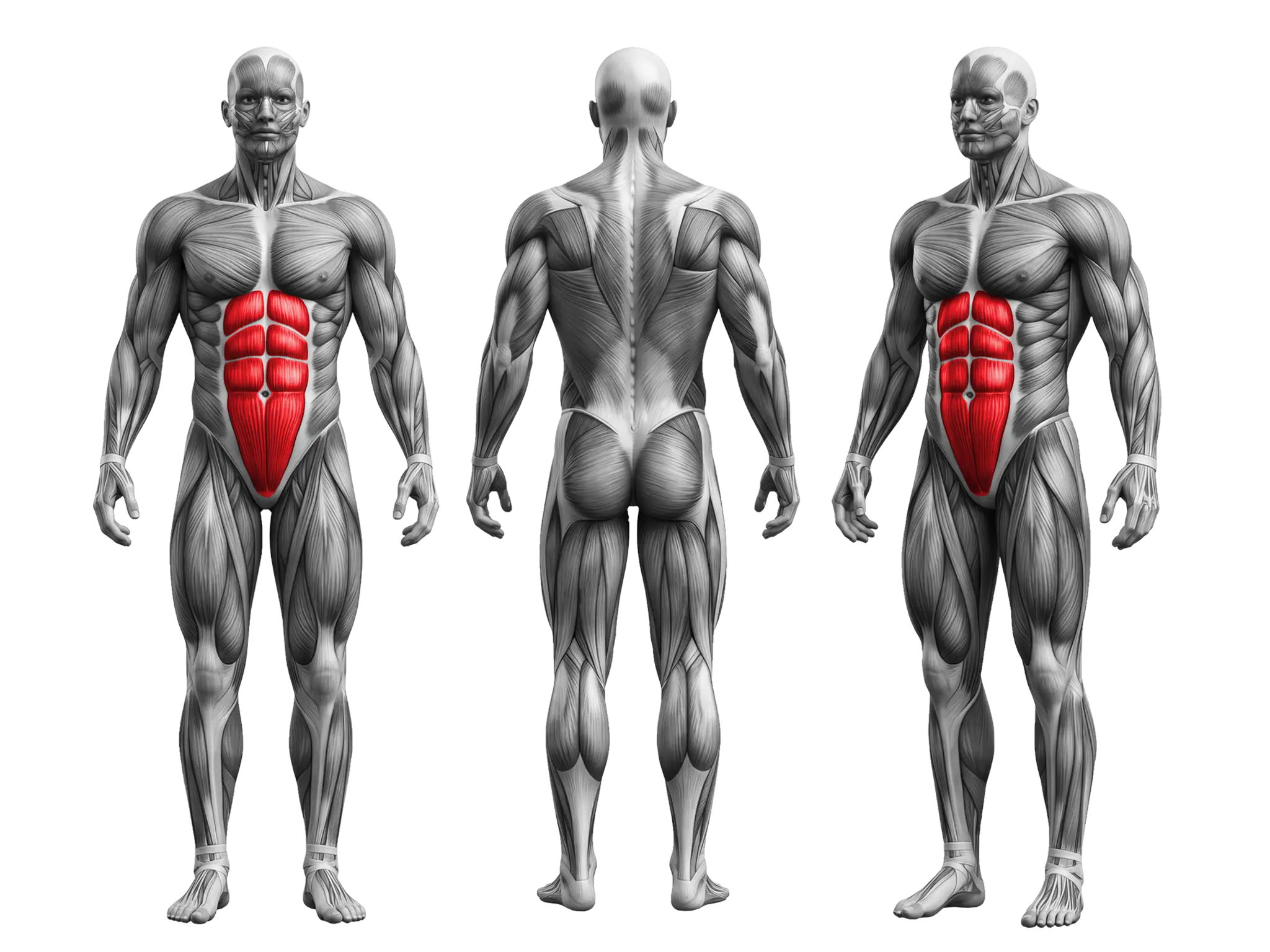
Side Plank Hip Dips

Setup
Lie on your side and prop yourself up on one hand, arm straight and directly under your shoulder. Stack your legs one on top of the other, feet together. Lift your hips so your body makes one straight line from head to heels. Free hand on your hip or reaching toward the ceiling.
Why the setup does the work here
Everything depends on the line. If your hips sag or your chest rolls forward, the load slides off your sides and onto your shoulder and lower back. Stacked feet matter too — the narrower the base, the harder your obliques have to work to hold you up. Hand under the shoulder keeps your joint safe; anywhere else and your shoulder pays for the set.
Technique
Lower your hip toward the floor under control — not all the way down, just until you feel your side stretch. Then drive it back up until your body is straight again, or slightly higher. Squeeze the side you're resting on at the top. Keep your body in one flat plane the whole time: chest facing forward, not rolling toward the floor. Steady pace, no bouncing off the bottom. Breathe out on the way up.
Why technique decides everything here
Your obliques bend you sideways — that's the entire movement here. Dropping the hip lengthens them, driving it up shortens them, and that's what makes this different from a regular side plank where you just hold still. The rotation is the thing to guard. As soon as your chest turns down toward the mat, the hip dip becomes a twist and your sides stop being the muscle doing the work. Keep the plane flat and the small movement stays honest.
Common Mistakes
Rolling the chest forward, which turns a side bend into a twist. Dropping the hip all the way to the floor and resting there between reps. Letting the shoulder drift out of line under the supporting hand. Going too fast, so the hips bounce instead of lift. And letting the top of the movement get lazy, so you never fully straighten out.
Where people lose results
People rush this one because the range is small, and a small movement done fast is nothing. Slow it down, squeeze at the top, and end the set when your line starts to sag — not when you hit a number. Do both sides evenly. When it gets easy, pause a second at the top or drop to a forearm side plank instead of adding reps.