dgfznjghkmvb nfgmjghk,ghkmh hfdhdgfj

dgfznjghkmvb nfgmjghk,ghkmh hfdhdgfj
fdznjkty lui;ghk fjmdtuk rtuykjtynjtykir dftyjnbdtk juy

• Stand with your feet shoulder-width apart.
• Hold the bar with an underhand grip around shoulder width.
• Keep your chest up and shoulders back.
• Let your arms hang fully extended.
• Keep your elbows close to your sides.
A stable starting position keeps the tension on your biceps from the very first rep. Standing tall with your chest up prevents your shoulders from taking over the movement, while keeping your elbows close to your body ensures the biceps remain the primary working muscle. The better your setup, the easier it is to isolate the biceps and train them effectively.
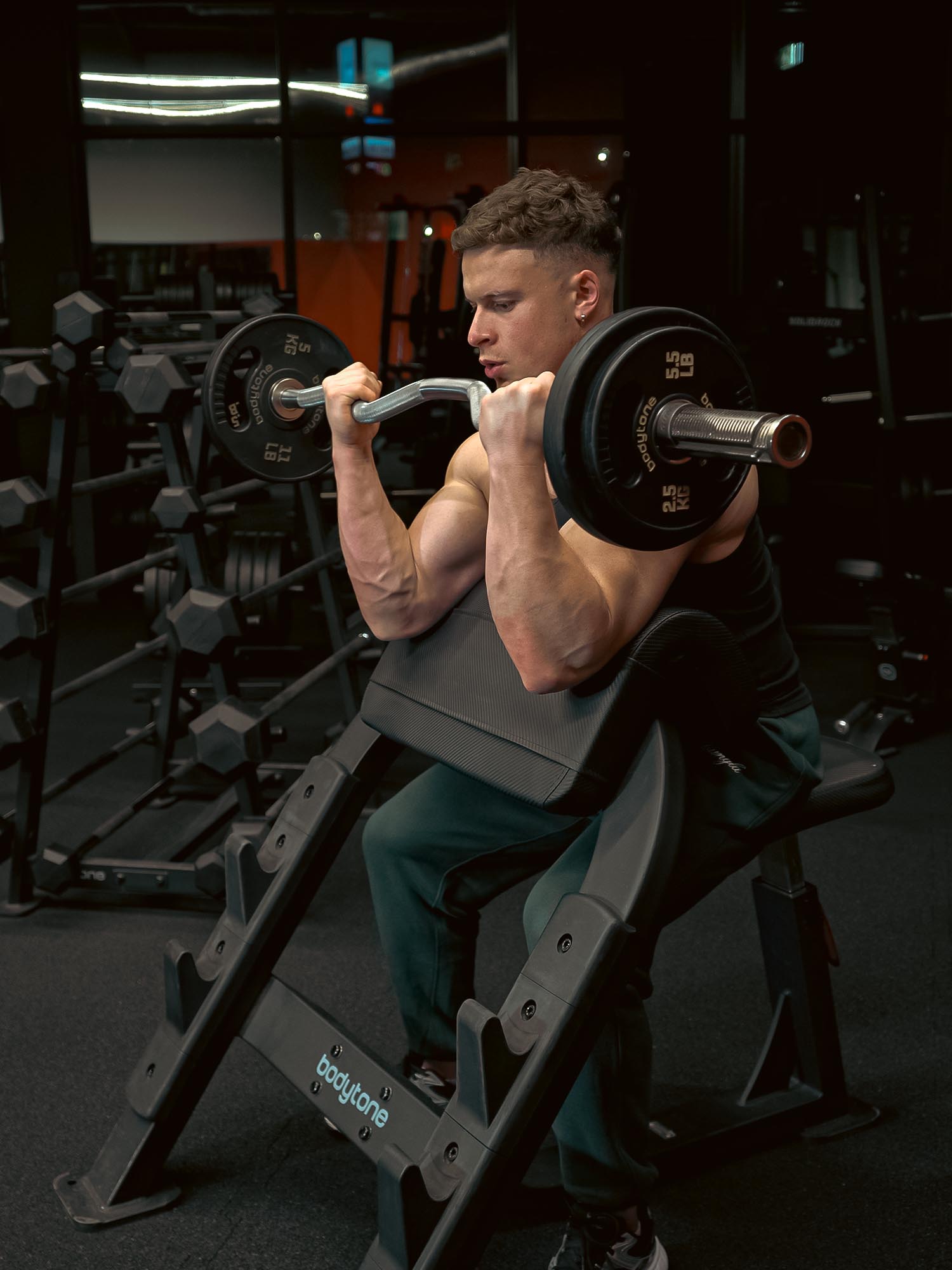
• Curl the bar toward your shoulders.
• Keep your elbows fixed throughout the movement.
• Squeeze your biceps at the top for a brief moment.
• Lower the bar slowly until your arms are fully extended.
• Stay in control without swinging your body.
Your biceps grow when they perform the work—not when momentum does it for them. Keeping your elbows still forces the biceps to generate the movement through the entire range of motion. Squeezing at the top increases muscle contraction, while lowering the weight under control places the muscle under tension for longer, which is one of the main drivers of muscle growth.
• Swinging your torso to lift the weight.
• Letting your elbows drift forward.
• Using only a partial range of motion.
• Dropping the weight too quickly.
• Leaning backward excessively.
Using momentum shifts the workload away from the biceps and onto your hips, shoulders, and lower back. Moving your elbows forward allows the front delts to assist, reducing biceps activation. Shortening the range of motion means part of the muscle never works fully, while rushing the lowering phase removes valuable tension that stimulates growth. Even if you lift heavier weights this way, your biceps often receive less effective training.