Exercise Instructions
Barbell Bench Press

Why this one is in the program
This is the main chest builder, and nothing has replaced it.
The reason is simple: it's the chest exercise where you can lift the most weight and keep adding to it for years. Flyes and cables are great for feel, but you can't load them the way you can load a bar. Growth comes from the weight going up over time, and this is the movement that lets it.
It also hits your front shoulders and triceps hard, so one lift covers most of your pushing muscles at once.
The trade-off: this is a heavy bar over your body. Everything below exists so you get the chest without the injury.
Setup
- Lie flat on the bench with your eyes under the bar.
- Grip the bar slightly wider than shoulder-width — about one and a half times your shoulder width.
- Keep your wrists straight, stacked over your forearms.
- Plant both feet flat on the floor and push them into the ground.
- Pull your shoulder blades down and back and squeeze them into the bench.
- Keep a small natural arch in your lower back — not a big one.
- Unrack the bar and hold it straight over your chest with arms locked.
Why the setup does the work here
Shoulder blades pinned back is the most important thing here. It gives your chest a solid base to press from and keeps your shoulders out of the position where they get hurt. Set them before you unrack and don't let them slip.
Grip width decides the target. Slightly wider than your shoulders is the sweet spot for the chest. Too wide and you lose range and strain your shoulders. Too narrow and it becomes a triceps exercise.
Feet into the floor. They stop your hips sliding around when the weight gets heavy.
Technique
- Lower the bar to your mid-chest — around nipple level.
- Keep your elbows at about 45 degrees from your body — tucked, not flared out like a T.
- Touch your chest lightly. No bouncing.
- Take about 2–3 seconds on the way down.
- Press up and slightly back, until your arms are fully straight.
- Squeeze your chest for a beat at the top.
- Keep your shoulder blades pinned and your feet planted the whole set.
Why technique decides everything here
Elbows at 45 degrees. Flared straight out to the sides is where shoulders get wrecked — it's the single most damaging mistake on this lift. Tucked slightly keeps the joint safe and puts the work on your chest.
Bar to mid-chest, not the neck. Touching too high forces your elbows to flare and your shoulder into a bad spot. Nipple line, every rep.
No bouncing. Springing the bar off your ribs isn't strength, it's momentum — and it's how people crack a sternum. Touch lightly, then press.
And control the way down. Two to three seconds. That's where a big share of the growth is, and dropping the bar throws it away.
Common Mistakes
- Elbows flared straight out to the sides.
- Bouncing the bar off the chest.
- Lowering the bar to the neck or upper chest.
- Letting the shoulder blades unpin and roll forward.
- Lifting the hips off the bench to force reps up.
- Not locking out at the top.
- Gripping far too wide or far too narrow.
- Letting the wrists bend back under the bar.
- Training heavy to failure with no spotter or safeties.
Where people lose results
Most bench press problems come down to where your hands are and where the bar lands.
Hands too wide. It looks strong and it shortens the distance the bar travels — less range, less chest work, and a lot more strain on the shoulder joint. Fix: about one and a half times shoulder width.
Hands too narrow. Now it's a triceps exercise. Good movement, wrong target. Fix: go back to just outside shoulder width.
Bar too high (neck or upper chest). This forces your elbows to flare and puts your shoulder in its weakest position. It's the classic shoulder-injury setup. Fix: lower to mid-chest, nipple level.
Bar too low (stomach). Awkward, weak, and your wrists bend back under the load. Fix: mid-chest again.
Elbows flared out. The most damaging fault on this lift. Fix: keep them at roughly 45 degrees from your body.
Then the weight. Too heavy and all of it happens at once — the bar bounces, the hips lift off the bench, the shoulder blades unpin, and the lockout disappears. Too light and nothing grows.
The honest test: shoulder blades pinned, hips down, 2–3 seconds on the way down, light touch, full lockout. If you can't do that for your whole rep range, that's not your weight.
Stay in the 6–12 rep range. And remember: this is a heavy barbell compound, so it never goes to failure. Stop 1–2 reps short on every working set, and always use safeties or a spotter. Save failure for the machines and cables later in the session.
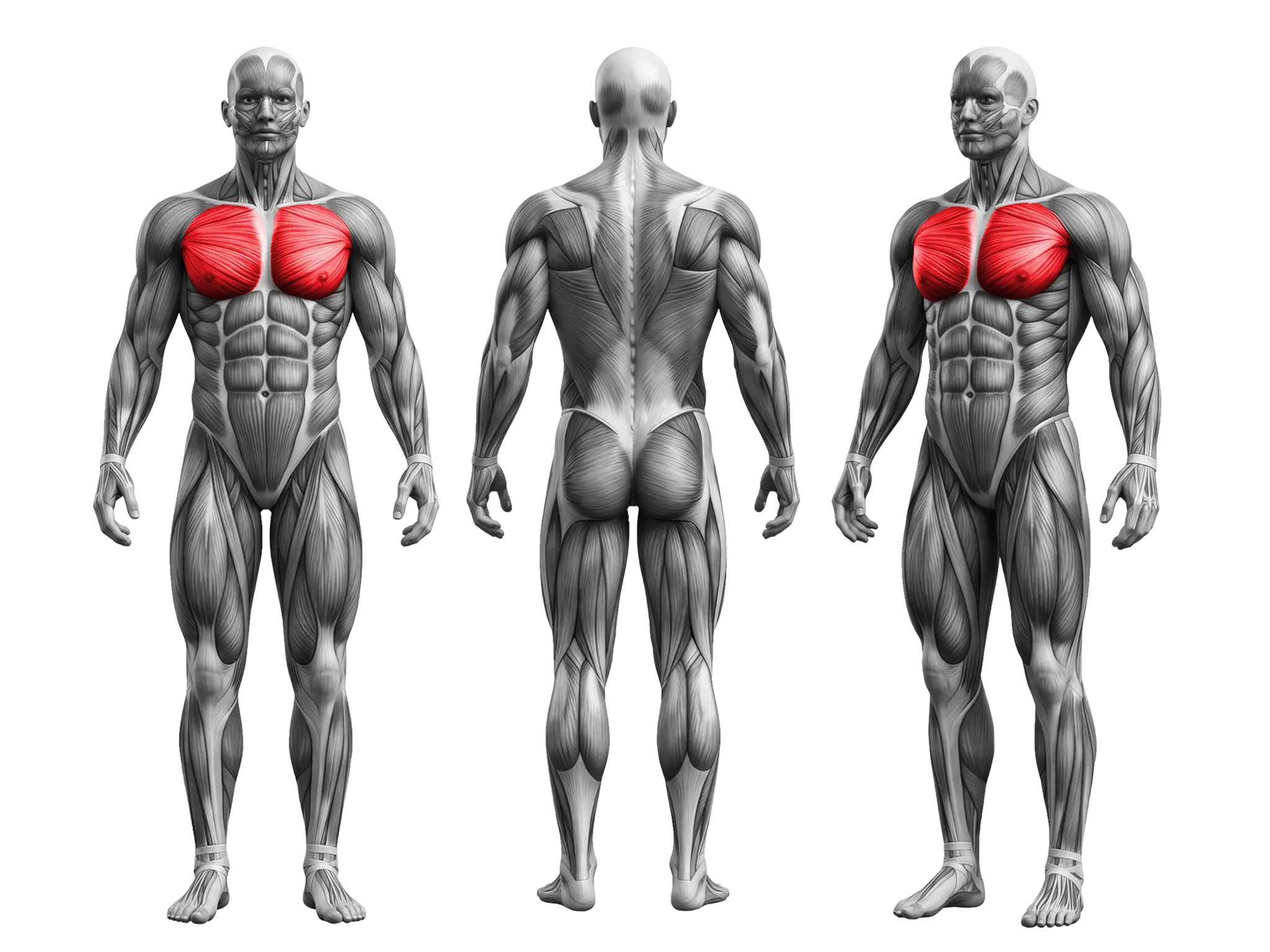
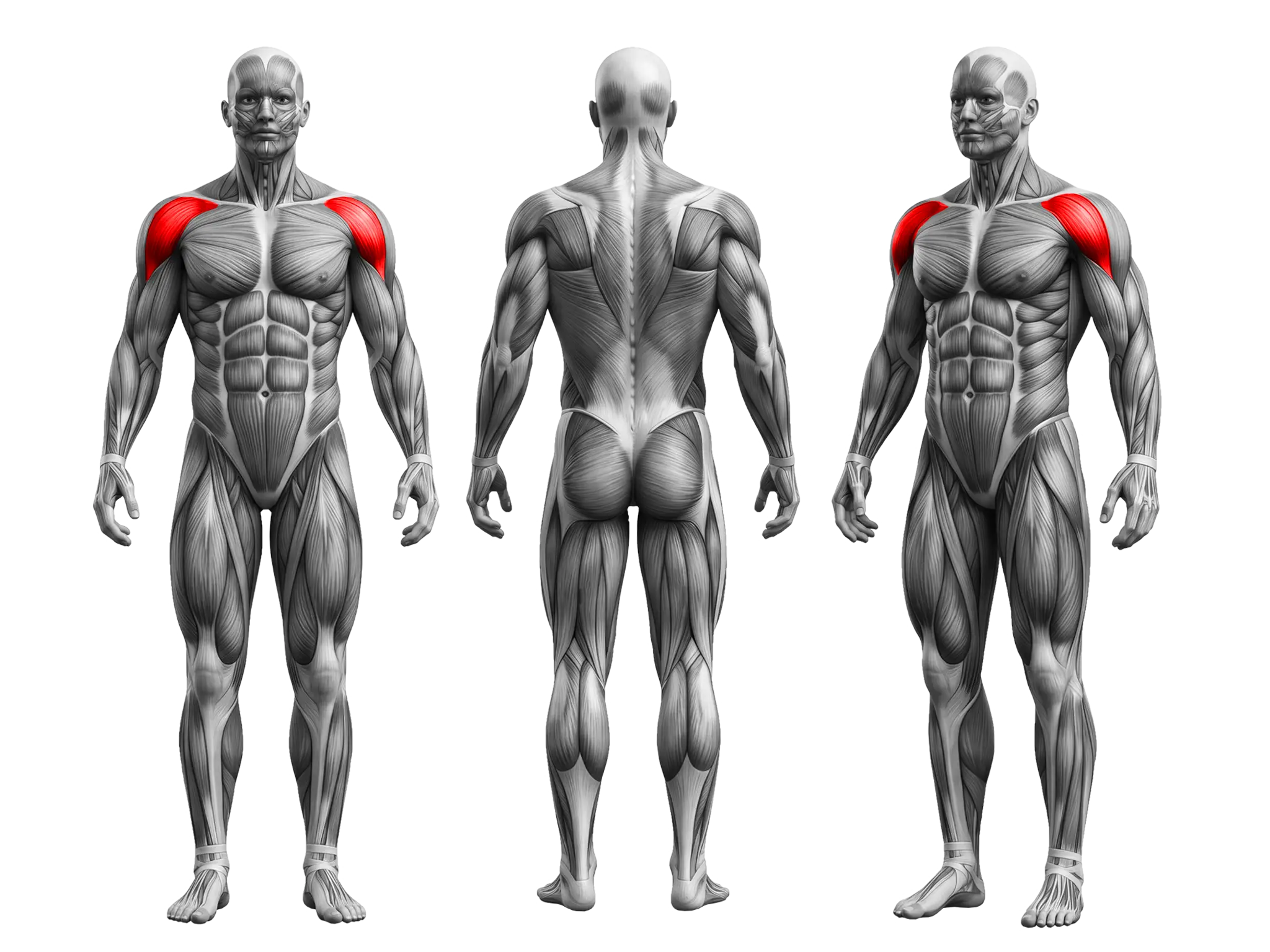

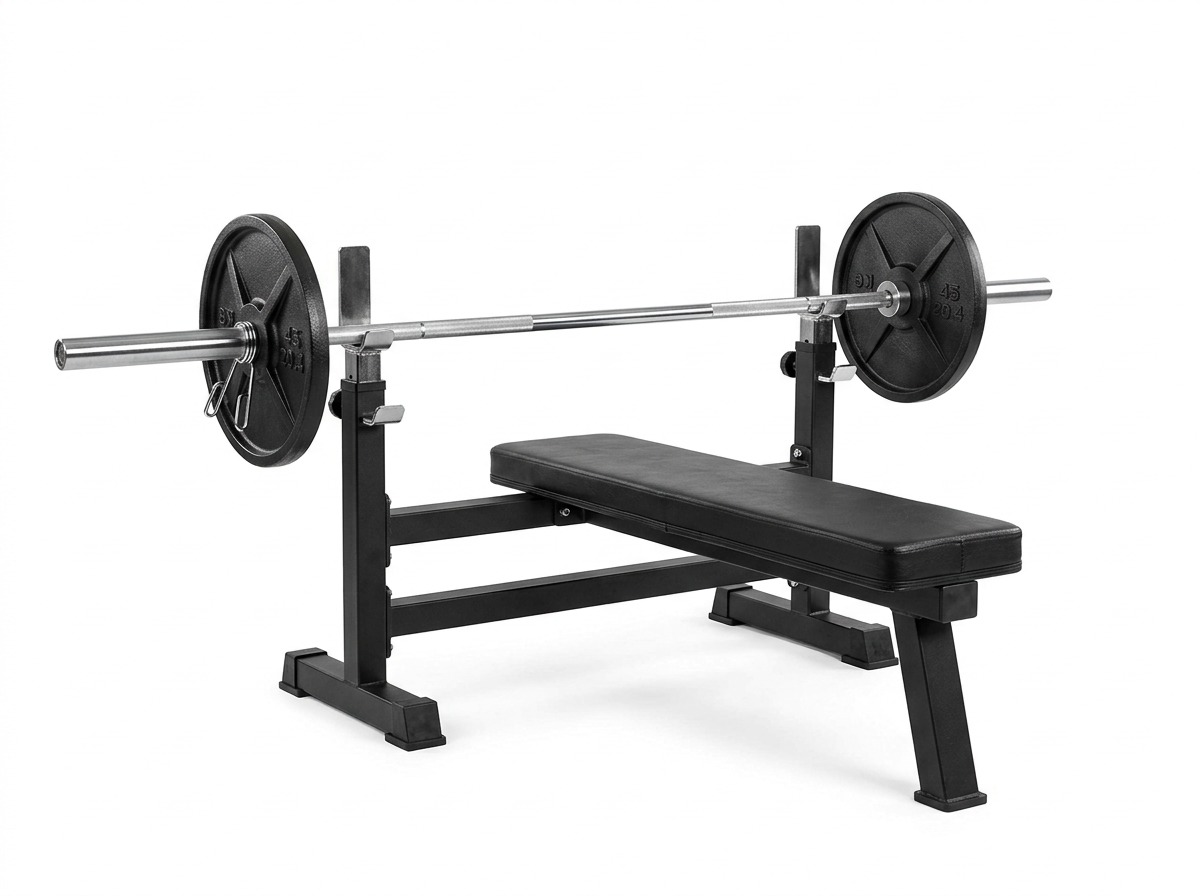
Flat Bench with a Barbell Rack (and safeties)A flat, padded bench with upright posts to hold the bar, ideally inside a power rack or with adjustable safety arms. Lie down with your eyes under the bar — that's the position that lets you unrack and rerack without reaching awkwardly. Set the safety arms just below your chest height, so that if a rep stalls, the bar has somewhere to land instead of on you.