Consistency training
No perfect days. Just consistent ones.
Back to workout

Exercise Instructions

Barbell Deadlift

Exercise guide — Setup / Technique / Tips / Mistakes

Why this one is in the program

This is the exercise that builds the muscles running up both sides of your spine.

Those are your spinal erectors. They're the thick columns you see on a well-built back, and they're what keeps you upright under load. Nothing trains them like this. And they do more than look good — strong erectors are what protect your lower back for the rest of your life, in the gym and out of it.

The deadlift also hits your hamstrings and glutes, your grip, your traps and your whole core at once. One bar, one movement, almost the entire back of your body.

Here's how I do it, and why. I start standing with the bar in my hands and lower it first, instead of pulling it off the floor. The bar slides down the front of my legs, almost to the ground, then back up. Lowering first lets me set my back position while I'm strong and fresh, and keep it the whole way down.

And where I can, I set the bar on rails or safety pins so it starts a bit higher than the floor — around shin height. That means every rep begins from a position where my back is already in a good shape, instead of from a deep, awkward start where most people round their spine. Same muscles, far less risk. If your gym has a rack, use it.

One honest note. Your erectors mostly work by holding your back flat against a heavy bar, not by moving it. That holding job is exactly what thickens them. So the goal here is never to lift the most weight — it's to hold a perfect back position under a weight that's genuinely hard.

Setup

  • Set the bar on rails or safety pins at about shin height, if your gym has them. If not, start from the floor.
  • Stand with your feet about shoulder-width apart, toes pointing forward or slightly out.
  • Stand close — the bar should be almost touching your shins.
  • Grip the bar just outside your legs, hands shoulder-width, arms straight.
  • Bend your knees a little — not a squat, but not locked straight either.
  • Push your chest up and pull your shoulders back.
  • Flatten your back. No rounding at the bottom, no big arch at the top.
  • Tighten your stomach hard, like someone's about to poke you in the belly.

Why the setup does the work here

Your feet go shoulder-width. This matters more than people think. Too narrow and you've got no base — you wobble, and your knees get in the way of the bar. Shoulder-width gives you a solid stance and a clear path for the bar to travel straight up your legs.

Knees bent, not locked. Straight legs turn this into a different exercise (that's a Romanian deadlift — all hamstrings, much lighter). A soft bend lets your hips and legs help, so your lower back isn't doing the whole job alone.

The flat back is non-negotiable. This is the one thing that decides whether this exercise builds you or hurts you. Chest up, shoulders back, stomach tight — and that shape stays exactly the same from the first rep to the last.

And start high if you can. Setting the bar on pins at shin height skips the hardest, lowest part of the pull, which is exactly where most people's backs round. You keep all the benefit and remove most of the risk.

Technique

  • Stand tall holding the bar, arms straight, back flat, stomach tight.
  • Push your hips back — like you're closing a car door with your backside.
  • Let the bar slide down the front of your legs, staying in contact the whole way.
  • Lower until the bar is just below your knees, or almost at the ground — as far as you can go with a flat back.
  • Take about 3 seconds on the way down.
  • Push your feet into the floor and drive your hips forward to stand back up.
  • Keep the bar against your legs on the way up too.
  • Stand tall at the top. Squeeze your glutes. Don't lean back.
  • Reset your breath and your position, then go again.

Why technique decides everything here

The bar stays glued to your legs. This is the whole exercise in one sentence. The second the bar drifts away from your body, it gets heavier for your lower back — a lot heavier. Keep it brushing your thighs and shins the entire time. If you're the kind of person who marks things up, chalk on the bar and a pair of long socks are your friends.

Hips go back, not down. This isn't a squat. Think about pushing your backside toward the wall behind you. Your knees bend a little as a result — that's it.

Your back shape never changes. Flat from start to finish. If it rounds at the bottom, stop the rep there — that's your true range for now, and it'll get better. A rounded back under a heavy bar is the single fastest way to end your training for two months.

Don't lean back at the top. Standing tall and squeezing your glutes is the finish. Leaning back past straight adds nothing and squeezes your lower back for no reason.

Common Mistakes

  • Rounding the lower back — the one that actually hurts people.
  • Feet too narrow, so there's no stable base.
  • Keeping the legs completely straight instead of a soft knee bend.
  • Letting the bar drift away from the legs.
  • Turning it into a squat — hips dropping instead of going back.
  • Jerking the bar off the bottom instead of pushing with the feet.
  • Leaning back at the top.
  • Going so heavy that form breaks on rep one.

Where people lose results

Nearly every deadlift problem is a position problem, and the weight is usually what caused it. Here are the big ones.

Rounded back. The most common and the most expensive. When the weight is too heavy, the back gives up its shape before the legs give up — your spine curves, and now the load is on your discs instead of your muscles. Fix: lighten the bar, and stop each rep at the depth where your back is still flat.

Feet too narrow. No base, no balance, and your knees end up in the bar's path. Fix: shoulder-width apart, every set.

No knee bend at all. Legs locked straight makes this a hamstring exercise and dumps everything else onto your lower back. Fix: a soft bend in the knees, so your hips and legs share the work.

Bar drifting away from the body. Even a few centimetres out front makes the weight feel much heavier on your lower back. Fix: slide it along your legs, touching, the whole way.

Turning it into a squat. Dropping the hips straight down instead of pushing them back. Fix: think "hips to the wall behind you," not "sit down."

Too heavy, or too light. Too heavy and everything above falls apart at once. Too light and nothing grows — perfect form with a weight you could lift fifteen more times trains nothing.

The honest test: flat back the whole set, bar touching your legs, three seconds down, no jerking. If you can't do that for your full rep range, that's not your weight.

Stay in the 6–12 rep range here. And remember the rule for heavy barbell lifts: this one never goes to failure. Stop 1–2 reps short on every working set. The risk lives in that last ugly rep, and the extra growth isn't worth it.
Target Muscles
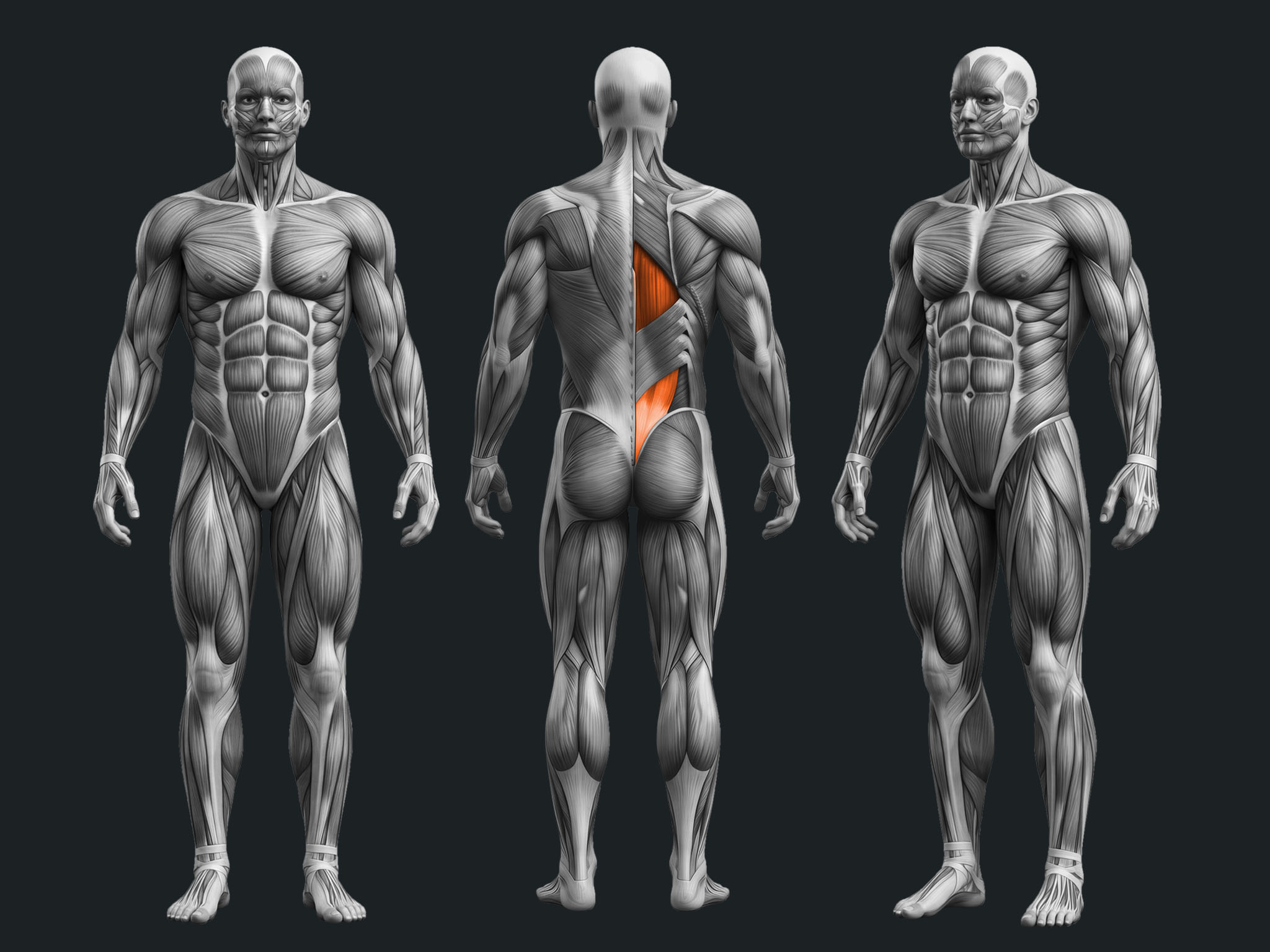
Spinal Erectors (Erector Spinae — lower back)
Primary
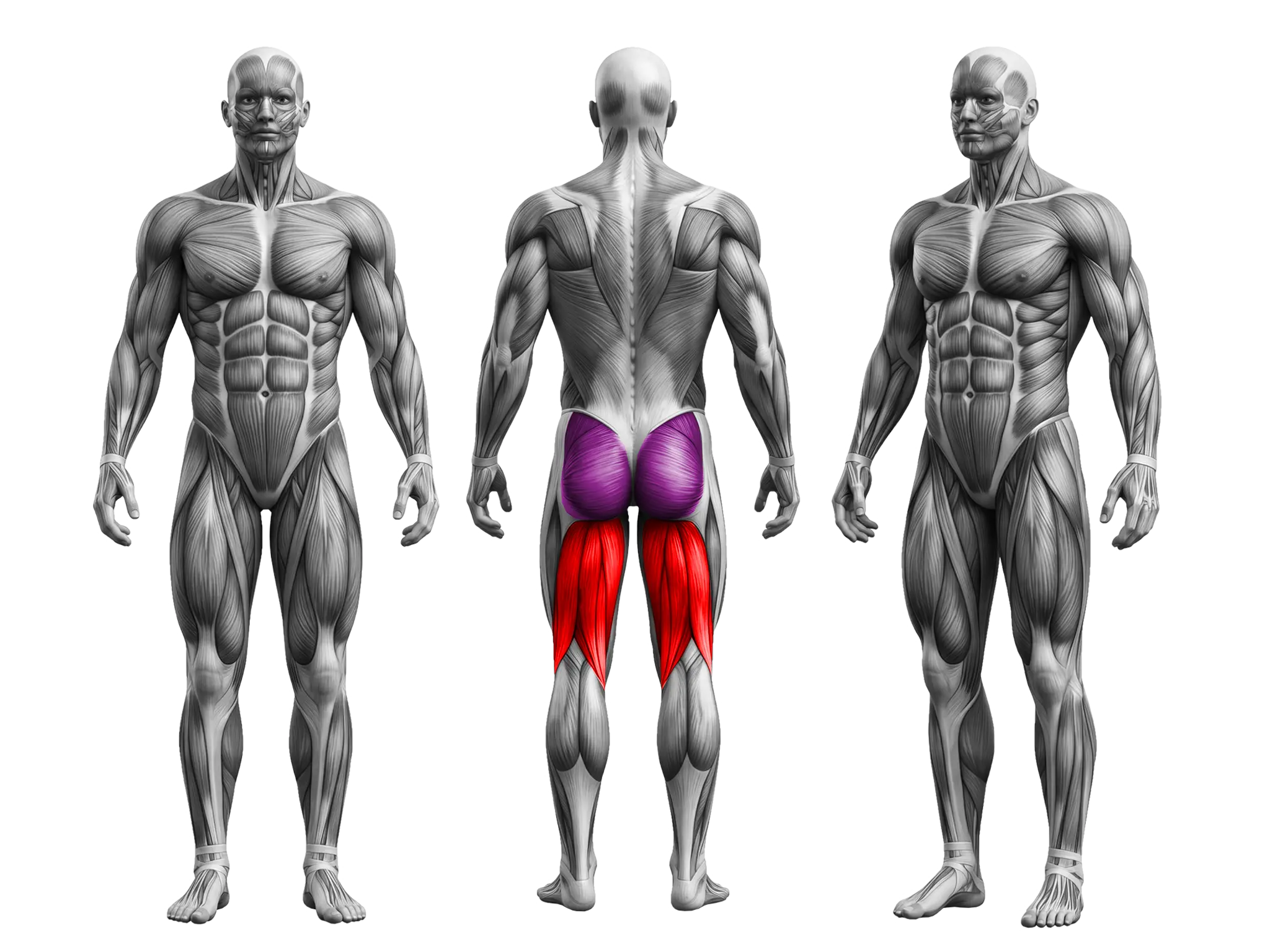
Hamstrings & Gluteus Maximus
Assisting
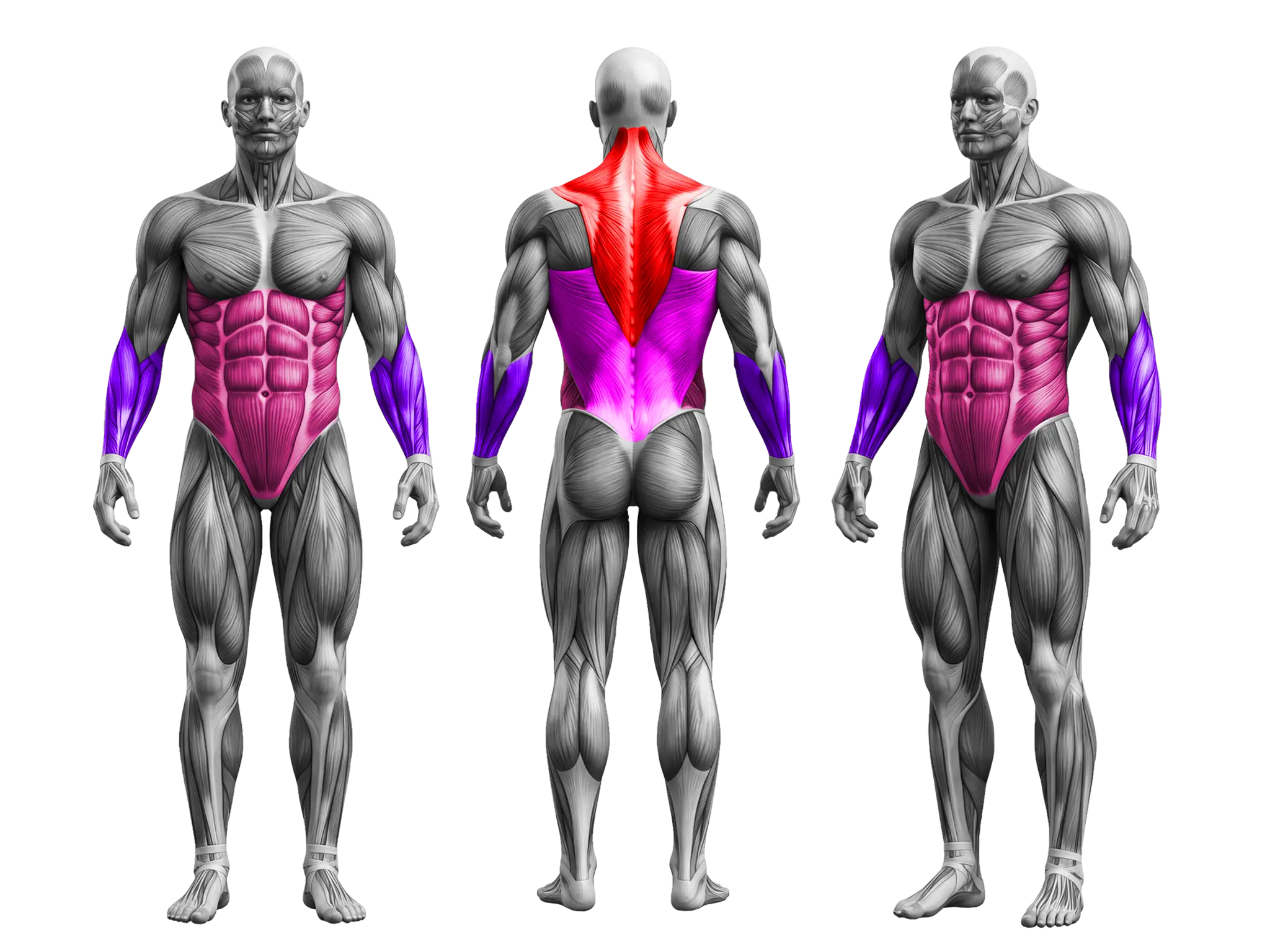
Trapezius, Lats, Forearms (grip) & Core
Assisting
Recommended Equipment

Barbell (on a rack with safety pins, if possible)
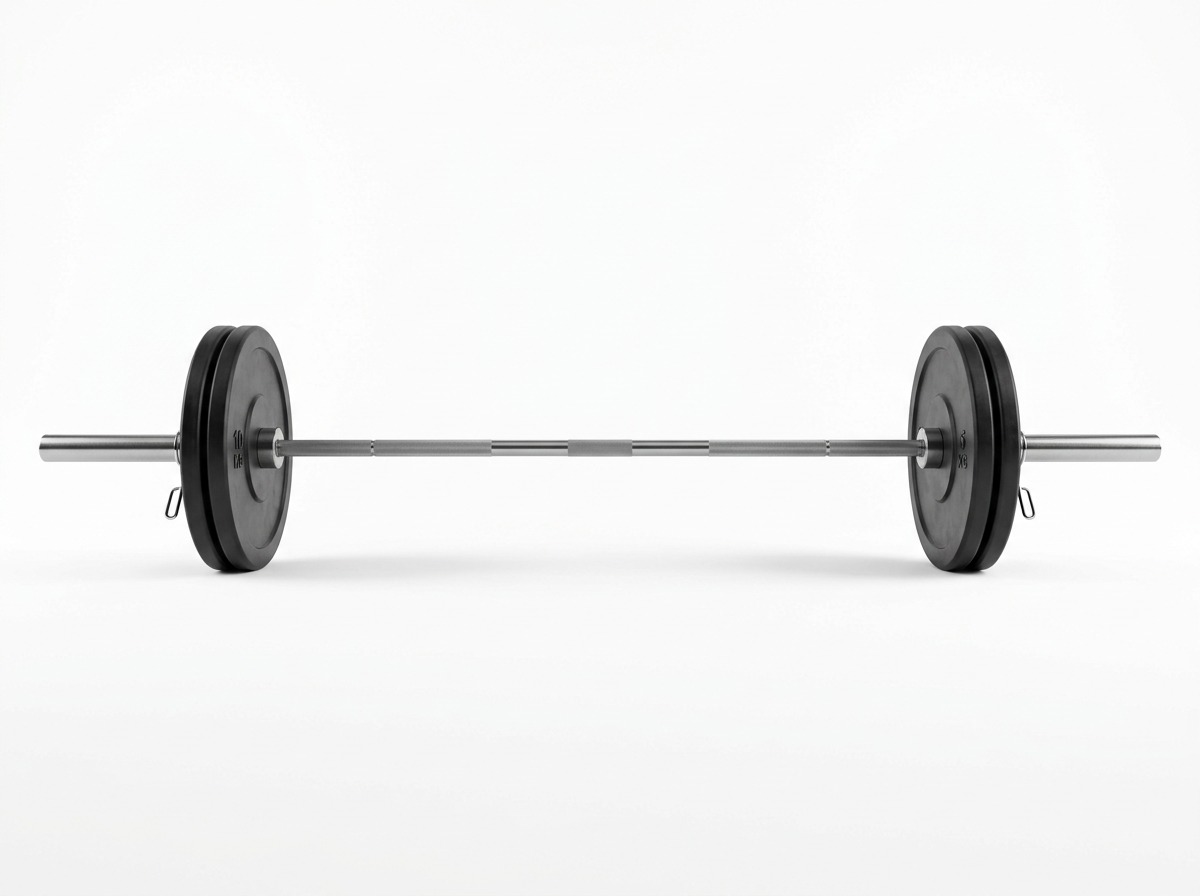
A straight barbell — the standard Olympic bar is 20 kg on its own. If that's already too much, use a lighter bar or a fixed-weight barbell; the bar isn't the exercise, the flat back and the hip hinge are.

Where you set it matters. If your gym has a power rack or a bar with safety rails, set the bar at about shin height and start every rep from there. The lowest part of a floor deadlift is exactly where most people's backs round, so starting higher removes most of the risk while keeping everything that builds you. If there's no rack, start from the floor — just stop lowering at the depth where your back is still flat, even if that's above your shins.

Exercise Instructions

Barbell Deadlift

Exercise guide — Setup / Technique / Tips / Mistakes

Why this one is in the program

This is the exercise that builds the muscles running up both sides of your spine.

Those are your spinal erectors. They're the thick columns you see on a well-built back, and they're what keeps you upright under load. Nothing trains them like this. And they do more than look good — strong erectors are what protect your lower back for the rest of your life, in the gym and out of it.

The deadlift also hits your hamstrings and glutes, your grip, your traps and your whole core at once. One bar, one movement, almost the entire back of your body.

Here's how I do it, and why. I start standing with the bar in my hands and lower it first, instead of pulling it off the floor. The bar slides down the front of my legs, almost to the ground, then back up. Lowering first lets me set my back position while I'm strong and fresh, and keep it the whole way down.

And where I can, I set the bar on rails or safety pins so it starts a bit higher than the floor — around shin height. That means every rep begins from a position where my back is already in a good shape, instead of from a deep, awkward start where most people round their spine. Same muscles, far less risk. If your gym has a rack, use it.

One honest note. Your erectors mostly work by holding your back flat against a heavy bar, not by moving it. That holding job is exactly what thickens them. So the goal here is never to lift the most weight — it's to hold a perfect back position under a weight that's genuinely hard.

Setup

  • Set the bar on rails or safety pins at about shin height, if your gym has them. If not, start from the floor.
  • Stand with your feet about shoulder-width apart, toes pointing forward or slightly out.
  • Stand close — the bar should be almost touching your shins.
  • Grip the bar just outside your legs, hands shoulder-width, arms straight.
  • Bend your knees a little — not a squat, but not locked straight either.
  • Push your chest up and pull your shoulders back.
  • Flatten your back. No rounding at the bottom, no big arch at the top.
  • Tighten your stomach hard, like someone's about to poke you in the belly.

Why the setup does the work here

Your feet go shoulder-width. This matters more than people think. Too narrow and you've got no base — you wobble, and your knees get in the way of the bar. Shoulder-width gives you a solid stance and a clear path for the bar to travel straight up your legs.

Knees bent, not locked. Straight legs turn this into a different exercise (that's a Romanian deadlift — all hamstrings, much lighter). A soft bend lets your hips and legs help, so your lower back isn't doing the whole job alone.

The flat back is non-negotiable. This is the one thing that decides whether this exercise builds you or hurts you. Chest up, shoulders back, stomach tight — and that shape stays exactly the same from the first rep to the last.

And start high if you can. Setting the bar on pins at shin height skips the hardest, lowest part of the pull, which is exactly where most people's backs round. You keep all the benefit and remove most of the risk.

Technique

  • Stand tall holding the bar, arms straight, back flat, stomach tight.
  • Push your hips back — like you're closing a car door with your backside.
  • Let the bar slide down the front of your legs, staying in contact the whole way.
  • Lower until the bar is just below your knees, or almost at the ground — as far as you can go with a flat back.
  • Take about 3 seconds on the way down.
  • Push your feet into the floor and drive your hips forward to stand back up.
  • Keep the bar against your legs on the way up too.
  • Stand tall at the top. Squeeze your glutes. Don't lean back.
  • Reset your breath and your position, then go again.

Why technique decides everything here

The bar stays glued to your legs. This is the whole exercise in one sentence. The second the bar drifts away from your body, it gets heavier for your lower back — a lot heavier. Keep it brushing your thighs and shins the entire time. If you're the kind of person who marks things up, chalk on the bar and a pair of long socks are your friends.

Hips go back, not down. This isn't a squat. Think about pushing your backside toward the wall behind you. Your knees bend a little as a result — that's it.

Your back shape never changes. Flat from start to finish. If it rounds at the bottom, stop the rep there — that's your true range for now, and it'll get better. A rounded back under a heavy bar is the single fastest way to end your training for two months.

Don't lean back at the top. Standing tall and squeezing your glutes is the finish. Leaning back past straight adds nothing and squeezes your lower back for no reason.

Common Mistakes

  • Rounding the lower back — the one that actually hurts people.
  • Feet too narrow, so there's no stable base.
  • Keeping the legs completely straight instead of a soft knee bend.
  • Letting the bar drift away from the legs.
  • Turning it into a squat — hips dropping instead of going back.
  • Jerking the bar off the bottom instead of pushing with the feet.
  • Leaning back at the top.
  • Going so heavy that form breaks on rep one.

Where people lose results

Nearly every deadlift problem is a position problem, and the weight is usually what caused it. Here are the big ones.

Rounded back. The most common and the most expensive. When the weight is too heavy, the back gives up its shape before the legs give up — your spine curves, and now the load is on your discs instead of your muscles. Fix: lighten the bar, and stop each rep at the depth where your back is still flat.

Feet too narrow. No base, no balance, and your knees end up in the bar's path. Fix: shoulder-width apart, every set.

No knee bend at all. Legs locked straight makes this a hamstring exercise and dumps everything else onto your lower back. Fix: a soft bend in the knees, so your hips and legs share the work.

Bar drifting away from the body. Even a few centimetres out front makes the weight feel much heavier on your lower back. Fix: slide it along your legs, touching, the whole way.

Turning it into a squat. Dropping the hips straight down instead of pushing them back. Fix: think "hips to the wall behind you," not "sit down."

Too heavy, or too light. Too heavy and everything above falls apart at once. Too light and nothing grows — perfect form with a weight you could lift fifteen more times trains nothing.

The honest test: flat back the whole set, bar touching your legs, three seconds down, no jerking. If you can't do that for your full rep range, that's not your weight.

Stay in the 6–12 rep range here. And remember the rule for heavy barbell lifts: this one never goes to failure. Stop 1–2 reps short on every working set. The risk lives in that last ugly rep, and the extra growth isn't worth it.
Target Muscles
Spinal Erectors (Erector Spinae — lower back)
Primary
Hamstrings & Gluteus Maximus
Assisting
Trapezius, Lats, Forearms (grip) & Core
Assisting
Recommended Equipment

Barbell (on a rack with safety pins, if possible)
A straight barbell — the standard Olympic bar is 20 kg on its own. If that's already too much, use a lighter bar or a fixed-weight barbell; the bar isn't the exercise, the flat back and the hip hinge are.

Where you set it matters. If your gym has a power rack or a bar with safety rails, set the bar at about shin height and start every rep from there. The lowest part of a floor deadlift is exactly where most people's backs round, so starting higher removes most of the risk while keeping everything that builds you. If there's no rack, start from the floor — just stop lowering at the depth where your back is still flat, even if that's above your shins.
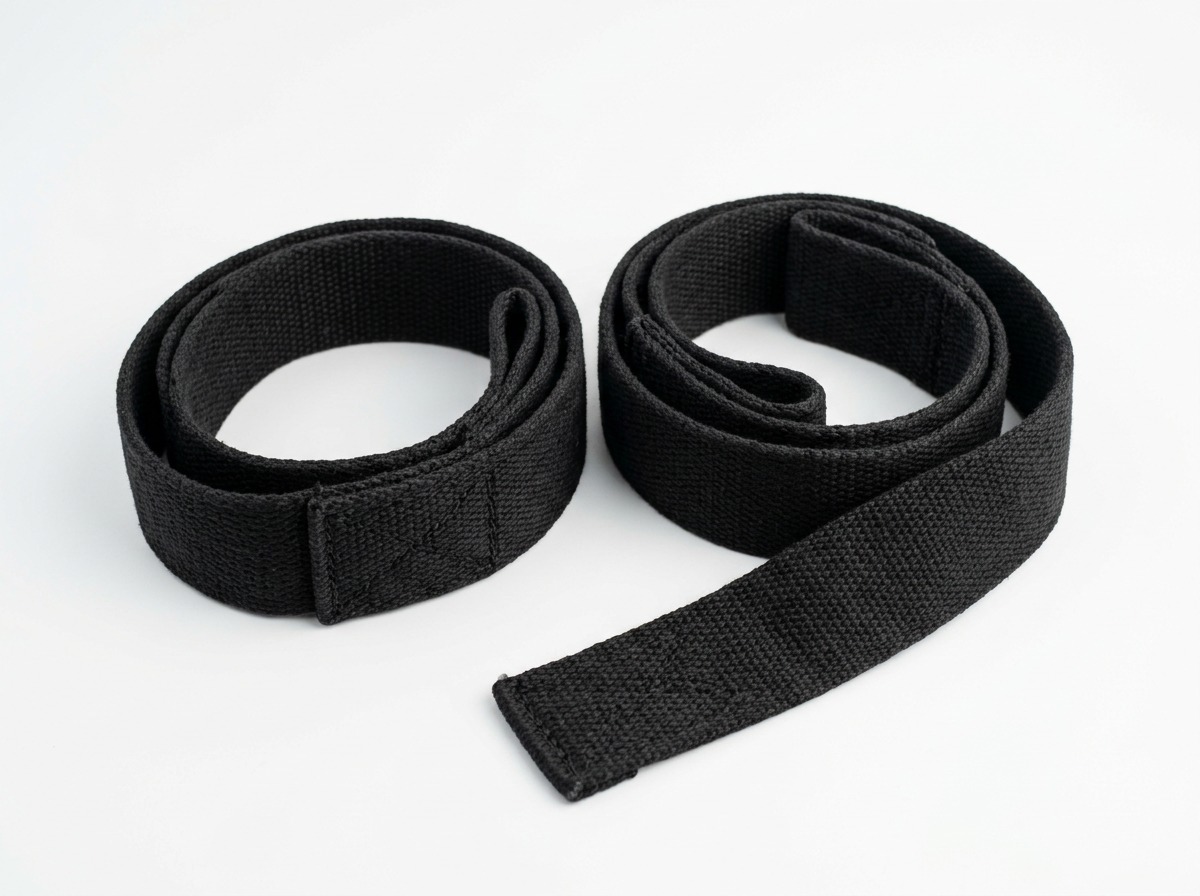
Lifting Straps & Belt (both optional)
Two things that come into play once the bar gets heavy. Straps wrap around your wrists and the bar so your grip isn't what ends the set — useful here, because your hands will usually give out before your back does. Keep your first sets strapless so your grip still gets trained, then strap up for the heavy ones. A belt goes tight around your waist and gives your stomach something to push against, which helps you hold that flat back under a heavy load.

Neither is required, and neither fixes bad form. If you're still learning the movement, skip both — lighter weight and a flat back will teach you more than any gear.

Gym Alternative
Trap Bar (Hex Bar) Deadlift

Honest answer: this is better than dumbbells, and for a lot of people it's better than the straight bar. You stand inside the bar with the handles at your sides, so the weight sits in line with your body instead of in front of it. That means far less strain on your lower back, an easier time keeping a flat back, and you can load it properly. If your gym has one, use it.

Additional gym alternatives, best to worst:

Additional gym alternatives:

  1. Rack Pull — the bar set on pins at knee height; a shorter, safer version of the same movement, very strong on the erectors
  2. Romanian Deadlift (RDL) — straight-ish legs, bar to just below the knee; more hamstring, lighter weight, very back-friendly
  3. Back Extension (45° bench or GHD) — pure spinal erector work with no bar at all; ideal if your lower back is beat up
Home Alternative
Dumbbell Romanian Deadlift (home)

A dumbbell in each hand, held in front of your thighs. Push your hips back, slide the dumbbells down your legs, keep your back flat, then stand back up. Same movement, same cues, and dumbbells at your sides are actually gentler on your lower back than a bar out in front.

Additional home alternatives:

Additional home alternatives:

  1. Single-Leg Dumbbell Deadlift — one leg, one dumbbell; much less weight needed and it trains your balance too
  2. Backpack or Kettlebell Deadlift — anything heavy with a handle, held between your legs
  3. Floor Back Extension (Superman) — lie face down, lift your chest and legs off the floor; no weight, but it works the erectors directly