Exercise Instructions
Barbell Shrug

Why this one is in the program
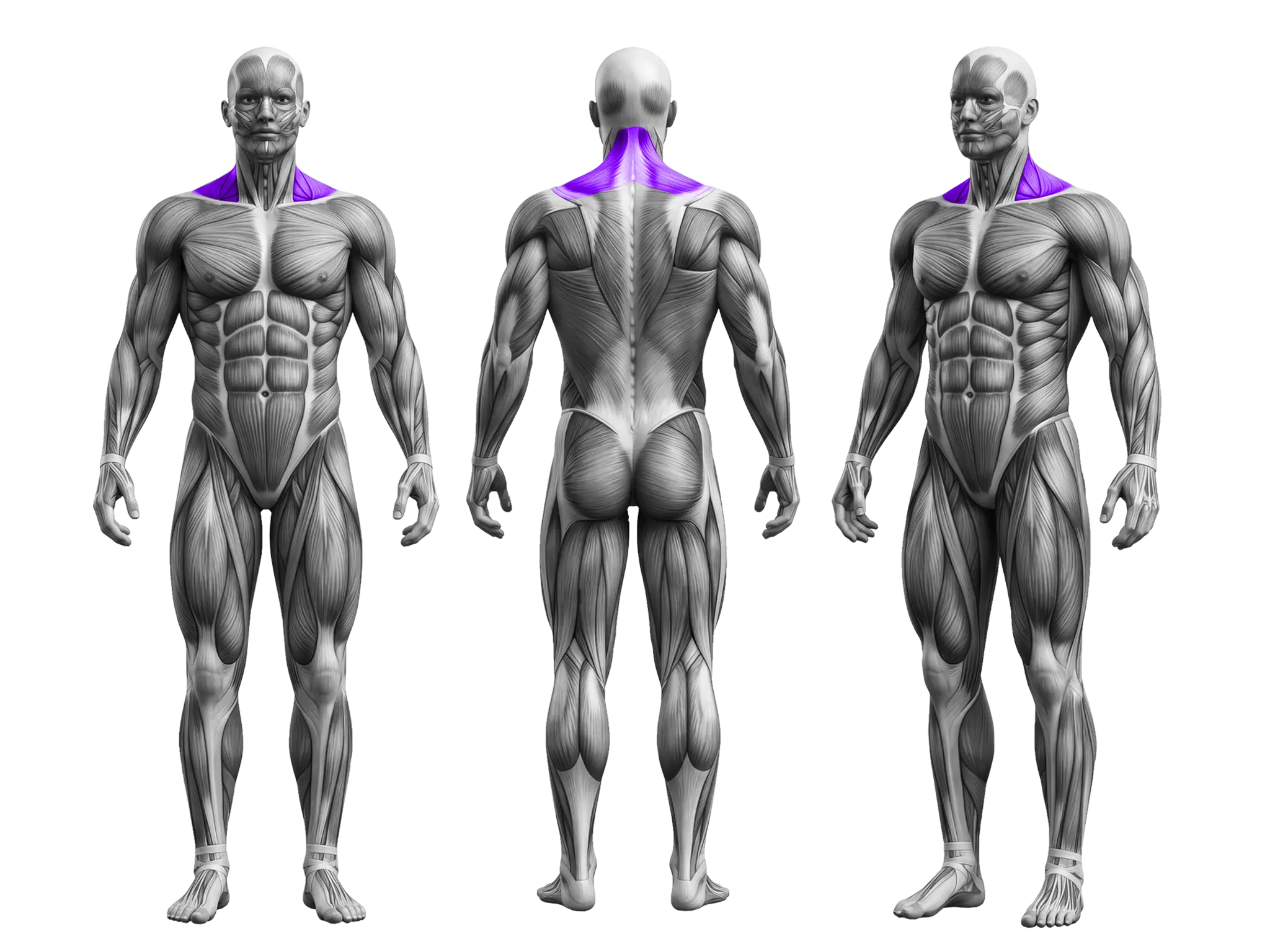
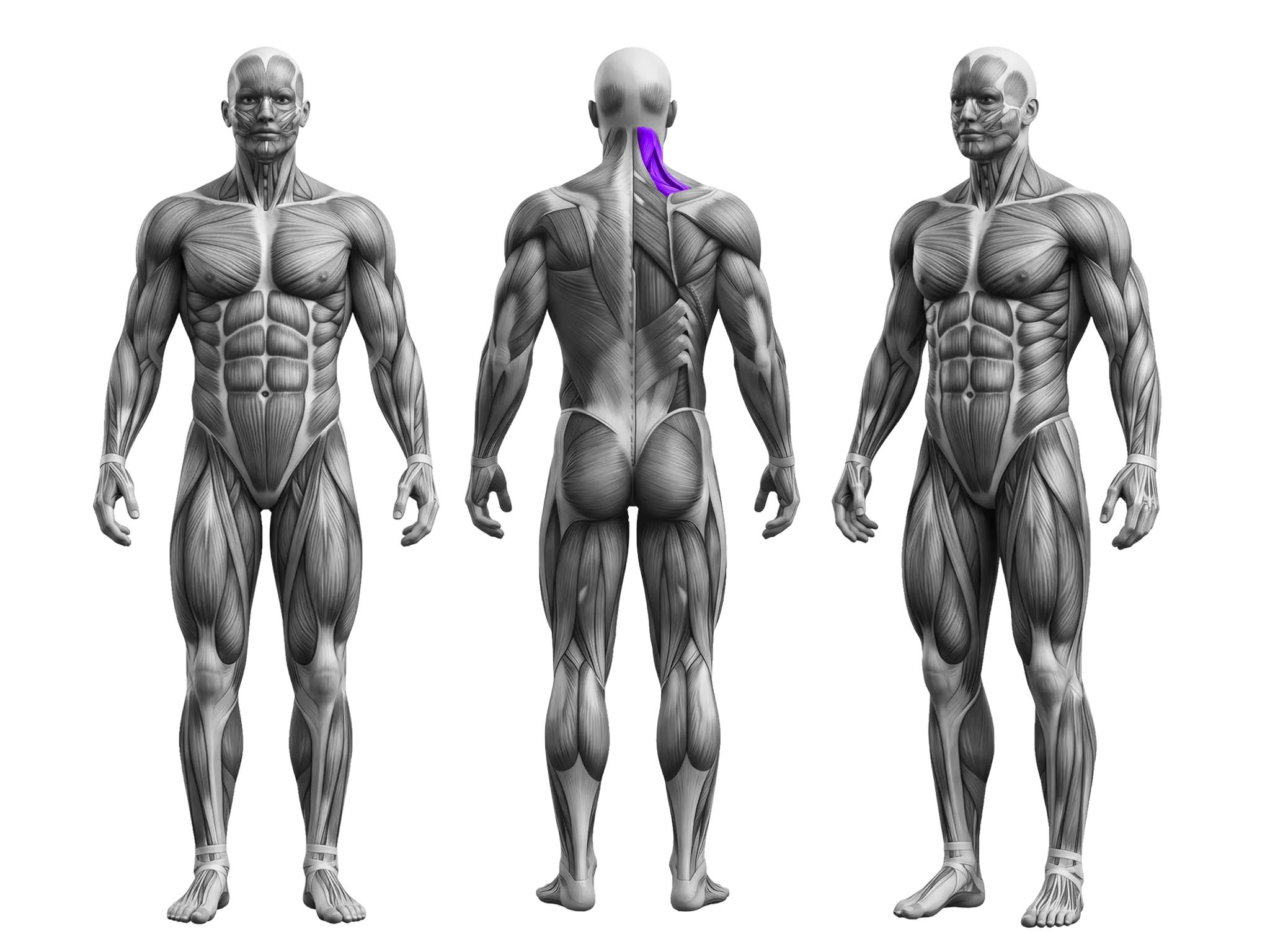
This is the most direct exercise for your upper traps — the muscles that run from your neck down to your shoulders.
Developed traps change how your whole upper body looks. They fill the gap between your neck and shoulders, make your shoulders look broader and your frame look thicker, even in a T-shirt. Rows and deadlifts work the traps a bit, but they're never the main target. Here they are.
And traps are strong — they need real weight. That's why the barbell is the right tool: it lets you load far heavier than dumbbells. But a heavy bar creates two problems, and the setup below fixes both.
Problem one: picking it up. Deadlifting a heavy bar off the floor before every set wastes energy and loads your lower back for nothing. So we start it from a rack at mid-thigh height.
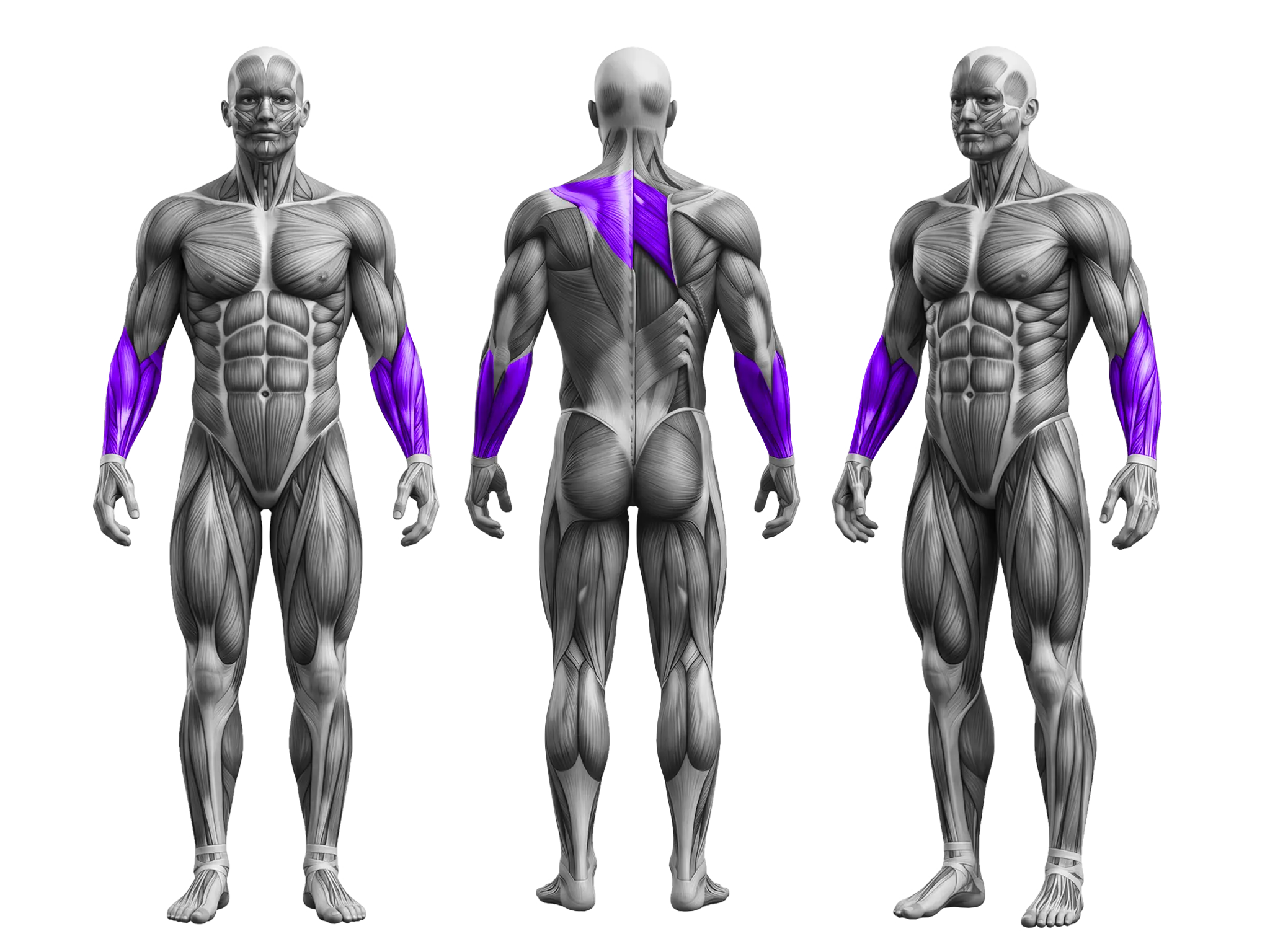
Problem two: your grip. Your forearms will give out long before your traps do. So we use lifting straps — your hands just hold on, and the traps do the work.
Setup
- Set the bar in a rack at about mid-thigh height — just below where your hands hang.
- Set the safety bars at the same height or slightly lower.
- Step up to the bar and grip it overhand, just outside your thighs — about shoulder-width.
- Wrap your lifting straps around the bar and pull them tight.
- Stand up with a small lift — just enough to clear the hooks — and take one small step back, or none at all if the rack allows.
- Stand tall, chest up, stomach tight, arms straight and relaxed.
Why the setup does the work here
The rack saves your back and your energy. You don't bend down and deadlift the bar every set. You just stand up a few centimetres and you're in position. All your effort goes into the traps.
Straps take your grip out of it. Without them, your hands give up first and your traps never get a hard set. With them, you can hold heavy weight for the full set and let the muscle you're training decide when the set ends.
Arms stay straight. They're just hooks connecting the bar to your shoulders. Bend them and your biceps start pulling.
Technique
- Start with your shoulders relaxed and dropped — let the bar pull them down into the stretch.
- Lift your shoulders straight up toward your ears, as high as they go.
- Hold the top for one to two seconds and squeeze hard.
- Lower slowly, about 2–3 seconds, all the way back down to the stretch.
- Keep your arms straight and your body still the whole time.
- At the end of the set, step forward and set the bar back on the hooks.
Why technique decides everything here
Straight up and straight down. Don't roll your shoulders in circles. Rolling adds nothing for the traps and puts unnecessary stress on your shoulder joints. Up toward your ears, then back down.
The hold at the top is the exercise. Most people bounce the bar up and drop it instantly. That's mostly momentum. One to two seconds at the top, squeezing — that's where the traps actually work.
Use the full range at the bottom too. Let your shoulders drop all the way down between reps. That stretch is half the movement.
Arms straight, legs still. No bending the elbows, no little knee bounce to throw the bar up.
Common Mistakes
- Lifting the bar off the floor every set instead of using a rack.
- No straps, so the grip gives out before the traps.
- Rolling the shoulders in circles.
- Bouncing the bar up and dropping it with no hold.
- Tiny reps — barely moving the shoulders.
- Bending the elbows and pulling with the arms.
- Using the knees to bounce the bar up.
- Jutting the head forward at the top.
Where people lose results
Tiny reps with huge weight. The most common mistake. The bar is loaded heavy, the shoulders move two centimetres, and nothing grows. Fix: a weight you can lift all the way toward your ears and hold.
No hold at the top. Up and down with no pause is momentum, not muscle. Fix: one to two seconds, every rep.
Grip giving out first. If your hands are what ends the set, your traps never got a real set. Fix: use straps.
Rolling the shoulders. Looks like effort, adds nothing for the muscle, and stresses the shoulder joint. Fix: straight up, straight down.
Leg bounce. A small knee dip to launch the bar turns it into a different lift. Fix: legs still, only the shoulders move.
Too heavy, or too light. Too heavy and the range shrinks, the hold disappears and the legs start helping. Too light and nothing grows — traps are strong and need real load.
The honest test: shoulders all the way up, one-to-two-second hold, slow down to a full stretch, arms and legs still. If you can't do that for your full rep range, that's not your weight.
Stay in the 8–15 rep range. The bar starts from a rack with safety bars set, so the last set can go close to failure — if a rep stalls, you simply set the bar back down.

Barbell Rack (with safety bars), Barbell & Plates
A power rack or squat stand with adjustable hooks and safety bars, and a straight barbell loaded with plates.
Set the hooks at about mid-thigh height — just below where your hands naturally hang when you stand. That way you start each set by standing up a few centimetres instead of deadlifting a heavy bar off the floor. Set the safety bars at the same height or slightly lower, so you can simply set the bar down if a set ends early.
Grip the bar overhand, about shoulder-width, just outside your thighs. Lifting straps are strongly recommended on this exercise — wrap them around the bar and pull them tight, so your grip doesn't end the set before your traps do.