Exercise Instructions
Cable Pullover
.png)
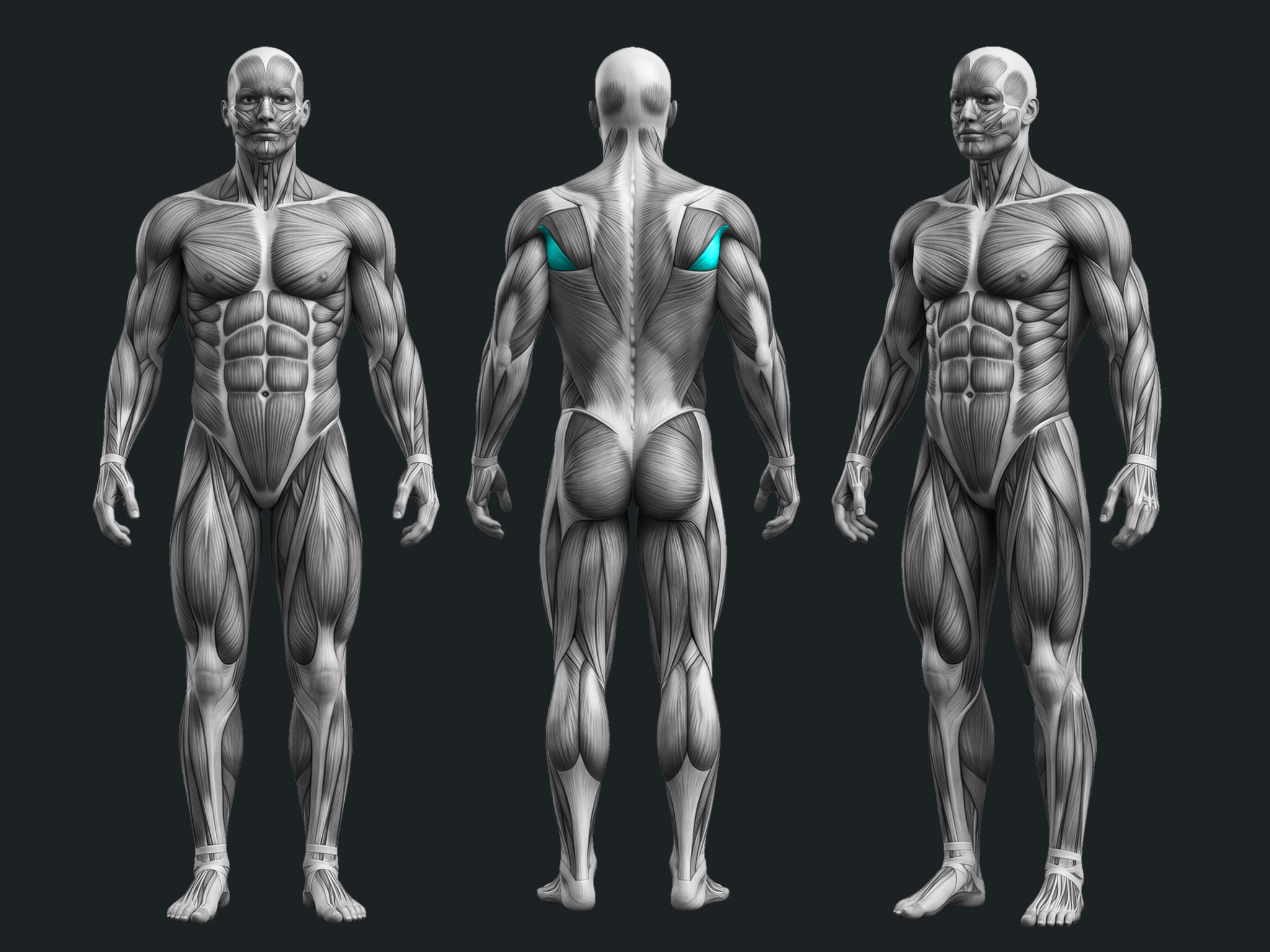
This is the only real lat exercise where your arms don't bend.
Think about what happens on a pulldown or a row: your lats are strong, but the chain they work through runs your biceps, your forearms and your grip. Those smaller links fail first. You finish a hard set of rows with burning arms and a back that never got fully emptied — and you assume your back is weak. It isn't. It just never got the chance.
The pullover removes that whole problem. Your elbows stay locked, so your biceps have nothing to do. The only muscle that can move the weight is your lat. There's no cheating and nowhere for the load to leak.
That gives us three things, and this is exactly why it goes first:
It switches your lats on before the heavy work. Most people can't feel their lats at all. They pull with arms for years and wonder why their back doesn't grow. Twelve to twenty clean reps of a movement where the lat is the only option teaches your brain where that muscle is. Then, when you get to your pulldowns and rows, you actually feel them working — and the same weight does more for you.
It pre-fatigues the lat so it becomes the limiting factor. By the time you get to your rows, your lats are already the tired link in the chain instead of the fresh one. Now your arms outlast your back the way they're supposed to, and your back is what fails at the end of the set. That's the whole point of every set you do.
It warms the shoulder joint through a full overhead range with almost no risk. Your first movement of the session takes your shoulders from full overhead stretch to full extension under light, controlled load. There's no better preparation for heavy pulling — and no safer way to get it.
There's one more reason, and it's the one people underrate. The pullover loads the lat at its longest, most stretched position — arms overhead, shoulder blades allowed to travel up. Stretch under load is one of the strongest growth signals there is, and almost nothing else in a back workout gives you that. Rows train the squeeze. This trains the stretch. You need both, and this is your only real shot at it.
So: not heavy, not a max-effort lift, not the star of the day. It's the exercise that makes everything after it work properly. Light, slow, and felt in the lats.
Setup
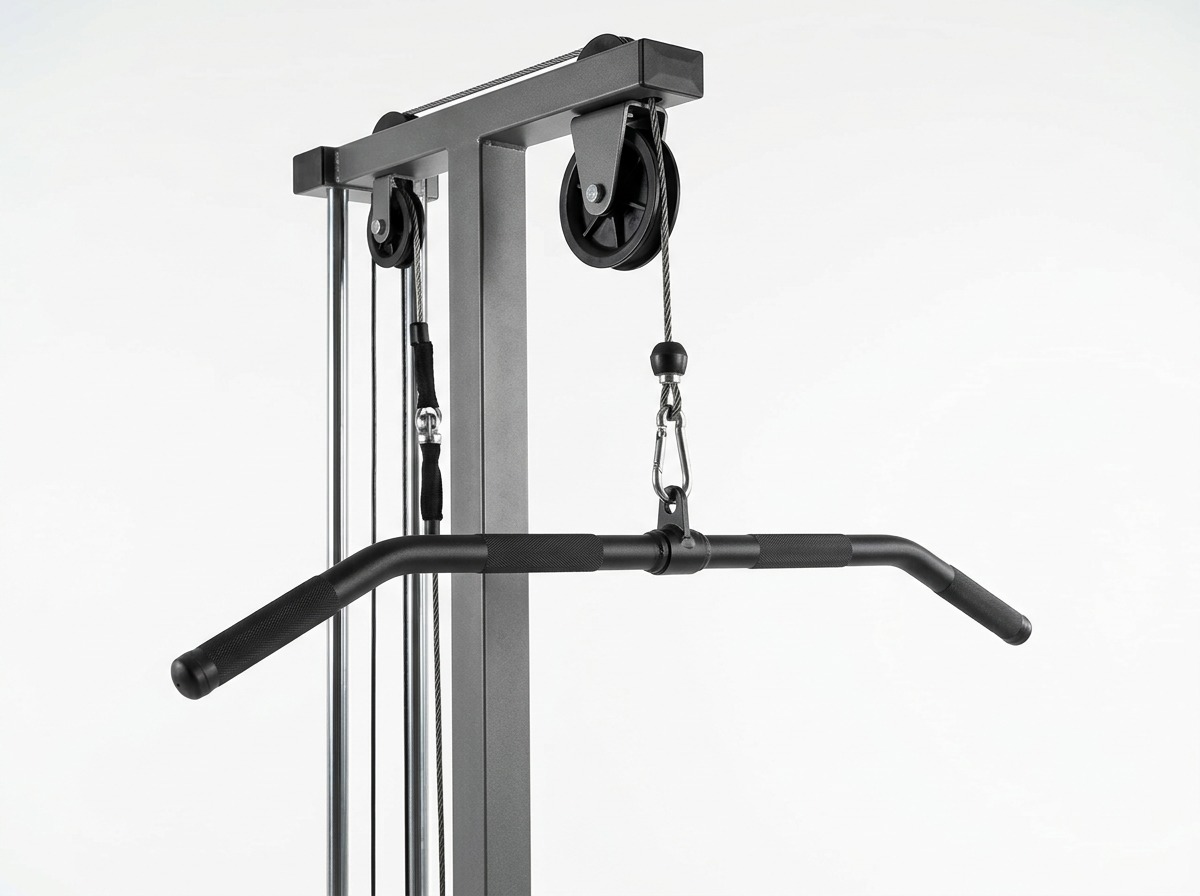
- Set the pulley to the highest position and attach a rope (or a straight/bent bar if you prefer).
- Take a neutral grip on the rope, one hand on each end, thumbs up.
- Step back two or three steps until the cable is under tension with your arms overhead.
- Set your feet hip-width apart, one foot slightly staggered if that feels steadier.
- Hinge forward at the hips to roughly 30–45°, flat back, chest tall, knees softly bent.
- Straighten your arms overhead with a small, fixed bend in the elbows — then lock that angle.
- Let your shoulders rise and travel forward into the stretch. That's your starting position.
Why the setup does the work here
Your distance from the machine is the whole exercise. Stand too close and there's no tension at the top — you lose the stretch, which is the most valuable part of the rep. Stand far enough back that you can feel your lats pulling from the very first moment your arms are overhead, before you've moved anything.
The forward hinge does the same job. Standing bolt upright puts the cable almost in line with your torso and kills the resistance at the top. Hinging forward opens the angle between your arms and your body so the lat is loaded through the entire arc, from overhead all the way to your hips.
The small elbow bend is deliberate. Fully locked-out elbows put every bit of stress into the joint; a slight, fixed bend takes the strain off without letting your arms become part of the movement. Set it once and don't change it — the second that angle starts opening and closing, you've turned a lat exercise into a triceps pushdown.
And let your shoulders come up at the top. Don't hold them pinned down. Letting the shoulder blades travel up and forward is what gives you the full stretch — the extra range is where the growth is hiding.
Technique
- Start each rep from the full overhead stretch, arms straight, shoulders up.
- Initiate by pulling your shoulder blades down and back — not by pushing with your arms.
- Drive your hands down in a wide arc toward your thighs, elbows locked at the same angle throughout.
- Keep your torso completely still — the only thing moving is your arms and shoulder blades.
- Finish with your hands at or just past your hips, and squeeze the lats hard for one full second.
- Return slowly, 3 seconds, letting your arms travel back overhead.
- Let the stretch happen at the top — don't stop the rep early.
- Only then start the next rep. No bouncing.
Why technique decides everything here
The one cue that makes this exercise work: push your hands away from your hips, not down. Think of it as an arc, not a straight line. The moment you push straight down close to your body, your triceps take over and your elbows start bending — that's a pushdown with extra steps.
Locking that elbow angle is non-negotiable. Watch yourself in the mirror for a set: if the angle at your elbow changes at any point, your arms are helping. Fix the angle, and there is literally nothing left to move the weight but your lat.
The torso has to stay frozen too. The most common way people cheat here is by hinging up as they pull down — a small dip of the chest that adds twenty kilos to what they can move and takes the entire load off the target. Set your hips and hold them. If your torso is moving, drop the weight.
The squeeze and the return are where the exercise earns its place. Hold the bottom for a real second — that's the peak contraction and it's the whole reason the movement exists for feel. Then take three slow seconds back to overhead. Letting the weight yank your arms up throws away the stretch, which is the most valuable second of the rep. Slow up, hard squeeze, full stretch.
Common Mistakes
- Bending the elbows and turning it into a triceps pushdown.
- Standing too close to the machine, so there's no tension at the top.
- Standing too upright instead of hinging forward.
- Rocking the torso up and down to move the weight.
- Cutting the top short — never letting the arms reach a full overhead stretch.
- Holding the shoulder blades pinned down instead of letting them travel up into the stretch.
- Letting the weight snap the arms back up instead of controlling the return.
- Going heavy and treating it like a strength lift.
- Placing it at the end of the workout as a finisher instead of first.
Where people lose results
The pullover has a unique problem: almost nobody progresses it.
People understand it's a light, feel-based exercise — so they set the same pin, do the same fifteen reps, and repeat that for a year. It becomes a ritual, not training. Light does not mean static. This exercise follows the exact same rule as everything else: when every working set hits the top of your range with clean form, the pin moves up one. Slowly, but it moves.
Now the other direction — and this is the one that actually breaks the movement. Too much weight here doesn't look like effort, it looks like a different exercise. The elbows start bending, the chest starts dipping, the shoulder blades stop fully releasing at the top and stop fully squeezing at the bottom. You end up hauling a heavy stack through the middle third of the range with your triceps, feeling nothing in your lats, and walking into your rows with your back still switched off. There is no version of this exercise where heavy wins.
The third thing that kills it: speed. This is the one exercise where a rushed rep is worth nothing at all. No one-second squeeze, no three-second return, no real stretch overhead — and you've removed everything the movement was there to do. Stay in the 12–20 rep range, keep the elbows locked, and if you can't feel your lats, the answer is never more weight. It's slower reps and a longer stretch.
.jpg)

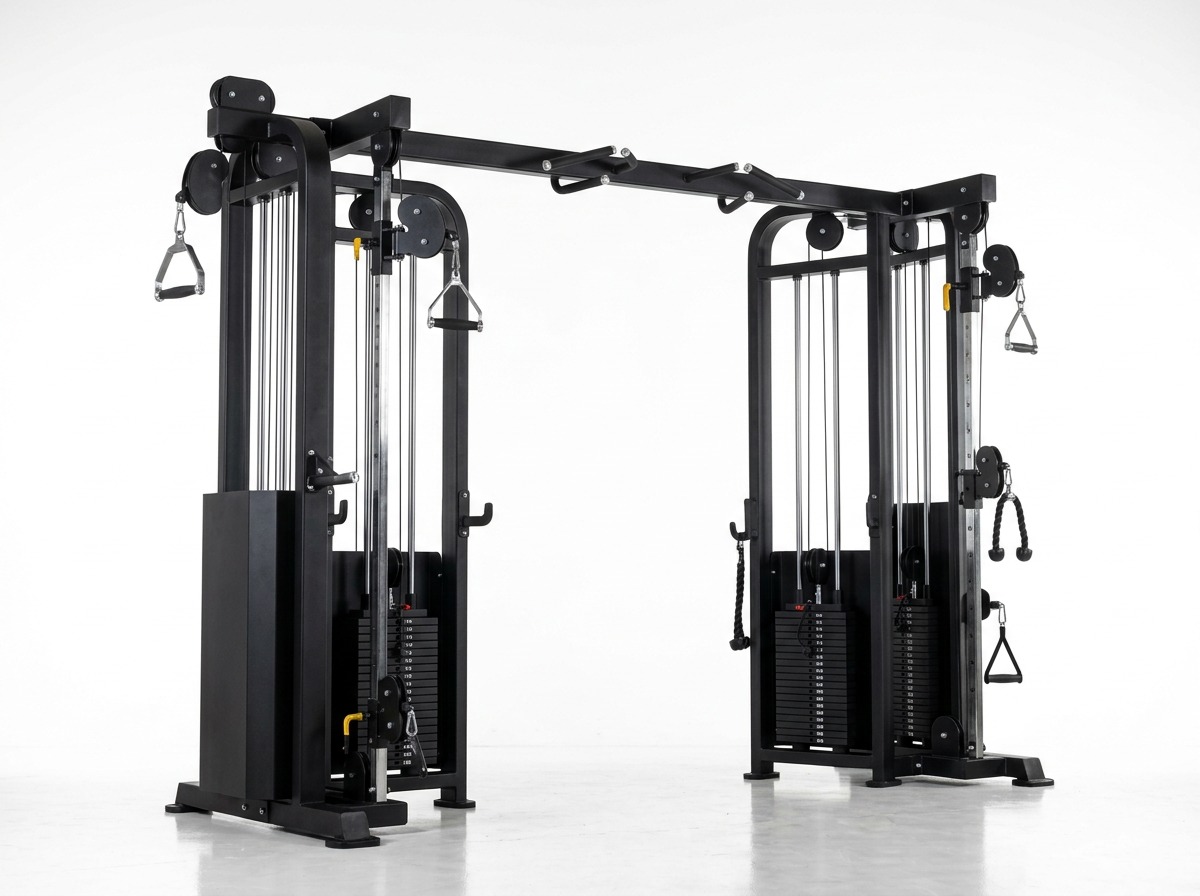
Cable Machine with High Pulley.
Any adjustable cable column or lat pulldown station where the pulley can be set at or above head height.