Exercise Instructions
Chest Dip

Exercise Guide (technique / how to / mistakes)
Why this one is in the program
Dips are the heaviest chest exercise you can do without a bar over your body.
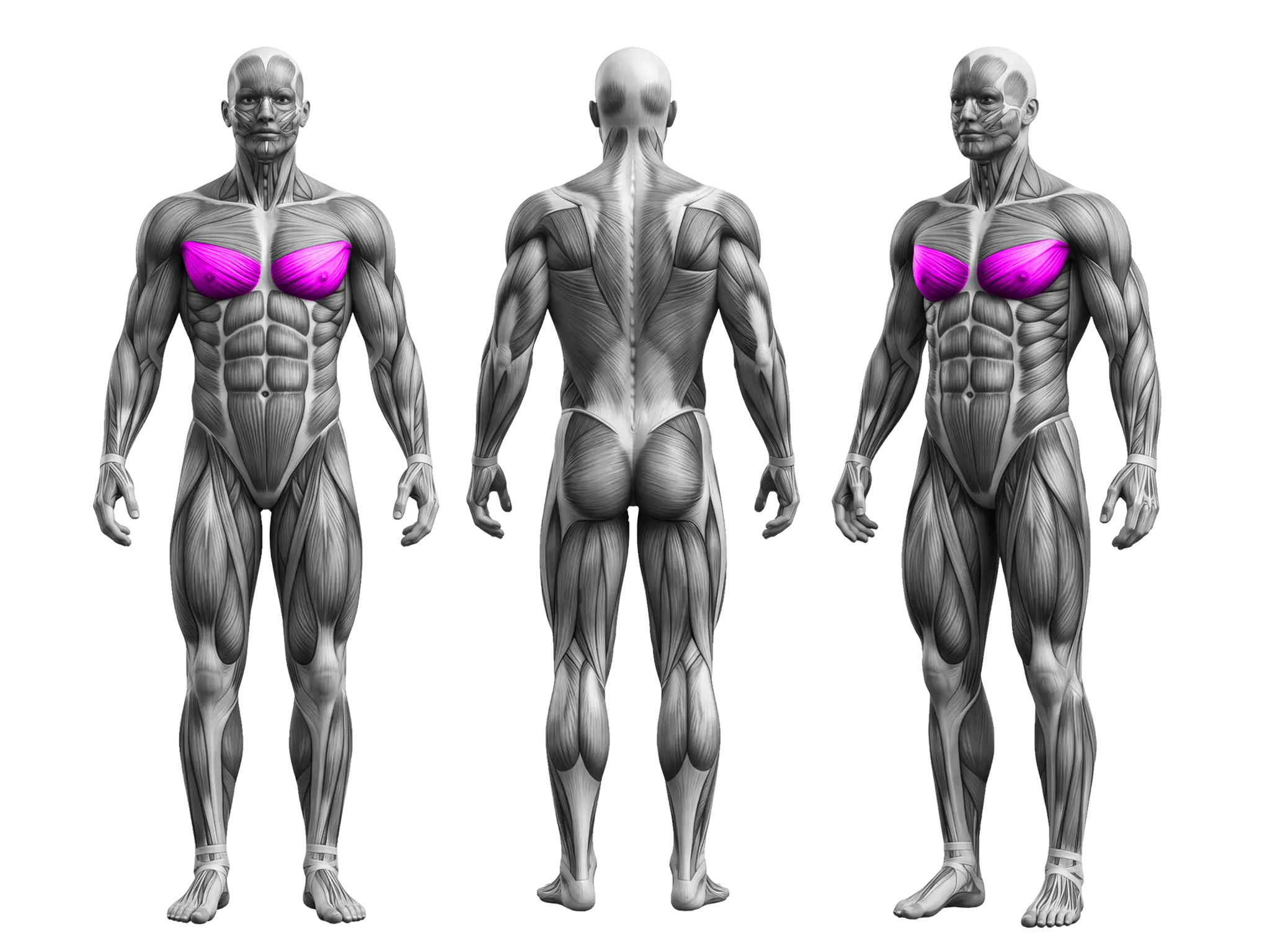
The movement hits the lower chest harder than almost anything else — that's the part that gives your chest a clear line underneath instead of blending into your stomach. The bench press works the middle, dips finish the bottom.
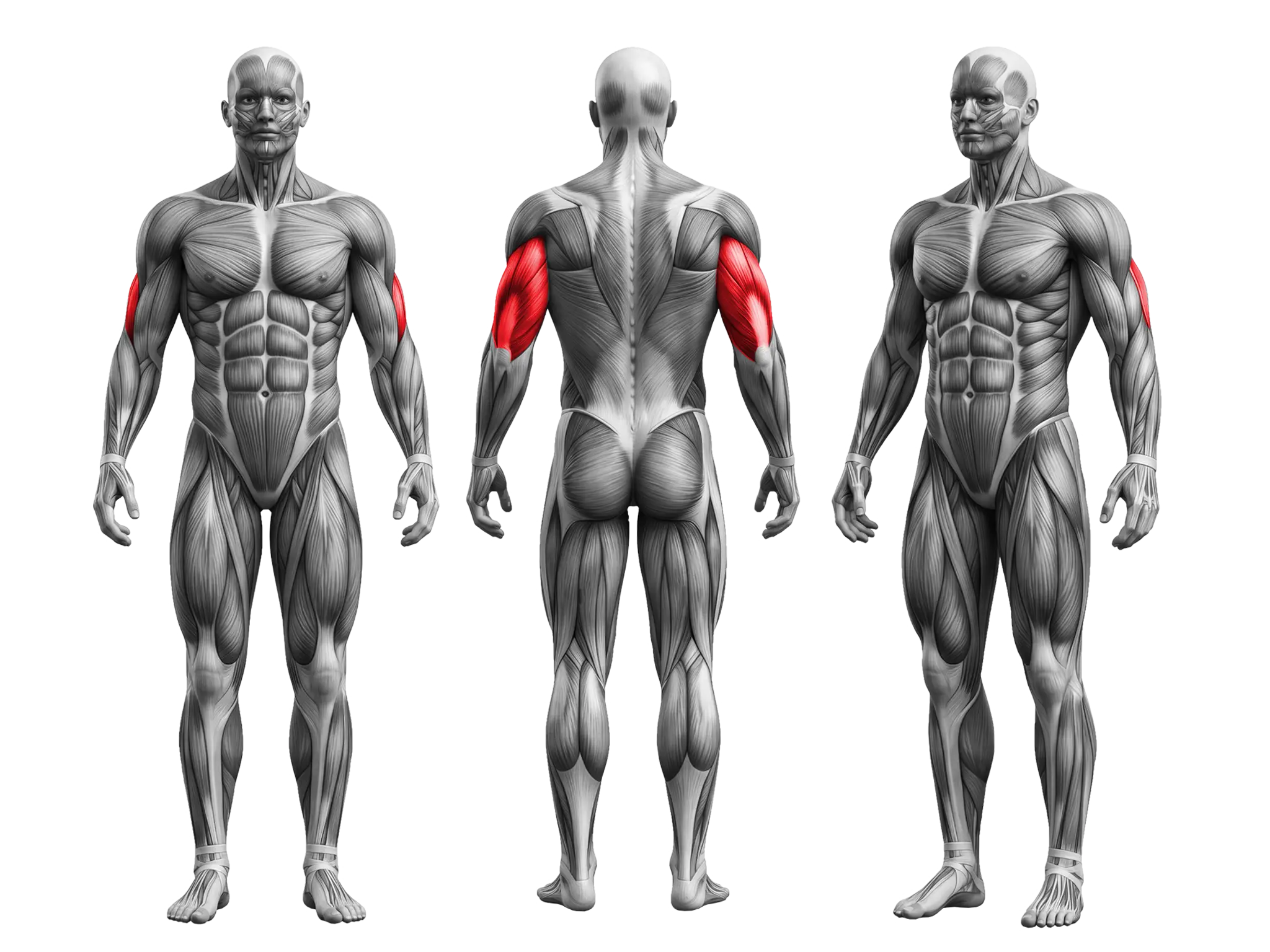
The lean is what makes it a chest exercise. Stay upright and your triceps take over. Lean your chest forward over your hands, and the work moves onto your pecs. Same bars, same movement, completely different target. We want the lean.
And it's safe to push hard: nothing is above you, so if a rep fails you just stand up. Once bodyweight gets easy, you hang a plate from a belt and keep adding — this exercise progresses for years.
Setup
- Grip the parallel bars and press yourself up to the top, arms straight.
- Bars should be roughly shoulder-width apart — a little wider is fine.
- Lean your chest forward, so your shoulders are in front of your hands.
- Bend your knees and cross your ankles behind you.
- Pull your shoulders down, away from your ears.
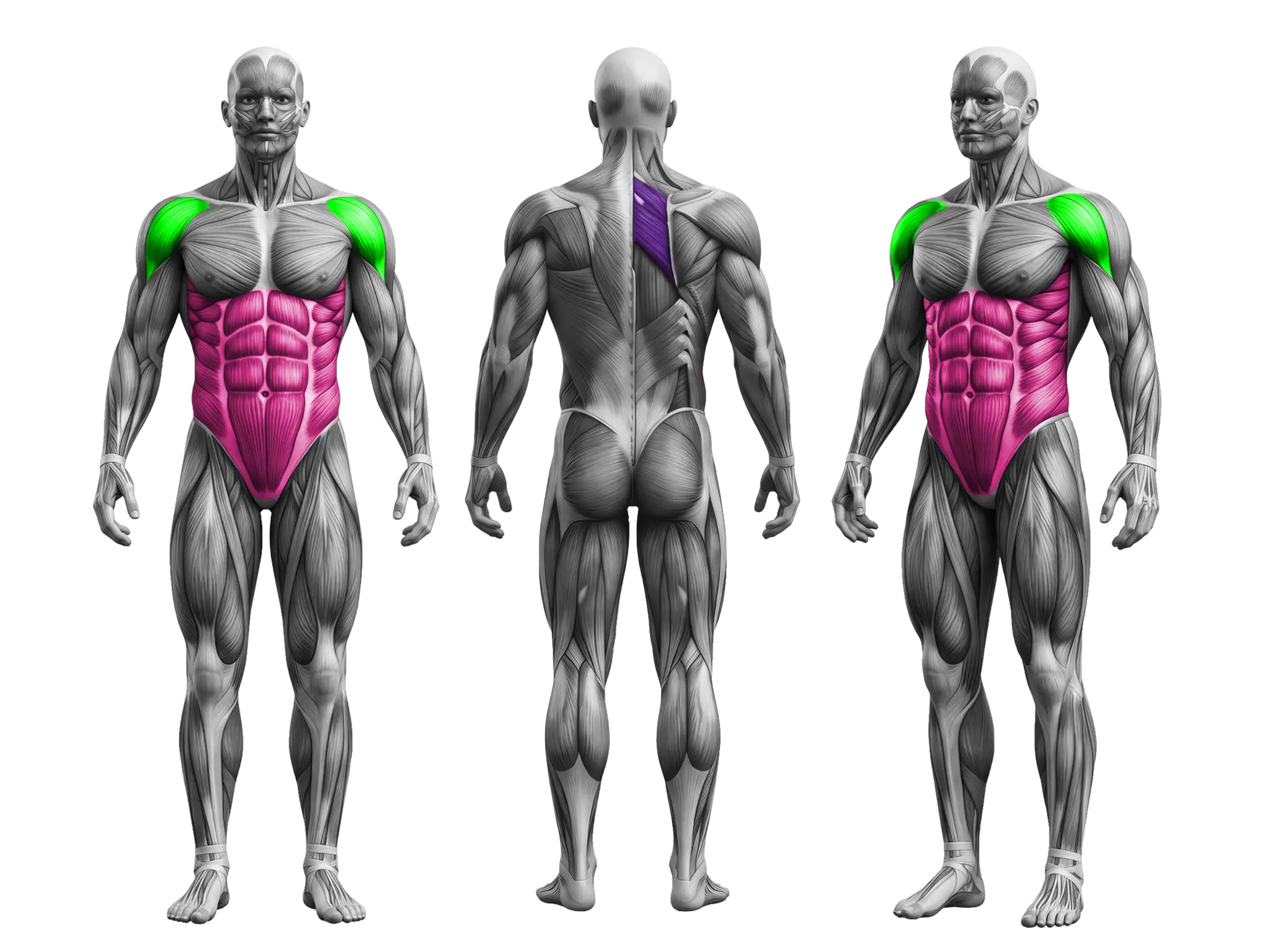
- Tighten your stomach so your body doesn't swing.
Why the setup does the work here
The forward lean is the whole exercise. Chest over hands, body angled like a slash, not standing straight up. If you're vertical, you're doing a triceps exercise.
Bars too wide hurt your shoulders. Shoulder-width is right. Wide bars stretch the shoulder joint into a weak position under your full bodyweight.
And keep your shoulders pulled down. If they creep up toward your ears, the joint takes the load instead of the muscle.
Technique
- Lower yourself slowly, about 3 seconds.
- Keep your chest leaning forward the whole way down — don't straighten up.
- Let your elbows flare out slightly, to about 45 degrees. That's correct here.
- Go down until your upper arms are roughly parallel to the floor — around 90 degrees at the elbow.
- Feel the stretch across your chest, then press back up.
- Push up until your arms are straight and squeeze your chest for a second.
- Stay leaning forward at the top too.
Why technique decides everything here
The lean has to survive the whole set. Most people start leaning and slowly stand upright as they get tired — and the exercise quietly turns into triceps work. Check yourself on the last reps.
Don't go too deep. Down to about 90 degrees is the sweet spot. Dropping lower feels impressive but puts your shoulder in a very vulnerable position with your whole bodyweight on it. Deeper is not better here.
And don't swing. Legs still, body controlled, three seconds down. Kicking your legs to get up means your chest isn't doing the work.
Common Mistakes
- Staying upright instead of leaning forward — trains triceps, not chest.
- Starting leaned over and gradually straightening up as the set gets hard.
- Going too deep and stressing the shoulder joint.
- Shrugging the shoulders up toward the ears.
- Swinging the legs to generate momentum.
- Dropping fast instead of lowering under control.
- Not locking out at the top.
- Using bars that are much wider than shoulder-width.
Where people lose results
Losing the lean. The number one fault. You start out leaning, then creep upright as you tire — and the chest work disappears without you noticing. Fix: chest in front of your hands on every rep, especially the last ones.
Going too deep. People chase depth thinking more is better. Past 90 degrees your shoulder takes the load under full bodyweight, and that's where dips injure people. Fix: stop when your upper arms are level with the floor.
Shrugging. Shoulders riding up toward the ears means the joint is carrying the weight instead of the muscle. Fix: pull them down before the first rep and keep them there.
Swinging the legs. Momentum makes it easier and makes it useless. Fix: cross your ankles, tighten your stomach, stay still.
Too hard, or too easy. If you can't do clean full reps yet, use an assisted dip machine or loop a resistance band across the bars and put a knee in it. If bodyweight is already easy — and it will be — don't just do more reps. Add weight with a dip belt. That's how this exercise keeps building you.
Stay in the 6–15 rep range. There's nothing above your body here, so the last set can go to failure. Just make sure the reps that got you there kept the lean.

Parallel Dip Bars (dip station or power tower)Two fixed parallel bars at about chest height, roughly shoulder-width apart. It can be a standalone dip station, the dip handles on a power tower, or the attachment on a power rack. Shoulder-width matters: bars set much wider force your shoulders into a stretched, weak position under your full bodyweight. Press up to straight arms, lean your chest forward over your hands, cross your ankles behind you, and keep your shoulders pulled down away from your ears.