Consistency training
No perfect days. Just consistent ones.
Back to workout

Exercise Instructions

Close-Grip Barbell Bench Press

Narrow-Grip Bench Press / Triceps Bench Press
Exercise guide — Setup / Technique / Tips / Mistakes

Why this one is in the program

This is the heaviest triceps exercise you'll ever do.

Pushdowns, extensions, kickbacks — they're all good, but they're all light. This is the only triceps movement where you can load a barbell and add weight for years. And the triceps make up roughly two thirds of your arm. If you want sleeves to get tight, this does more than any curl.

The reason it works is simple: bring your hands in close and the bench press stops being a chest exercise. Your elbows tuck to your sides, the range gets longer, and your triceps have to finish every single rep. Same lift, same bar, completely different target.

It's also the safest heavy pressing you can do for your shoulders. Elbows flared out wide is where shoulders get wrecked over the years. Elbows tucked in is a much friendlier position — and it happens to be exactly the position that hits the triceps hardest.

One thing to be clear on before we start: close does not mean hands touching. Shoulder width — roughly the width of your chest — is the grip. Go narrower than that and you won't feel more triceps, you'll just feel your wrists. More on that below.

Setup

  • Lie flat on the bench, eyes under the bar.
  • Grip the bar at roughly shoulder width — about chest width, your index fingers near the smooth part of the knurling.
  • Keep your wrists straight and stacked over your forearms, not bent back.
  • Plant your feet flat and drive them into the floor.
  • Pull your shoulder blades down and back and squeeze them into the bench.
  • Unrack the bar and hold it over your lower chest with straight arms.

Why the setup does the work here

Grip width is the entire exercise, and it's a narrow window.

Too wide and you're just benching — the chest takes over and the triceps get leftovers. Too narrow, hands a few inches apart, and you'll feel it in your wrists long before your triceps: the bar forces your wrists to bend backwards under load and your elbows flare out to compensate, which is the exact opposite of what you want. Shoulder width is the answer. It's close enough to load the triceps hard, wide enough to keep your wrists stacked and your elbows tucked.

The shoulder blades matter too. Pinned down and back into the bench gives you a stable platform to press from and keeps your shoulders out of trouble. Loose shoulders under a heavy bar is how people get hurt.

And keep your feet driving into the floor. That's not for show — it's what stops your hips shifting around when the weight gets heavy.

Technique

  • Lower the bar under control to your lower chest, just below the nipple line.
  • Keep your elbows tucked at roughly 30–45° from your body — never flared out wide.
  • Touch lightly, no bouncing off the ribs.
  • Drive the bar back up in a straight line over your lower chest.
  • Finish the rep — lock the elbows out fully and squeeze the triceps hard for a beat.
  • Lower again for 2–3 seconds under control.
  • Keep your wrists straight the entire time.

Why technique decides everything here

Two cues make or break this lift.

First: elbows in. The moment they flare out, the exercise walks straight back to your chest. Think about brushing your elbows past your ribs on the way down. Tucked elbows, bar to the lower chest, triceps do the work.

Second: finish every rep. This is the one people skip. The last few inches — where your arms straighten and lock out — is where the triceps contract hardest. Stop short of lockout and you've cut off the best part of the movement. Push all the way up, straighten the arms, and squeeze the triceps for a full second at the top. You should feel them clamp. If you don't, you're not finishing.

And watch your wrists. Bent-back wrists mean your grip is too narrow or your bar path is wrong. Wrists stacked straight over your forearms, always.

Common Mistakes

  • Gripping far too narrow — hands close together, wrists bent, shoulders taking the strain.
  • Flaring the elbows out, turning it back into a chest press.
  • Lowering the bar to the upper chest or neck instead of the lower chest.
  • Not locking out at the top — cutting off the hardest triceps contraction.
  • Bouncing the bar off the chest.
  • Letting the wrists bend back under the load.
  • Letting the shoulder blades unpin and roll forward mid-set.
  • Taking it to failure with a heavy bar and no spotter.

Where people lose results

This lift goes wrong in a very specific way, and it's almost always the grip.

Too wide and you're doing bench press with extra steps. It feels strong, the numbers look good, and your triceps get almost nothing while your chest quietly takes the set. If your elbows are drifting out, that's your answer.

Too narrow and your wrists pay for your triceps. Hands a few inches apart doesn't add triceps — it bends your wrists back under a loaded bar and pushes your elbows out anyway. You get the joint stress without the benefit. Chest width, wrists straight. That's the window.

Then the weight itself, both directions. Too heavy and the tuck disappears, the elbows flare, and you stop locking out at the top — you're back to a chest press with a bad path. Too light and you'll press it clean fifteen times with reps to spare, which trains nothing. The weight is right when your elbows stay tucked, your wrists stay straight, you lock out every single rep, and the last reps are genuinely hard.

And one more, which quietly costs the most: half lockouts. Under fatigue, people shorten the top of the rep without noticing. The bar stops two inches from straight. That's exactly where the triceps work hardest — cut it and you've removed the reason this exercise exists. Every rep, arms straight, triceps squeezed.

Last thing: this is a heavy barbell compound, so it never goes to failure. Stop 1–2 reps short on your working sets, and always use a rack with safeties or a spotter. Save failure for your pushdowns and extensions later, where nothing can land on you.
Target Muscles
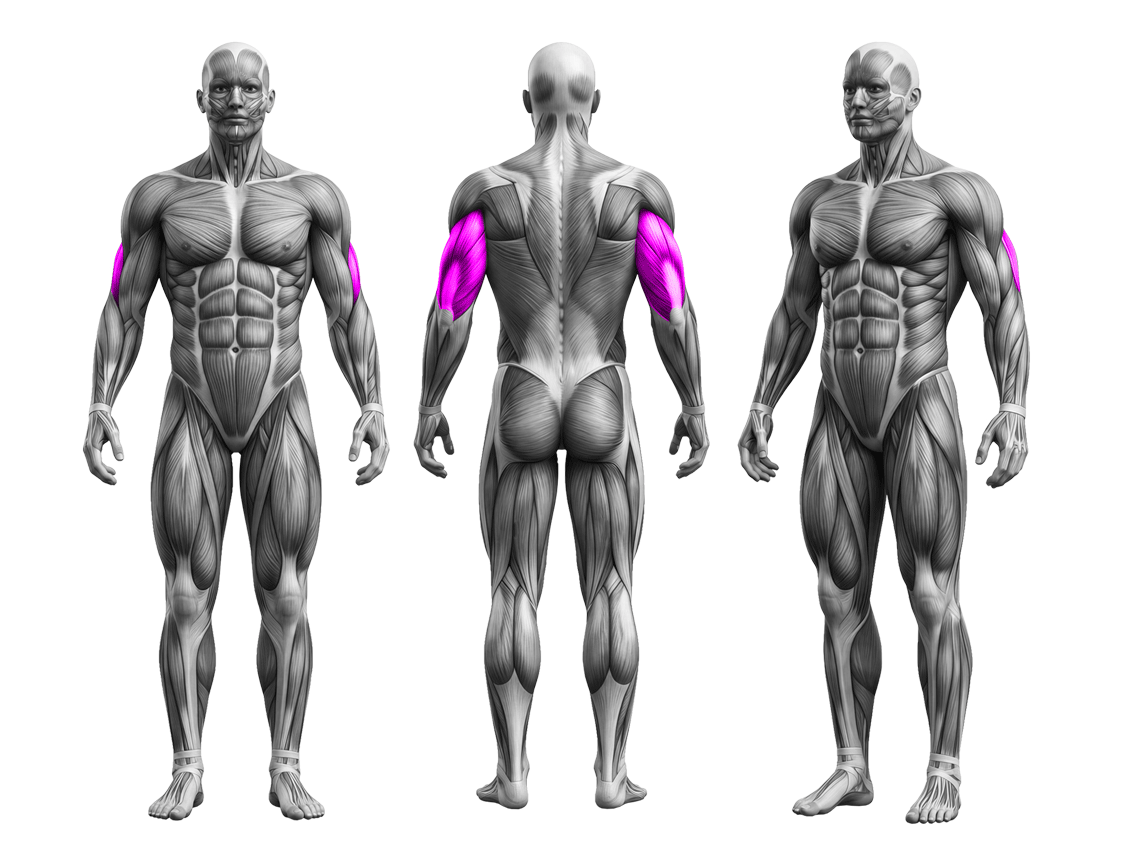
Triceps Brachii (all three heads — lateral, medial and long)
Primary
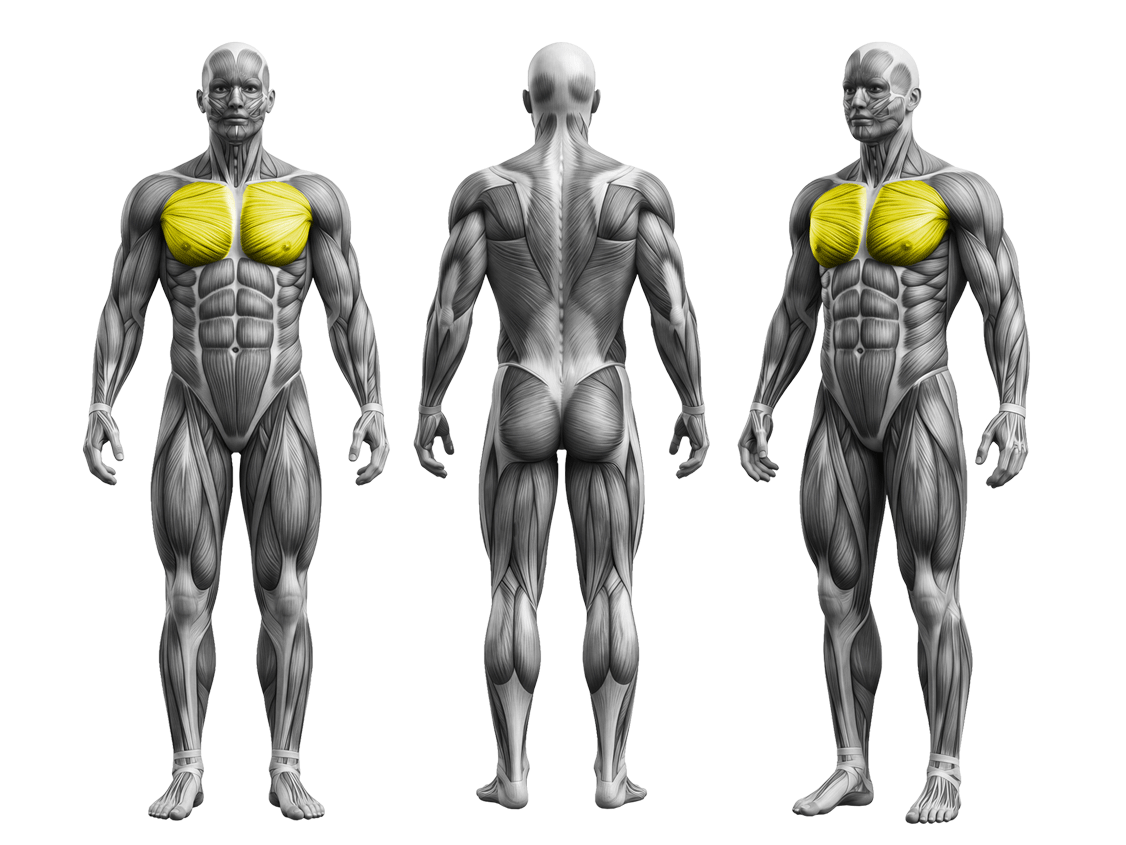
Pectoralis Major (Lower / Sternal Head)
Assisting
Anterior Deltoids
Assisting
Recommended Equipment

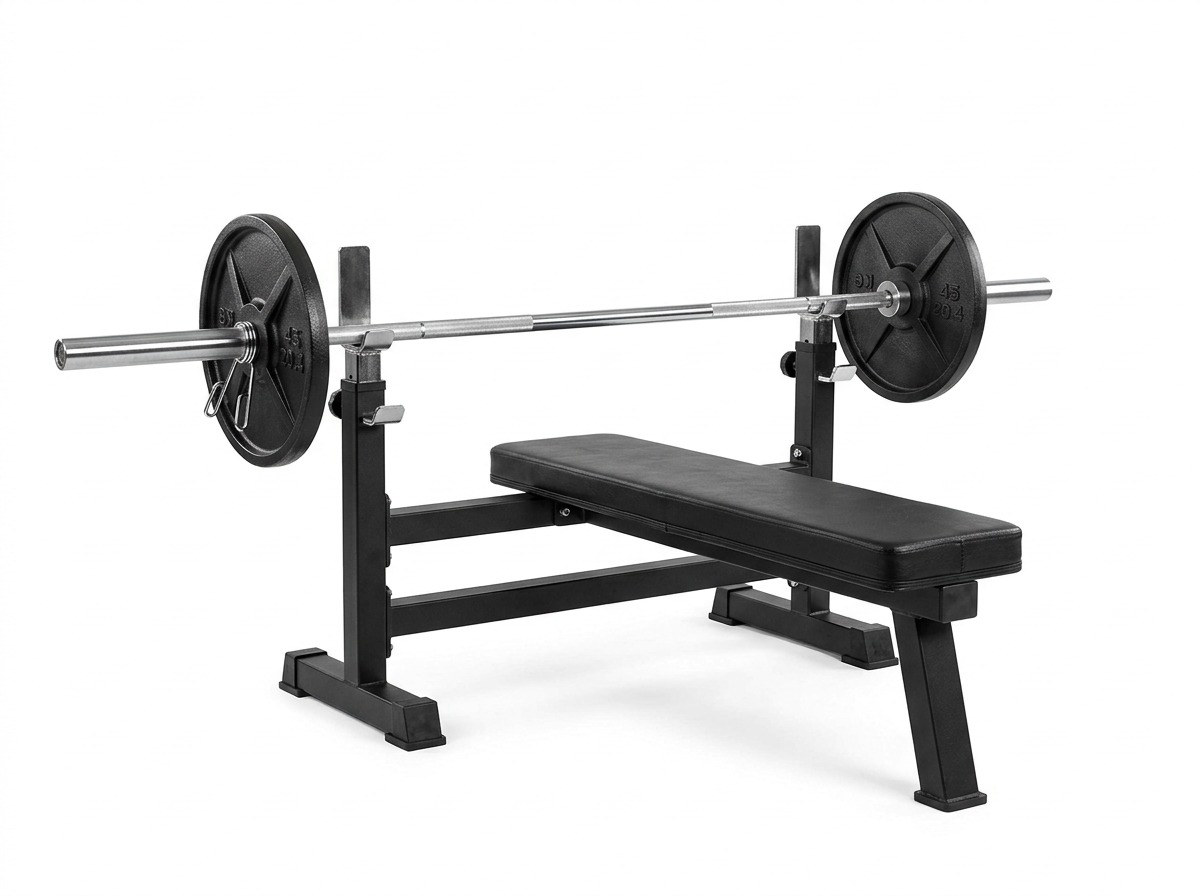
Barbell & Flat Bench (in a rack with safeties)
A straight barbell on a flat bench, ideally set up inside a power rack or on a bench with adjustable safety arms. The standard Olympic bar is 20 kg on its own — if that's already too much, use a lighter fixed-weight bar, a shorter studio bar, or an EZ bar with the narrowest set of angled grips. Set the safeties just below your chest height so that if a rep stalls, the bar has somewhere to land. This is a heavy pressing movement over your body: never train it to failure without either safeties or a spotter.

Exercise Instructions

Close-Grip Barbell Bench Press

(
Narrow-Grip Bench Press / Triceps Bench Press
)
Exercise guide — Setup / Technique / Tips / Mistakes

Why this one is in the program

This is the heaviest triceps exercise you'll ever do.

Pushdowns, extensions, kickbacks — they're all good, but they're all light. This is the only triceps movement where you can load a barbell and add weight for years. And the triceps make up roughly two thirds of your arm. If you want sleeves to get tight, this does more than any curl.

The reason it works is simple: bring your hands in close and the bench press stops being a chest exercise. Your elbows tuck to your sides, the range gets longer, and your triceps have to finish every single rep. Same lift, same bar, completely different target.

It's also the safest heavy pressing you can do for your shoulders. Elbows flared out wide is where shoulders get wrecked over the years. Elbows tucked in is a much friendlier position — and it happens to be exactly the position that hits the triceps hardest.

One thing to be clear on before we start: close does not mean hands touching. Shoulder width — roughly the width of your chest — is the grip. Go narrower than that and you won't feel more triceps, you'll just feel your wrists. More on that below.

Setup

  • Lie flat on the bench, eyes under the bar.
  • Grip the bar at roughly shoulder width — about chest width, your index fingers near the smooth part of the knurling.
  • Keep your wrists straight and stacked over your forearms, not bent back.
  • Plant your feet flat and drive them into the floor.
  • Pull your shoulder blades down and back and squeeze them into the bench.
  • Unrack the bar and hold it over your lower chest with straight arms.

Why the setup does the work here

Grip width is the entire exercise, and it's a narrow window.

Too wide and you're just benching — the chest takes over and the triceps get leftovers. Too narrow, hands a few inches apart, and you'll feel it in your wrists long before your triceps: the bar forces your wrists to bend backwards under load and your elbows flare out to compensate, which is the exact opposite of what you want. Shoulder width is the answer. It's close enough to load the triceps hard, wide enough to keep your wrists stacked and your elbows tucked.

The shoulder blades matter too. Pinned down and back into the bench gives you a stable platform to press from and keeps your shoulders out of trouble. Loose shoulders under a heavy bar is how people get hurt.

And keep your feet driving into the floor. That's not for show — it's what stops your hips shifting around when the weight gets heavy.

Technique

  • Lower the bar under control to your lower chest, just below the nipple line.
  • Keep your elbows tucked at roughly 30–45° from your body — never flared out wide.
  • Touch lightly, no bouncing off the ribs.
  • Drive the bar back up in a straight line over your lower chest.
  • Finish the rep — lock the elbows out fully and squeeze the triceps hard for a beat.
  • Lower again for 2–3 seconds under control.
  • Keep your wrists straight the entire time.

Why technique decides everything here

Two cues make or break this lift.

First: elbows in. The moment they flare out, the exercise walks straight back to your chest. Think about brushing your elbows past your ribs on the way down. Tucked elbows, bar to the lower chest, triceps do the work.

Second: finish every rep. This is the one people skip. The last few inches — where your arms straighten and lock out — is where the triceps contract hardest. Stop short of lockout and you've cut off the best part of the movement. Push all the way up, straighten the arms, and squeeze the triceps for a full second at the top. You should feel them clamp. If you don't, you're not finishing.

And watch your wrists. Bent-back wrists mean your grip is too narrow or your bar path is wrong. Wrists stacked straight over your forearms, always.

Common Mistakes

  • Gripping far too narrow — hands close together, wrists bent, shoulders taking the strain.
  • Flaring the elbows out, turning it back into a chest press.
  • Lowering the bar to the upper chest or neck instead of the lower chest.
  • Not locking out at the top — cutting off the hardest triceps contraction.
  • Bouncing the bar off the chest.
  • Letting the wrists bend back under the load.
  • Letting the shoulder blades unpin and roll forward mid-set.
  • Taking it to failure with a heavy bar and no spotter.

Where people lose results

This lift goes wrong in a very specific way, and it's almost always the grip.

Too wide and you're doing bench press with extra steps. It feels strong, the numbers look good, and your triceps get almost nothing while your chest quietly takes the set. If your elbows are drifting out, that's your answer.

Too narrow and your wrists pay for your triceps. Hands a few inches apart doesn't add triceps — it bends your wrists back under a loaded bar and pushes your elbows out anyway. You get the joint stress without the benefit. Chest width, wrists straight. That's the window.

Then the weight itself, both directions. Too heavy and the tuck disappears, the elbows flare, and you stop locking out at the top — you're back to a chest press with a bad path. Too light and you'll press it clean fifteen times with reps to spare, which trains nothing. The weight is right when your elbows stay tucked, your wrists stay straight, you lock out every single rep, and the last reps are genuinely hard.

And one more, which quietly costs the most: half lockouts. Under fatigue, people shorten the top of the rep without noticing. The bar stops two inches from straight. That's exactly where the triceps work hardest — cut it and you've removed the reason this exercise exists. Every rep, arms straight, triceps squeezed.

Last thing: this is a heavy barbell compound, so it never goes to failure. Stop 1–2 reps short on your working sets, and always use a rack with safeties or a spotter. Save failure for your pushdowns and extensions later, where nothing can land on you.
Target Muscles
Triceps Brachii (all three heads — lateral, medial and long)
Primary
Pectoralis Major (Lower / Sternal Head)
Assisting
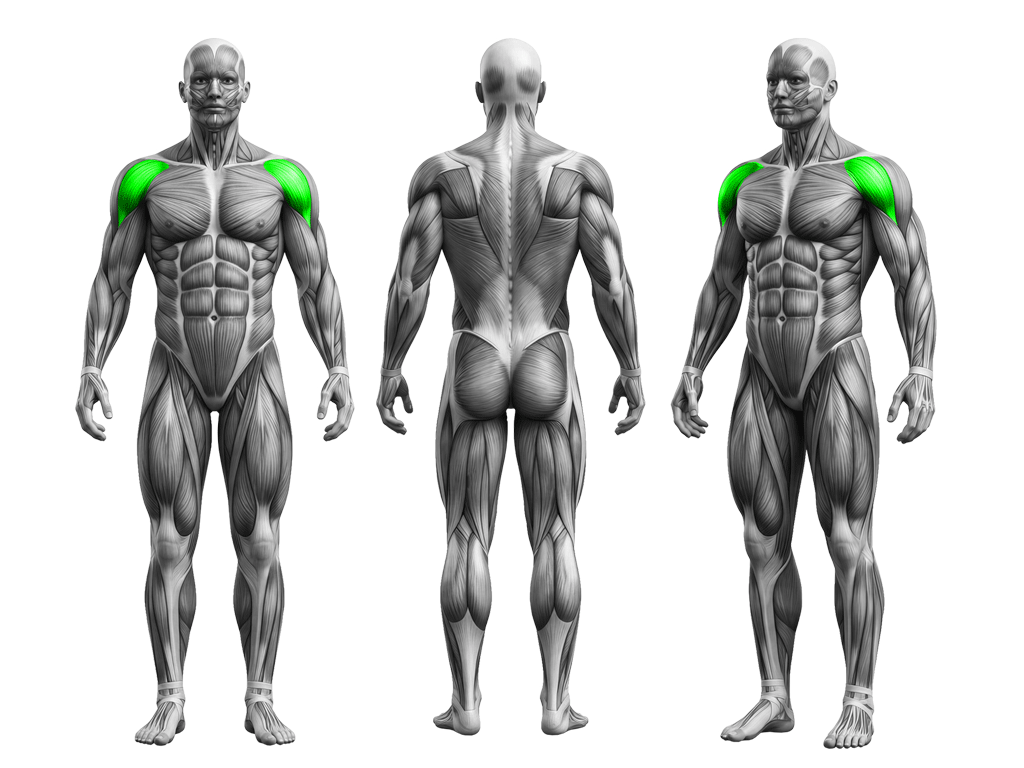
Anterior Deltoids
Assisting
Recommended Equipment

Barbell & Flat Bench (in a rack with safeties)
A straight barbell on a flat bench, ideally set up inside a power rack or on a bench with adjustable safety arms. The standard Olympic bar is 20 kg on its own — if that's already too much, use a lighter fixed-weight bar, a shorter studio bar, or an EZ bar with the narrowest set of angled grips. Set the safeties just below your chest height so that if a rep stalls, the bar has somewhere to land. This is a heavy pressing movement over your body: never train it to failure without either safeties or a spotter.
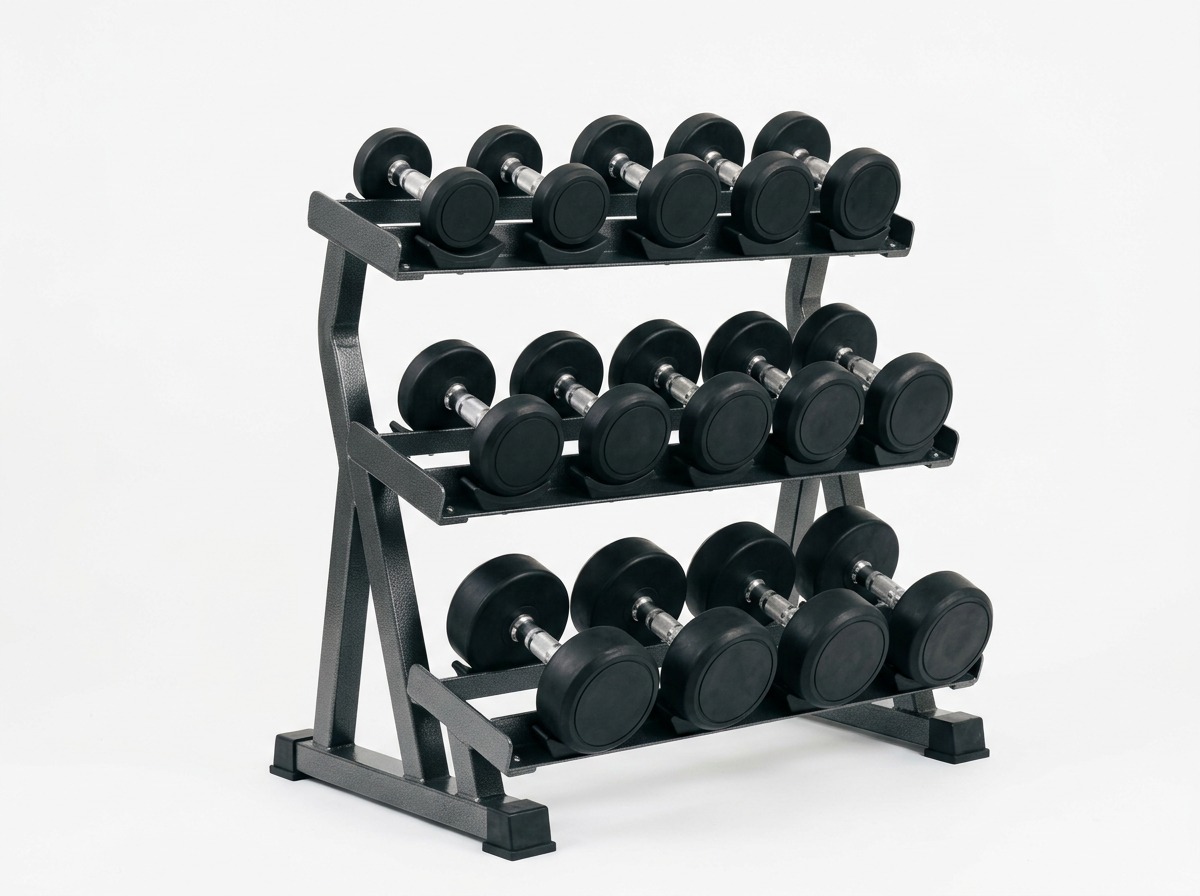
Dumbbells (as the wrist-friendly substitute) or Wrist Wraps (optional)
If the straight bar bothers your wrists no matter how you set the grip, swap to dumbbells held with a neutral grip, palms facing each other. Your wrists sit in their natural position, your elbows tuck automatically, and the triceps get the same job. Wrist wraps are the other option: a short elastic strap wrapped snug around the wrist joint to stop it bending back under a heavy bar. They're not required, and they don't fix a grip that's too narrow — fix the grip first, then add wraps only if you still want the extra support on your heaviest sets.

Gym Alternative
Smith Machine Close-Grip Bench Press

The bar runs on a fixed track with hooks you can rotate into at any point, so you can push much closer to your limit without a spotter. You lose some stabiliser work, you gain the ability to train the triceps hard and safely. Best swap if you train alone.

Additional gym alternatives, best to worst:

Additional gym alternatives, best to worst:

  1. Close-Grip Dumbbell Press (neutral grip, palms facing each other — very wrist-friendly)
  2. Weighted Dips, torso upright (heaviest bodyweight triceps movement there is)
  3. Machine Dip / Triceps Press Machine (fixed path, safe to push near failure)
  4. JM Press (a hybrid of close-grip bench and a skull crusher — brutal on the triceps)
  5. EZ-Bar Skull Crusher (lighter, but hits the long head much harder)
Home Alternative
Narrow Push-Ups

The closest thing to this exercise you can do with nothing but the floor. Hands under your chest at roughly shoulder width, elbows brushing your sides on the way down, and a full lockout at the top with the triceps squeezed. Same movement pattern, same target, same rules — only the load changes.

Additional home alternatives:

Additional home alternatives:

  1. Diamond / Narrow Push-Ups — hands under your chest, elbows brushing your sides
  2. Elevated-Feet Narrow Push-Ups — feet on a chair or bed to add load
  3. Bench Dips — hands on a chair behind you, feet out in front
  4. Backpack Close-Grip Floor Press — loaded backpack held with both hands
  5. Band Triceps Extension / Band Close-Grip Press — band anchored behind you
  6. Close-Grip Dumbbell Floor Press — lie on the floor, two dumbbells held with palms facing each other, elbows tucked tight to your ribs.