Consistency training
No perfect days. Just consistent ones.
Back to workout

Exercise Instructions

EZ-Bar Cable Triceps Pushdown

V-Bar Pushdown
Exercise guide — Setup / Technique / Tips / Mistakes

Why this one is in the program

If the overhead extension builds your triceps, this is what finishes them.

Your arms are down at your sides here, and in that position the long head takes a back seat — the lateral head does most of the work. That's the outer head, the one that gives your arm that horseshoe shape you see from the side when it's developed. Overhead work and pushdowns are not the same exercise twice. They hit different heads, and you want both.

I use the EZ-bar attachment rather than a rope here on purpose. The rope is great when you want to spread your hands and chase the squeeze. The bar is great when you want to move weight. It's rigid, your hands can't drift, both arms are forced to work evenly, and you can load it far heavier than a rope while keeping your form locked. That makes it the better tool for actual progression.

And the angled grips matter. A straight bar forces your wrists into a bent, awkward position under load — after a few weeks your wrists complain before your triceps do. The angled EZ handle lets your wrists sit naturally, so you can push hard without paying for it.

It's also the safest hard-triceps work you'll do. No bar over your body, nothing to drop. This is where you can genuinely push to failure at the end of a session.

But here's the thing almost nobody gets right: where you stand. Get that wrong and you'll spend years using half the weight you're capable of. Read the setup carefully.

Setup

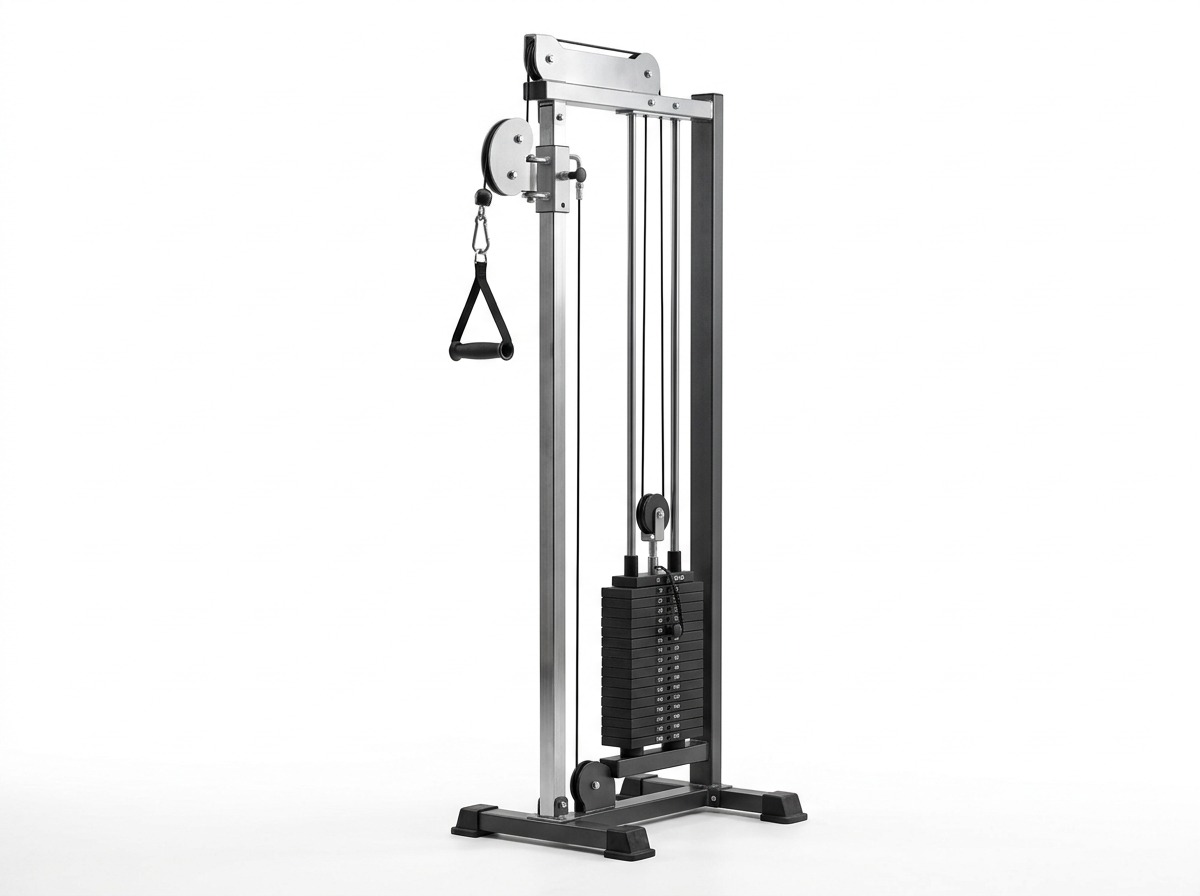
  • Set the pulley to the top position and attach the EZ-bar (angled) handle.
  • Stand facing the machine and grip the bar overhand on the angled sections, hands at about shoulder width.
  • Step back so your hands sit roughly under the pulley when your elbows are at your sides — about half an arm's length from the stack.
  • Feet hip-width, or one foot slightly staggered for stability.
  • Lean your torso forward just slightly — maybe 10°, chest up, abs braced.
  • Pull your elbows in and pin them to your sides.
  • Start with your forearms roughly parallel to the floor, triceps stretched. That's the top.

Why the setup does the work here

Your distance from the machine decides how much weight you can use. Not your triceps — your feet.

Stand too far back and the cable pulls you forward the whole set. Now your abs, your lower back and your legs are all fighting just to keep you upright. You feel strong, but you're stabilising, not pressing — and the moment the weight gets heavy, the cable wins and you start leaning into it. You'll cap out at a weight far below what your triceps can actually handle.

Stand too close and you get the opposite problem. The cable comes down almost on top of your hands, there's no clean line for your forearms to travel, and you end up shortening the rep or pushing the bar out and away just to get around the cable. The path is wrong, and the tension at the top disappears.

The sweet spot: close enough that the cable runs in a straight line down through your hands, far enough that nothing gets in the way. When your elbows are at your sides, your hands should sit roughly under the pulley. Find that spot once and mark it — same position every single set.

Then pin the elbows. That's the hinge, and the whole exercise depends on it staying put.

Technique

  • Start with your elbows at your sides and your forearms parallel to the floor.
  • Keep your upper arms completely still — only your forearms move.
  • Push the bar down until your arms are fully straight.
  • Squeeze the triceps hard for one full second at the bottom.
  • Let the bar rise slowly, 2–3 seconds, back to the start.
  • Let your forearms come up until you feel the triceps stretch — don't cut it short.
  • Keep your torso frozen. The bar moves, you don't.
  • Keep your wrists straight and stacked over your forearms.

Why technique decides everything here

Your elbows are the hinge, and a hinge doesn't travel. Pin them to your ribs and forget them. The second your elbows drift forward or your upper arms swing, your shoulders and lats take over and your triceps get a break. This is the single most common way this exercise is ruined.

Your torso stays frozen. The classic cheat is leaning your bodyweight into the bar as it gets hard — a little dip of the chest on every rep. It lets you move a lot more weight and it moves it with your body, not your arms. If you're rocking, the weight is wrong.

Finish every rep. Full lockout, arms straight, one honest second of squeeze. The last few degrees are exactly where the triceps contract hardest. Under fatigue people quietly stop short — the bar ends up two inches from straight and the best part of the exercise disappears.

And use the top of the rep. Let your forearms travel up until you feel the stretch, then start the next one. Half reps at the top are wasted range. Slow up, hard squeeze, full lockout.

Common Mistakes

  • Standing too far from the stack and getting dragged forward.
  • Standing too close, so the cable interferes with the bar path.
  • Elbows drifting forward or flaring out wide.
  • Swinging the upper arms and turning it into a shoulder and lat movement.
  • Leaning the bodyweight into the bar to force out reps.
  • Not locking out fully at the bottom.
  • Cutting the top short and skipping the stretch.
  • Letting the wrists bend back under the load.
  • Letting the stack snap the bar back up instead of controlling it.

Where people lose results

Most people are quietly using half the weight they're capable of on this exercise — and it has nothing to do with their triceps. It's where they're standing.

Stand too far back and the cable drags you forward all set. Your core and your lower back end up doing real work just to hold you in place, and your triceps never become the limiting factor. It feels hard, so you assume the weight is right. It isn't — you're just tired from stabilising. Stand too close and the cable crowds your hands, the bar path goes crooked, and you shorten the rep to get around it.

Fix your position and the weight jumps immediately. Elbows at your sides, hands under the pulley, slight forward lean, feet planted. From there the only thing that can move the bar is your triceps, and you'll find you can load noticeably more than before with cleaner form. Find that spot, remember it, and stand there every time.

Then watch the other direction. Once you can handle real weight, too heavy announces itself fast: the elbows start drifting, the torso starts rocking, and the lockout disappears. At that point you're doing a standing press with your bodyweight. If your elbows won't stay pinned, drop a plate.

And the third one, which costs the most over time: half reps at both ends. Under fatigue this exercise shrinks. The bar stops short of straight at the bottom and never travels high enough at the top. You end up pumping a heavy stack through the middle six inches of the range. Full stretch up, full lockout down, every rep.

The good news: this is a cable exercise with nothing above your body, so this is exactly where failure belongs. Push the last set all the way — take it to failure, add a dropset if you want. Just make sure the reps that got you there were real ones. Stay in the 10–20 rep range, and once every working set hits the top of that range with clean form, move the pin up one.
Target Muscles
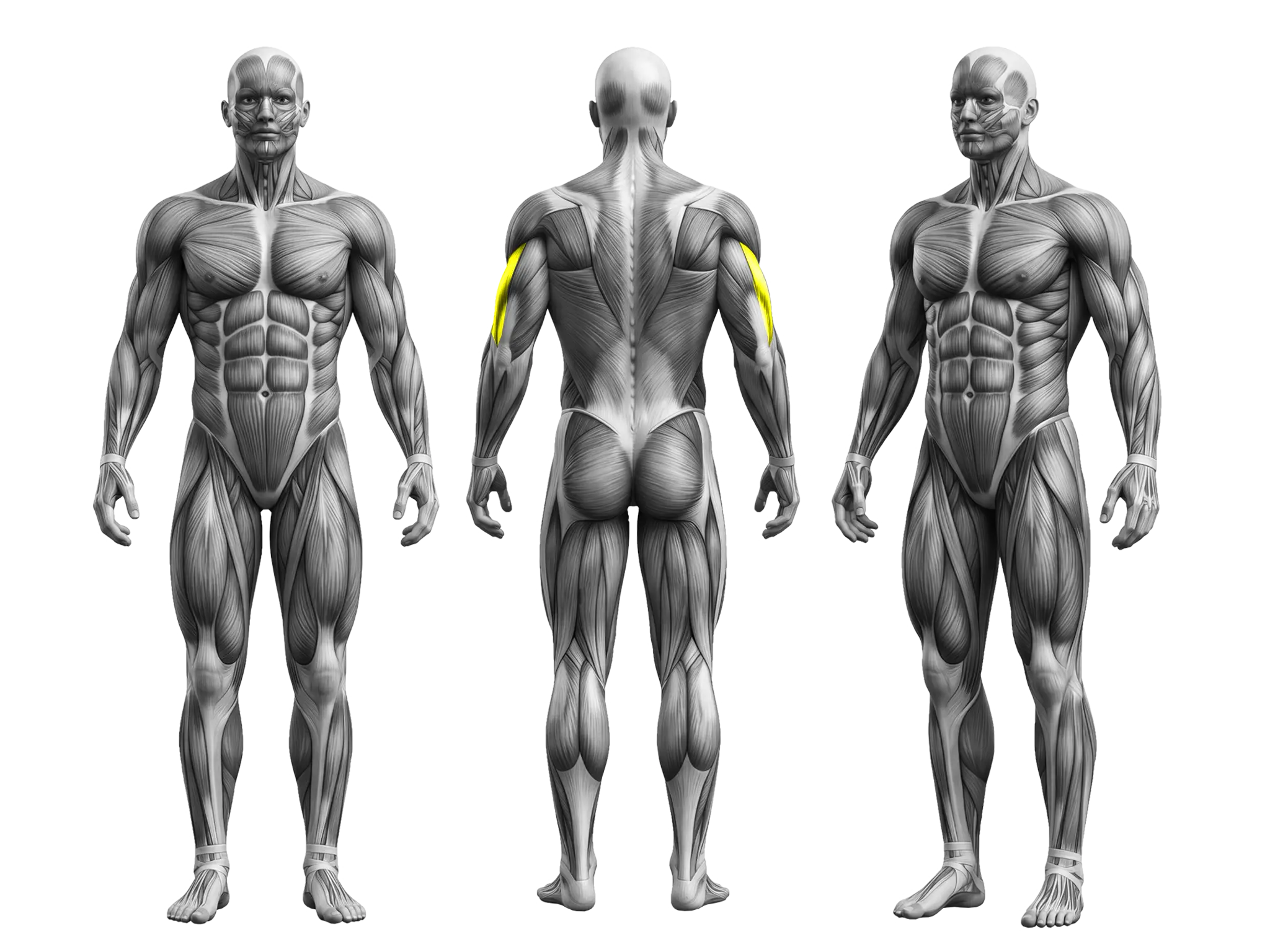
Triceps Brachii — Lateral Head
Primary
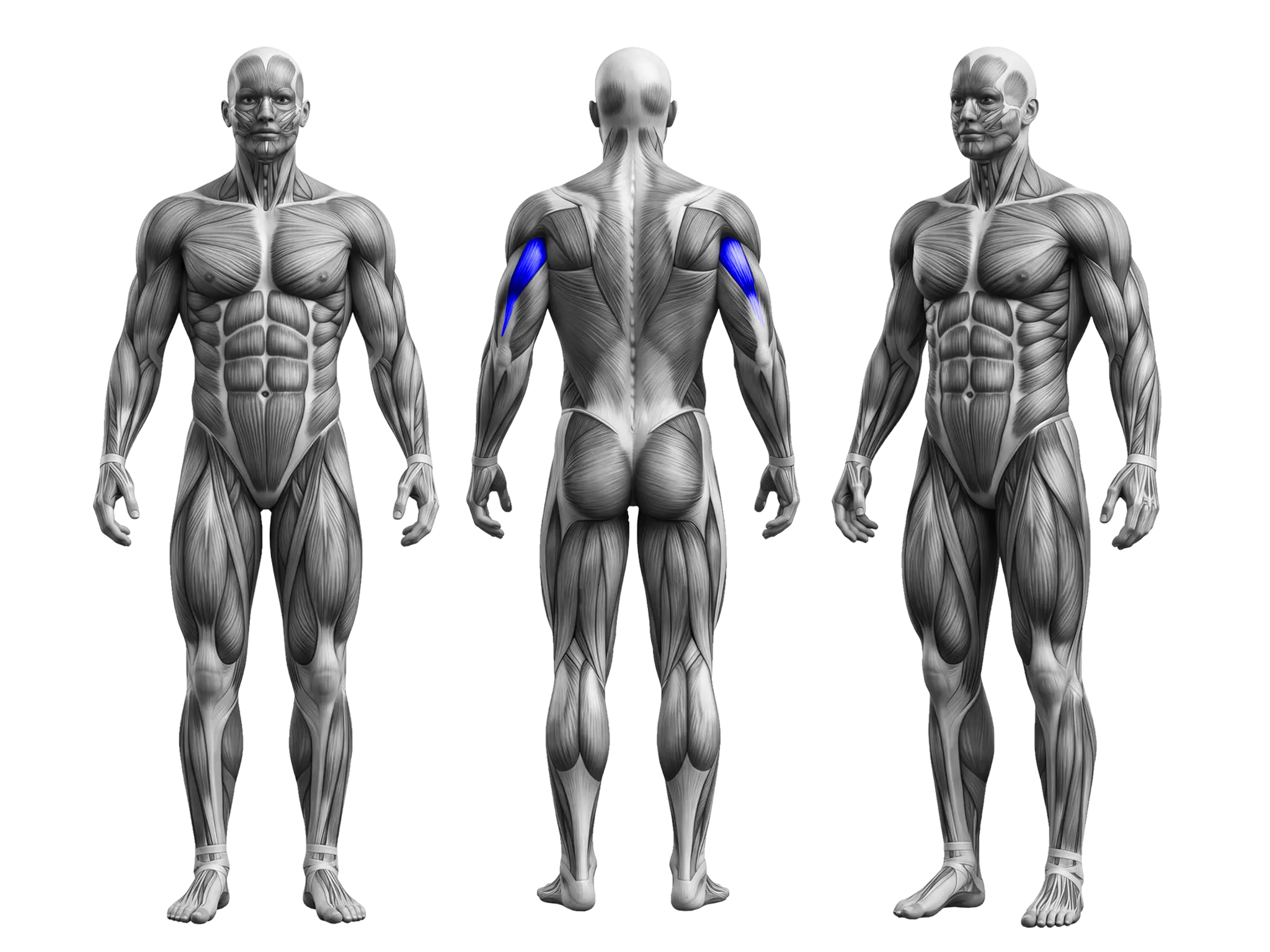
Triceps Brachii — Medial Head
Assisting
Triceps Brachii — Long Head, Anconeus & Forearm Flexors
Assisting
Recommended Equipment

Cable Machine with High Pulley
Any cable column or pulldown station where the pulley sits at or near the top. Set it to the highest position so the cable runs straight down through your hands. Your distance from the stack is the setting that matters most here: stand so that with your elbows pinned to your sides, your hands sit roughly under the pulley — about half an arm's length away. Too far back and the cable drags you forward all set; too close and it gets in the way of the bar path. Find that spot once and stand in exactly the same place every session. The cable is the right tool because tension never drops off — the triceps are loaded from the stretch at the top right through to full lockout.

Exercise Instructions

EZ-Bar Cable Triceps Pushdown

(
V-Bar Pushdown
)
Exercise guide — Setup / Technique / Tips / Mistakes

Why this one is in the program

If the overhead extension builds your triceps, this is what finishes them.

Your arms are down at your sides here, and in that position the long head takes a back seat — the lateral head does most of the work. That's the outer head, the one that gives your arm that horseshoe shape you see from the side when it's developed. Overhead work and pushdowns are not the same exercise twice. They hit different heads, and you want both.

I use the EZ-bar attachment rather than a rope here on purpose. The rope is great when you want to spread your hands and chase the squeeze. The bar is great when you want to move weight. It's rigid, your hands can't drift, both arms are forced to work evenly, and you can load it far heavier than a rope while keeping your form locked. That makes it the better tool for actual progression.

And the angled grips matter. A straight bar forces your wrists into a bent, awkward position under load — after a few weeks your wrists complain before your triceps do. The angled EZ handle lets your wrists sit naturally, so you can push hard without paying for it.

It's also the safest hard-triceps work you'll do. No bar over your body, nothing to drop. This is where you can genuinely push to failure at the end of a session.

But here's the thing almost nobody gets right: where you stand. Get that wrong and you'll spend years using half the weight you're capable of. Read the setup carefully.

Setup

  • Set the pulley to the top position and attach the EZ-bar (angled) handle.
  • Stand facing the machine and grip the bar overhand on the angled sections, hands at about shoulder width.
  • Step back so your hands sit roughly under the pulley when your elbows are at your sides — about half an arm's length from the stack.
  • Feet hip-width, or one foot slightly staggered for stability.
  • Lean your torso forward just slightly — maybe 10°, chest up, abs braced.
  • Pull your elbows in and pin them to your sides.
  • Start with your forearms roughly parallel to the floor, triceps stretched. That's the top.

Why the setup does the work here

Your distance from the machine decides how much weight you can use. Not your triceps — your feet.

Stand too far back and the cable pulls you forward the whole set. Now your abs, your lower back and your legs are all fighting just to keep you upright. You feel strong, but you're stabilising, not pressing — and the moment the weight gets heavy, the cable wins and you start leaning into it. You'll cap out at a weight far below what your triceps can actually handle.

Stand too close and you get the opposite problem. The cable comes down almost on top of your hands, there's no clean line for your forearms to travel, and you end up shortening the rep or pushing the bar out and away just to get around the cable. The path is wrong, and the tension at the top disappears.

The sweet spot: close enough that the cable runs in a straight line down through your hands, far enough that nothing gets in the way. When your elbows are at your sides, your hands should sit roughly under the pulley. Find that spot once and mark it — same position every single set.

Then pin the elbows. That's the hinge, and the whole exercise depends on it staying put.

Technique

  • Start with your elbows at your sides and your forearms parallel to the floor.
  • Keep your upper arms completely still — only your forearms move.
  • Push the bar down until your arms are fully straight.
  • Squeeze the triceps hard for one full second at the bottom.
  • Let the bar rise slowly, 2–3 seconds, back to the start.
  • Let your forearms come up until you feel the triceps stretch — don't cut it short.
  • Keep your torso frozen. The bar moves, you don't.
  • Keep your wrists straight and stacked over your forearms.

Why technique decides everything here

Your elbows are the hinge, and a hinge doesn't travel. Pin them to your ribs and forget them. The second your elbows drift forward or your upper arms swing, your shoulders and lats take over and your triceps get a break. This is the single most common way this exercise is ruined.

Your torso stays frozen. The classic cheat is leaning your bodyweight into the bar as it gets hard — a little dip of the chest on every rep. It lets you move a lot more weight and it moves it with your body, not your arms. If you're rocking, the weight is wrong.

Finish every rep. Full lockout, arms straight, one honest second of squeeze. The last few degrees are exactly where the triceps contract hardest. Under fatigue people quietly stop short — the bar ends up two inches from straight and the best part of the exercise disappears.

And use the top of the rep. Let your forearms travel up until you feel the stretch, then start the next one. Half reps at the top are wasted range. Slow up, hard squeeze, full lockout.

Common Mistakes

  • Standing too far from the stack and getting dragged forward.
  • Standing too close, so the cable interferes with the bar path.
  • Elbows drifting forward or flaring out wide.
  • Swinging the upper arms and turning it into a shoulder and lat movement.
  • Leaning the bodyweight into the bar to force out reps.
  • Not locking out fully at the bottom.
  • Cutting the top short and skipping the stretch.
  • Letting the wrists bend back under the load.
  • Letting the stack snap the bar back up instead of controlling it.

Where people lose results

Most people are quietly using half the weight they're capable of on this exercise — and it has nothing to do with their triceps. It's where they're standing.

Stand too far back and the cable drags you forward all set. Your core and your lower back end up doing real work just to hold you in place, and your triceps never become the limiting factor. It feels hard, so you assume the weight is right. It isn't — you're just tired from stabilising. Stand too close and the cable crowds your hands, the bar path goes crooked, and you shorten the rep to get around it.

Fix your position and the weight jumps immediately. Elbows at your sides, hands under the pulley, slight forward lean, feet planted. From there the only thing that can move the bar is your triceps, and you'll find you can load noticeably more than before with cleaner form. Find that spot, remember it, and stand there every time.

Then watch the other direction. Once you can handle real weight, too heavy announces itself fast: the elbows start drifting, the torso starts rocking, and the lockout disappears. At that point you're doing a standing press with your bodyweight. If your elbows won't stay pinned, drop a plate.

And the third one, which costs the most over time: half reps at both ends. Under fatigue this exercise shrinks. The bar stops short of straight at the bottom and never travels high enough at the top. You end up pumping a heavy stack through the middle six inches of the range. Full stretch up, full lockout down, every rep.

The good news: this is a cable exercise with nothing above your body, so this is exactly where failure belongs. Push the last set all the way — take it to failure, add a dropset if you want. Just make sure the reps that got you there were real ones. Stay in the 10–20 rep range, and once every working set hits the top of that range with clean form, move the pin up one.
Target Muscles
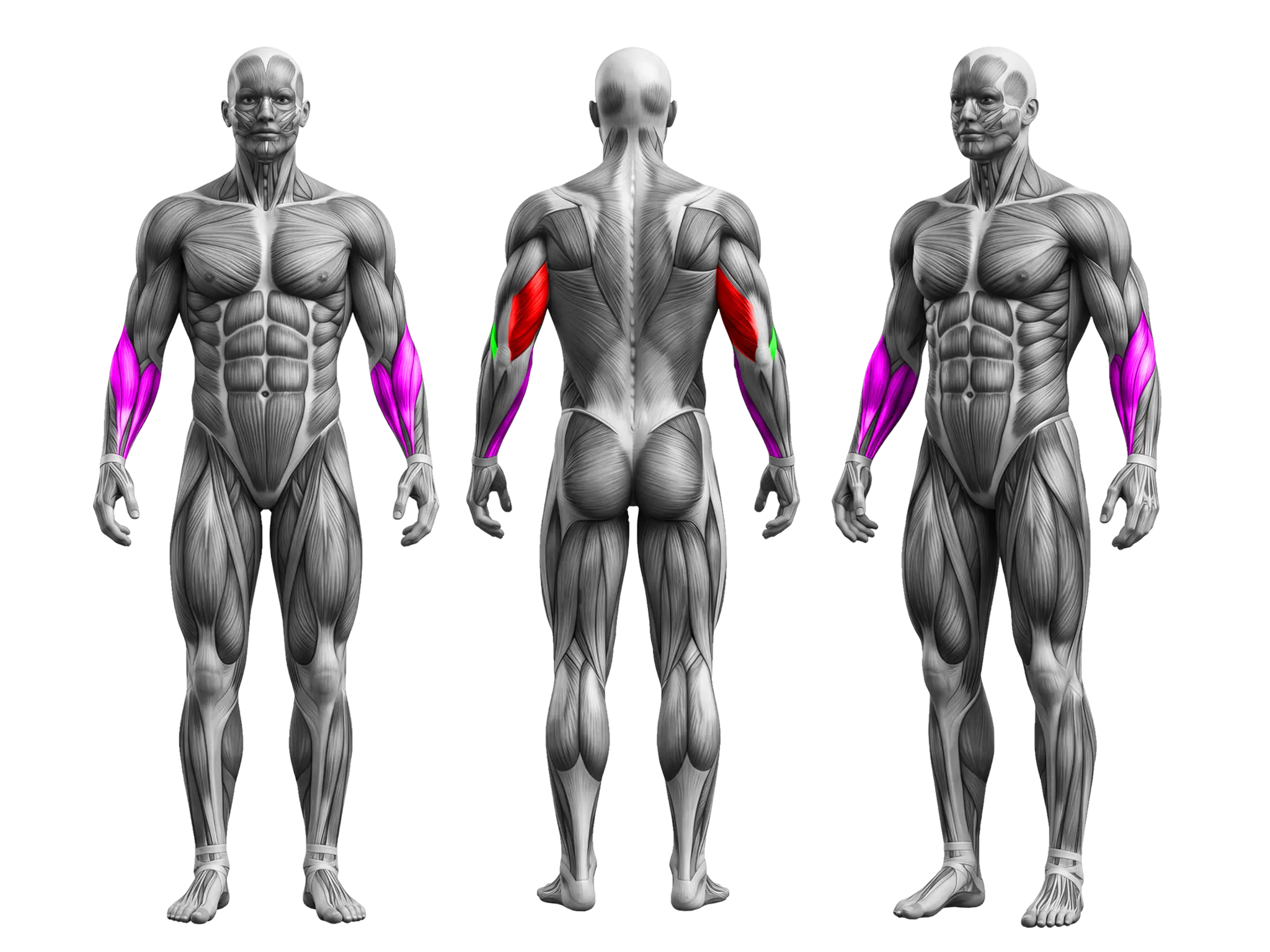
Triceps Brachii — Lateral Head
Primary
Triceps Brachii — Medial Head
Assisting
Triceps Brachii — Long Head, Anconeus & Forearm Flexors
Assisting
Recommended Equipment

Cable Machine with High Pulley
Any cable column or pulldown station where the pulley sits at or near the top. Set it to the highest position so the cable runs straight down through your hands. Your distance from the stack is the setting that matters most here: stand so that with your elbows pinned to your sides, your hands sit roughly under the pulley — about half an arm's length away. Too far back and the cable drags you forward all set; too close and it gets in the way of the bar path. Find that spot once and stand in exactly the same place every session. The cable is the right tool because tension never drops off — the triceps are loaded from the stretch at the top right through to full lockout.
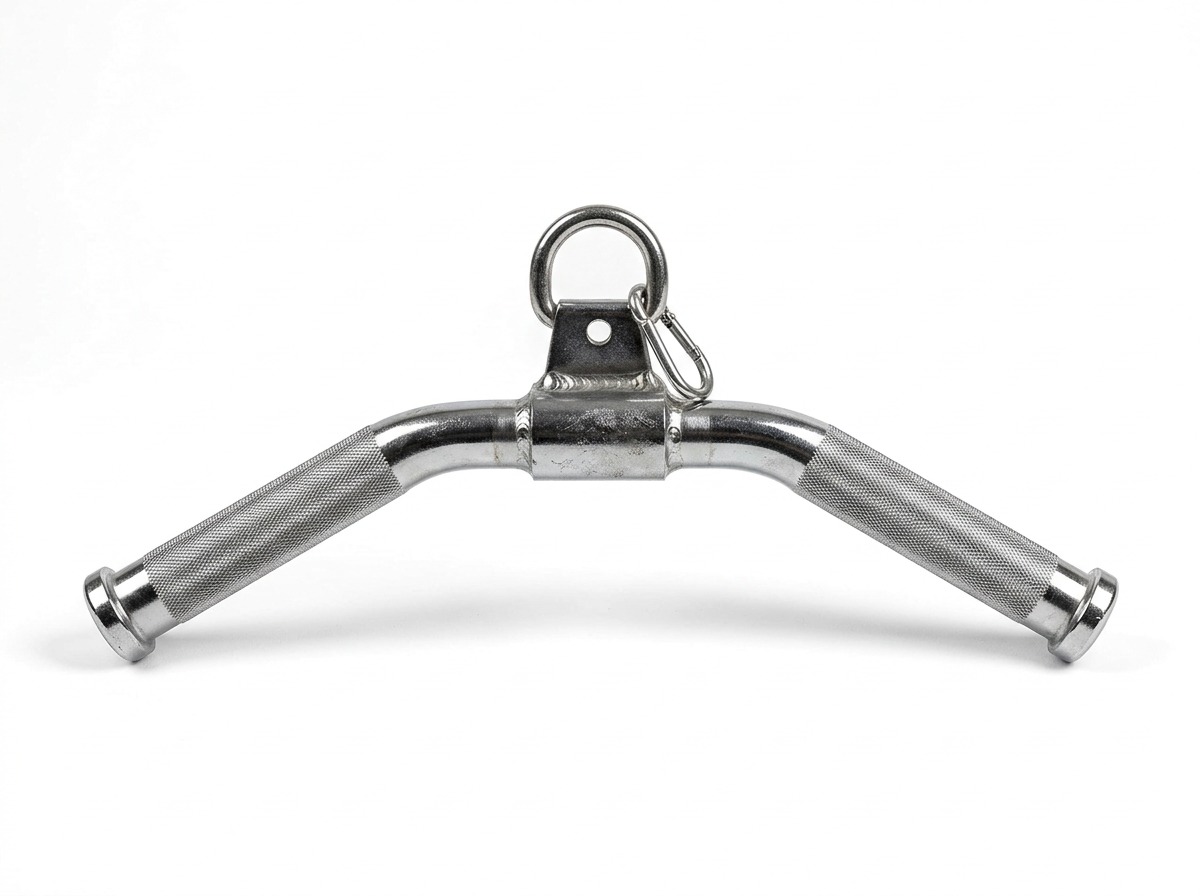
EZ-Bar / Angled Pushdown Handle
The short rigid bar with angled grip sections, clipped to the high pulley. Take it overhand at roughly shoulder width, hands on the angled parts. The angle is the whole point: it lets your wrists sit in their natural position instead of bending back the way a straight bar forces them, so you can push heavy for years without your wrists ending the set before your triceps do. A rigid bar also means your hands can't drift and both arms are forced to work evenly — which is exactly what you want when the goal is moving real weight. If your gym only has a V-bar or a straight bar, either works; the V-bar is the closer substitute.

Gym Alternative
Straight-Bar Cable Pushdown

Same exercise, same setup, same cues, with a rigid straight bar instead of the angled EZ handle. Just as heavy and just as stable. The only trade-off is your wrists: the straight bar forces them into a slightly bent position, so if your wrists start complaining, that's your signal to go back to the angled bar.

Additional gym alternatives, best to worst:

Additional gym alternatives, best to worst:

  1. V-Bar / Angled-Handle Pushdown (another rigid grip, very close to this)
  2. Reverse-Grip Cable Pushdown (underhand, single bar — hits the medial head harder)
  3. Single-Arm Cable Pushdown (one side at a time, fixes imbalances, big squeeze)
  4. Rope Pushdown (lighter, but you can spread the hands at the bottom for a harder contraction)
  5. Machine Triceps Extension / Dip Machine (fixed path, safe to push near failure)
Home Alternative
Resistance Band Triceps Pushdown

Anchor a band over a door, a bar or a hook above head height, stand in the same position, elbows pinned, and push down to a full lockout. The band gets harder the further you push, which lines up almost perfectly with how your triceps get stronger through the rep. It's the closest home match there is.

Additional home alternatives:

Additional home alternatives:

  1. Feet-Elevated Narrow Push-Ups — feet on a chair or bed, hands under the chest, elbows brushing the sides
  2. Bench Dips — hands on a chair behind you, feet out in front, legs straight to make it harder
  3. Overhead Band Triceps Extension — band under both feet, arms overhead
  4. Lying Dumbbell Skull Crusher on the floor or a bench
  5. Bodyweight Triceps Extension — hands on a table edge, body leaning forward, lower the forehead toward the hands and press back out