Exercise Instructions
Hammer Strength Chest Press

Exercise Guide (technique / how to / mistakes)
Why this one is in the program
This is where you push your chest hard without having to think about anything else.
A barbell press makes you balance the weight, keep your shoulders pinned and watch out for the bar above you. The hammer does none of that. You sit down, the machine holds the path, and the only job left is pressing. That means you can take this one much closer to failure than any barbell lift — there's nothing to drop and nothing to get stuck under.
The second advantage is the handles move separately. Each side works alone, so a stronger arm can't carry a weaker one. That's why it's called iso-lateral.
And the path is built to curve slightly inward as you press, which means your chest actually squeezes at the top — something a straight bar can't give you.
One thing before you start: most hammers adjust. Seat height, sometimes backrest angle. Spend thirty seconds setting it up for yourself and this exercise goes from average to excellent.
Setup
- Sit down and adjust the seat first.
- Set the height so the handles sit at about mid-chest to armpit level — never up by your shoulders or neck.
- Press your whole back into the pad.
- Plant both feet flat on the floor.
- Push your chest up and out — proud chest, ribcage lifted.
- Pull your shoulders down and back, away from your ears.
- Grip the handles and press out once to feel the position.
If it feels wrong, change the seat. Press out and check: do you feel it across your chest, or in the front of your shoulders? If it's your shoulders, the seat is too low — raise it a notch and try again. Every hammer is built a bit differently, so take a moment to find your setting and remember it.
Why the setup does the work here
Seat height decides which muscle gets the work. Too low and the handles end up near your shoulders, so you're pressing upward — that's a shoulder exercise. Too high and the angle gets awkward and short. Handles at mid-chest level is the window where your chest does the pressing.
The proud chest is the second half of it. Ribcage up, shoulders pulled back into the pad. That puts your chest in its strongest, most stretched position. Sit slouched with your shoulders rolled forward and the front delt takes over — same machine, wrong muscle.
Feet on the floor keep you anchored so you can push properly.
Technique
- Start with the handles back and your chest stretched.
- Press forward and slightly together, following the machine's path.
- Press until your arms are almost straight — stop just short of locking the elbows.
- Squeeze your chest hard for one second at the end.
- Come back slowly, about 3 seconds.
- Let the handles travel back far enough to feel the stretch across your chest.
- Keep your back and shoulders pressed into the pad the whole time.
Why technique decides everything here
Think about squeezing your chest, not pushing with your hands. The machine handles the path for you, so your only job is the contraction. Hold the handles firmly but drive the movement from your chest.
Use the full range at the back. This is the biggest advantage the hammer has over a barbell — the handles can travel further back than a bar can, which gives your chest a deeper stretch. Most people cut that short and waste it. Let them come back, feel it, then press.
Don't slam the lockout. Press to almost straight and squeeze. Snapping your elbows locked puts the stress on the joint instead of the muscle.
And keep your shoulders back. As the set gets hard they want to roll forward. The moment they do, your front delt takes over.
Common Mistakes
- Seat set too low, so the press goes upward and the shoulders take it.
- Slouching with the shoulders rolled forward.
- Cutting the stretch short at the back.
- Not squeezing at the front.
- Slamming the elbows into full lockout.
- Lifting the back or hips off the pad to force reps.
- Letting the weight snap the handles back instead of controlling it.
- Loading it so heavy that only the middle of the range gets used.
Where people lose results
Wrong seat height. The number one fault, and it's invisible to most people. Set too low, every rep presses upward and your front shoulders take the exercise — you work hard, your chest gets little, and your shoulders get sore. Fix: handles at mid-chest to armpit level. Press out once before your working sets and check where you feel it.
Rolled-forward shoulders. Slouch into the seat and the work slides off your chest. Fix: chest up and out, shoulders pinned down and back.
Half reps. On a machine it's very easy to pump out short reps in the middle of the range and feel busy. You lose the stretch at the back and the squeeze at the front — the two best parts. Fix: all the way back, all the way forward, one second at the end.
Too heavy. This is the machine where people load the most plates, because it feels safe. Then the back lifts off the pad, the range shrinks, and the shoulders roll forward to help. Too light is just as useless — perfect form with a weight you could press twenty more times trains nothing.
The honest test: back flat on the pad, full stretch at the back, one-second squeeze at the front, three seconds coming back. If you can't do that for your whole rep range, that's not your weight.
Stay in the 8–15 rep range. You're seated with nothing above you, so the last set can go all the way to failure — and this is a great place for a dropset: just pull a plate off each side and keep going.
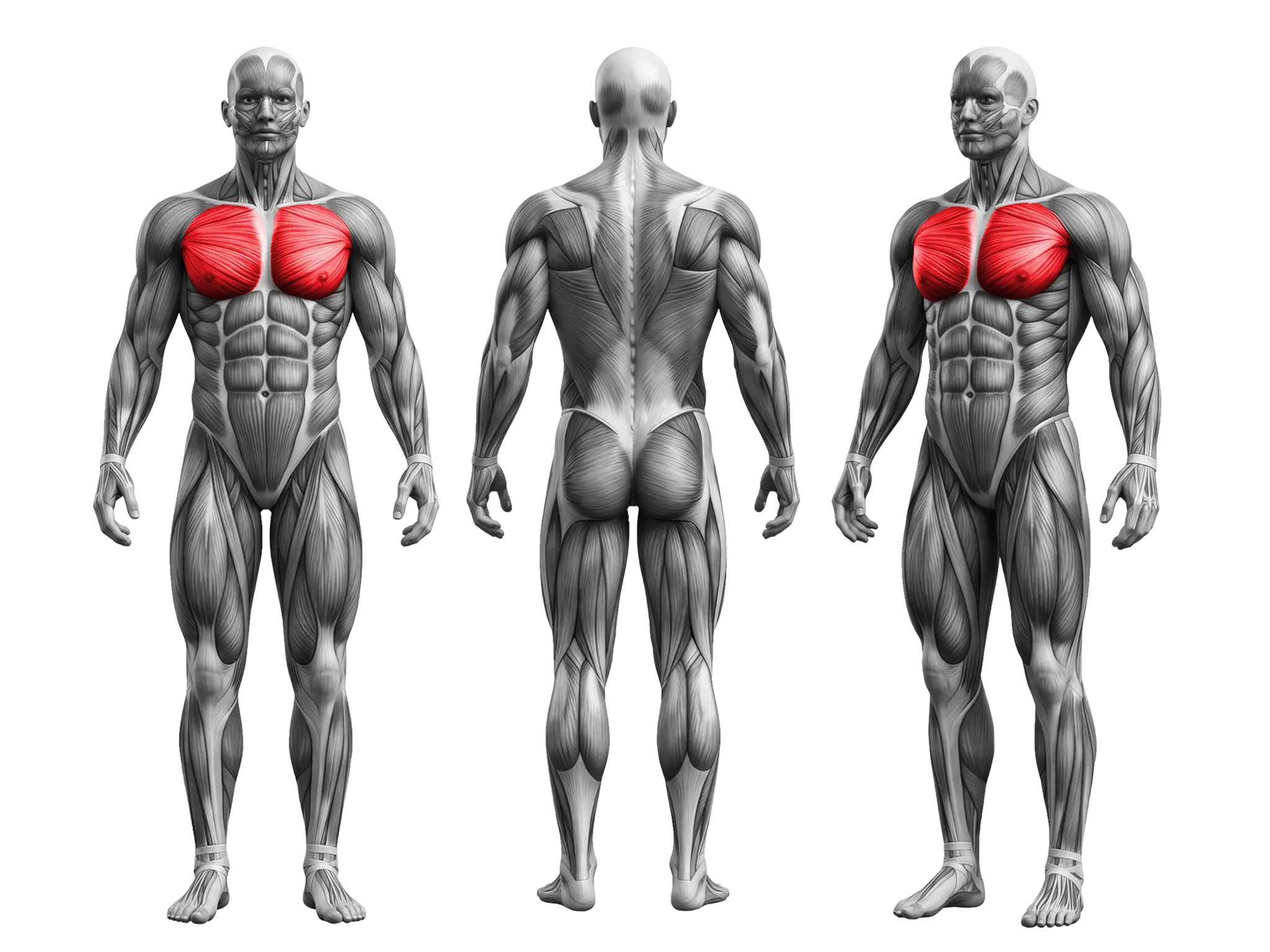
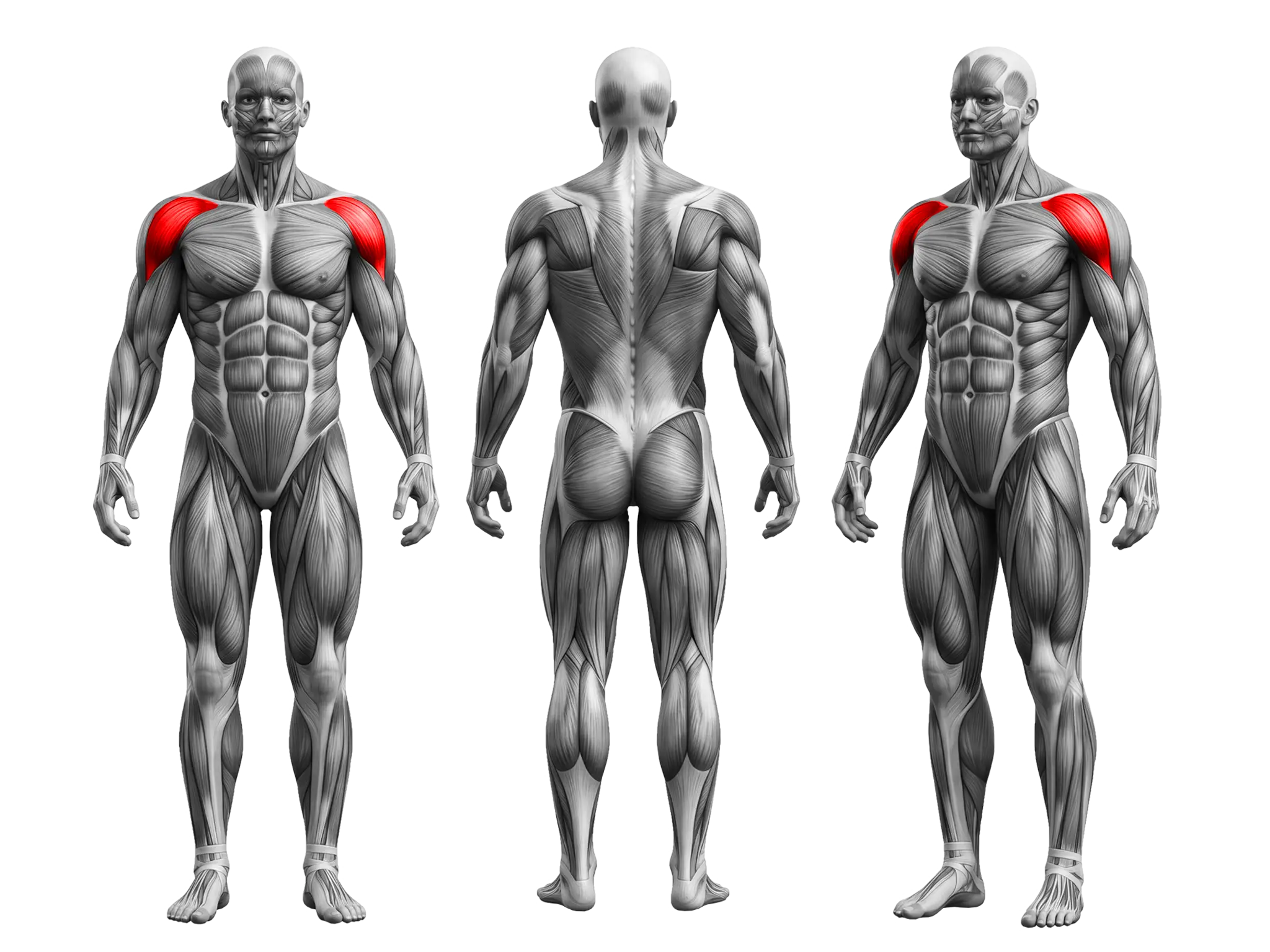


Chest Press Machine (Hammer Strength)
The seated press machine with a back pad and two handles that move independently, loaded with plates on each side. Each arm works on its own, so a weaker side can't hide behind a stronger one.
Set the seat before every session. Adjust the height so the handles sit at about mid-chest to armpit level when you grip them — too low and you'll be pressing upward and feeling it in your shoulders instead of your chest. Some machines also let you change the backrest angle; if yours does, try one notch either way and keep the setting where you feel your chest working hardest at the end of the press. Every hammer is built slightly differently, so find your setting once and remember it.