Exercise Instructions
Incline Barbell Bench Press

Why this one is in the program
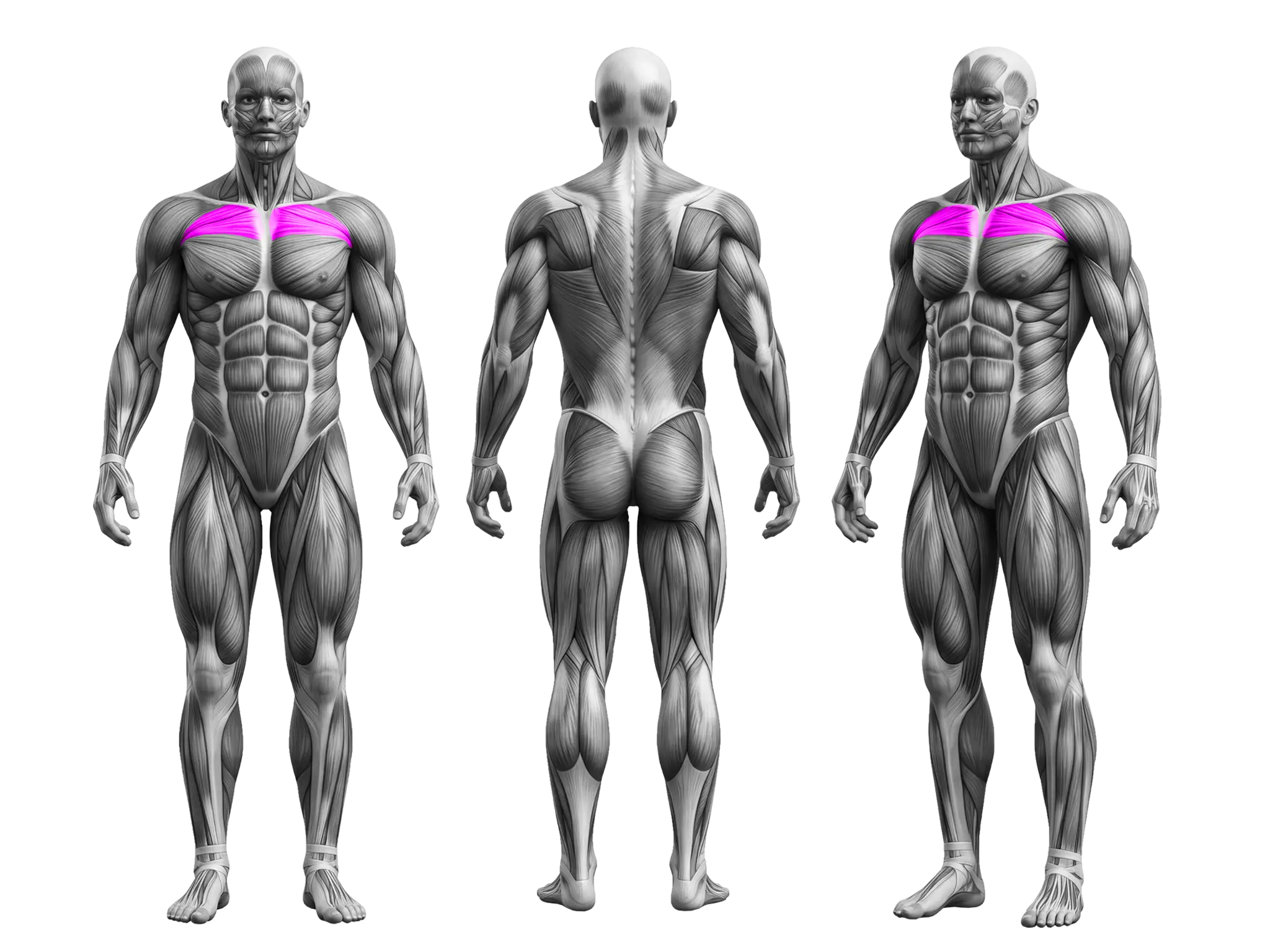
This is the exercise that builds the top of your chest — the part just below your collarbones.
That area is what makes a chest look full and square instead of flat and droopy. And here's the thing: the flat bench press barely touches it. Lie flat and most of the work goes to the middle and lower chest. Tilt the bench up and the load shifts onto the upper fibres.
That's why both are in your program. They're not the same lift twice.
It's also a heavy barbell movement, so you can add weight to it for years — which is exactly what the upper chest needs. Cables and flyes can't load it the same way.
Setup
- Set the bench to about 30 degrees. Not higher.
- Lie back with your eyes under the bar.
- Grip the bar slightly wider than shoulder-width.
- Keep your wrists straight, stacked over your forearms.
- Plant both feet flat on the floor and push into the ground.
- Pull your shoulder blades down and back and squeeze them into the pad.
- Unrack the bar and hold it straight over your upper chest, arms locked.
Why the setup does the work here
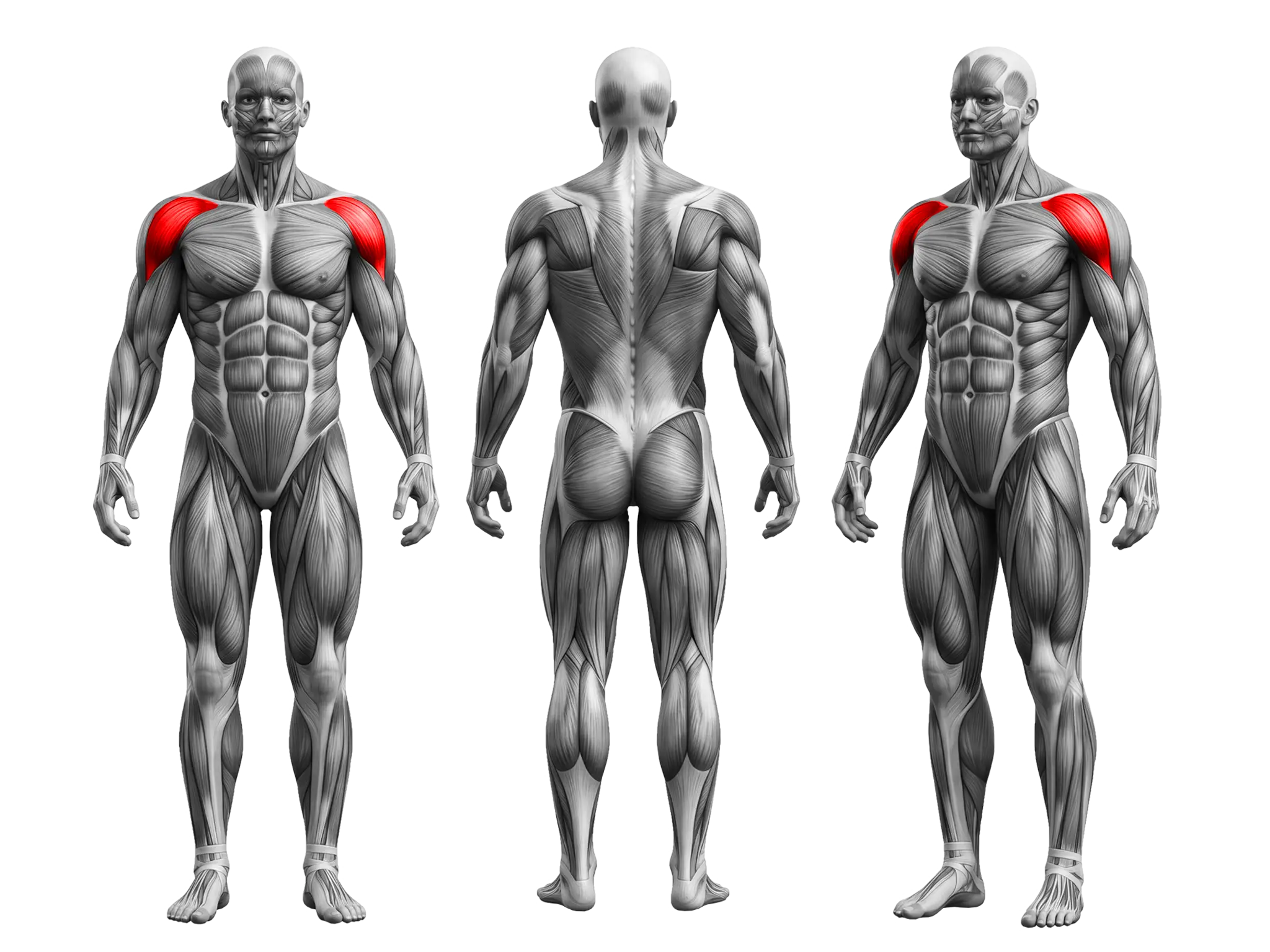
The bench angle is everything, and lower is better than higher. Around 30 degrees is the sweet spot. Set it to 45 degrees or more — which a lot of people do — and your front shoulders take over the lift. You'll feel it in your shoulders, your chest gets less, and you'll never understand why. If your bench only has fixed settings, pick the lowest incline available.
Shoulder blades pinned back give your chest a solid base and keep your shoulder joint safe. Set them before you unrack and hold them all set.
Feet into the floor stop your hips sliding around once the bar gets heavy.
Technique
- Lower the bar to your upper chest — just below your collarbones.
- Keep your elbows at about 45 degrees from your body, not flared out like a T.
- Take 2–3 seconds on the way down.
- Touch lightly. No bouncing.
- Press up until your arms are completely straight.
- Squeeze your chest for a beat at the top.
- Keep your shoulder blades pinned and your hips on the bench the whole time.
Why technique decides everything here
The bar lands higher than on a flat bench. Just below your collarbones, not on your mid-chest. That's what matches the angle of the bench — get it wrong and the bar path fights the movement.
Elbows at 45 degrees. Flaring them straight out is the fastest way to hurt your shoulders, and on an incline your shoulders are already working harder than usual. Keep them tucked.
Don't bounce. Touch the chest lightly, then press. Springing the bar off your ribs is momentum, not muscle.
And control the way down. Two to three seconds. That's where a big share of the growth is.
Common Mistakes
- Setting the bench too steep — 45 degrees or more turns it into a shoulder press.
- Elbows flared straight out to the sides.
- Lowering the bar to the mid-chest instead of the upper chest.
- Bouncing the bar off the chest.
- Letting the shoulder blades unpin and roll forward.
- Lifting the hips off the bench to force reps up.
- Not locking out at the top.
- Training heavy to failure with no spotter or safeties.
Where people lose results
The bench is too steep. The number one fault on this lift, and most people never notice it. Past about 30–35 degrees the work slides off your chest and onto your front shoulders. You end up doing a bad shoulder press and wondering why your upper chest never fills in. Fix: 30 degrees. When in doubt, go lower, not higher.
Elbows flared out. On an incline your shoulder is in a more vulnerable position than on a flat bench, so flaring costs more here. Fix: about 45 degrees from your body.
Bar touching too low. Mid-chest is a flat bench cue. On an incline the bar belongs just under the collarbones. Fix: follow the angle of the bench.
Hips coming off the bench. When the weight is too heavy, people push their hips up to flatten the bench out — which means they're no longer doing an incline press at all. Fix: hips down, drop the weight.
Too heavy, or too light. Too heavy and all of the above happens at once. Too light and nothing grows.
The honest test: shoulder blades pinned, hips on the bench, 2–3 seconds down, light touch, full lockout. If you can't do that for your whole rep range, that's not your weight.
Stay in the 6–12 rep range. And remember the rule for heavy barbell lifts: this one never goes to failure. Stop 1–2 reps short on every working set, and always use safeties or a spotter.


Incline Bench with a Barbell Rack (and safeties)
An adjustable bench set to about 30 degrees, with upright posts to hold the bar — ideally inside a power rack or with adjustable safety arms.
The angle is the setting that matters most. Around 30 degrees puts the work on your upper chest. Steeper than 45 and your front shoulders take over, which is the single most common reason this exercise doesn't work for people. If your bench has fixed notches, choose the lowest incline available.
Lie back with your eyes under the bar so you can unrack without reaching awkwardly. Set the safety arms just above your chest, so a failed rep has somewhere to land instead of on you. Keep both feet flat on the floor and your shoulder blades pinned down and back into the pad.