Consistency training
No perfect days. Just consistent ones.
Back to workout

Exercise Instructions

Leg Press (Gym)

Exercise guide — Setup / Technique / Tips / Mistakes

Why this one is in the program

This is where you load your legs heavy without loading your spine.

A squat is the king of leg exercises, but it costs you something: a heavy bar sits on your back, your lower back works the whole time, and your core gives out before your legs do. The leg press removes all of that. Your back is supported, there's no balancing, and your legs can keep working long after your core would have quit.

That means two things. You can use a lot of weight, and you can push much closer to failure safely — there's nothing above you and the machine has safety catches.

It's also the best heavy leg option if your lower back is tired or beat up. You get the quads and glutes without asking anything of your spine.

This is a partner to squats, not a replacement. Squats train your whole body to work as one piece. The leg press lets you hammer the legs themselves. You want both.

Setup

  • Sit all the way back so your whole back and hips are against the pad.
  • Place your feet on the platform about shoulder-width apart, toes turned out slightly.
  • Put your feet roughly in the middle of the platform — not right at the top, not at the bottom edge.
  • Press the sled up, then release the safety handles.
  • Grip the side handles and pull yourself down into the seat.
  • Keep your knees in line with your toes.
  • Take a breath into your stomach and brace.

Why the setup does the work here

Your lower back must stay flat against the pad. This is the one safety rule on this machine. If your hips curl up off the seat at the bottom of the rep — what lifters call "butt wink" — your lower spine takes the whole load while it's rounded. That's where leg press injuries come from, and it's entirely avoidable.

Foot placement changes the target. Feet higher on the platform shifts work toward your glutes and hamstrings. Feet lower shifts it toward your quads. Middle is the balanced default — start there, and adjust once you know what you want more of.

Feet too narrow jams your hips before you reach depth. Shoulder-width with toes slightly out lets your hips open so you can go deep with your back flat.

Technique

  • Start with your legs almost straight, knees not locked.
  • Lower the platform slowly, about 2–3 seconds.
  • Bring your knees down toward your chest until your thighs are at roughly 90 degrees — or as deep as you can go with your lower back still flat.
  • Stop the moment your hips start to lift off the seat. That's your depth.
  • Push back up through your whole foot, driving with your heels and mid-foot.
  • Stop just short of locking your knees at the top.
  • Keep your knees tracking over your toes — don't let them cave inward.

Why technique decides everything here

Depth is decided by your back, not by the machine. Go as deep as you can while your hips stay planted. For some people that's a long way; for others it's much shorter. Both are correct — the one thing that isn't correct is pushing past the point where your hips roll up.

Don't lock out at the top. Snapping your knees straight under a heavy sled puts the load on the joint instead of the muscle. Stop just short and keep tension on the legs.

Keep your heels down. If your heels lift off the platform as you go deep, you've gone too far or your feet are too low. Whole foot pressed down, every rep.

And knees out, not in. If your knees cave inward as you push, the weight is too heavy.

Common Mistakes

  • Letting the hips curl off the seat at the bottom — the one that hurts people.
  • Locking the knees hard at the top.
  • Going too deep for your own range and rounding the lower back.
  • Feet too narrow, so the hips jam before depth.
  • Heels lifting off the platform.
  • Knees caving inward on the way up.
  • Half reps — only moving the sled a few inches.
  • Putting your hands on your knees to push.

Where people lose results

Hips lifting off the seat. The number one fault, and the only genuinely dangerous one. It happens when you chase depth your hips can't reach, or when the weight is too heavy. Your lower back ends up rounded under a loaded sled. Fix: go only as deep as you can with your hips planted. Watch for it on the last reps of a set, because that's when it appears.

Locking out at the top. Hard lockouts under a heavy sled strain the knee for no benefit. Fix: stop just short of straight.

Half reps. The leg press is the easiest machine in the gym to fake. People load it enormously and move it ten centimetres. It looks impressive and builds almost nothing. Fix: go to a real depth with a flat back, and accept the weight that allows.

Hands on the knees. Pushing your knees with your hands means your arms are helping. Fix: hold the side handles.

Too heavy, or too light. Too heavy and all of the above show up at once: the range shrinks, the hips lift, the knees cave. Too light and nothing grows.

The honest test: back and hips flat on the pad, 2–3 seconds down, real depth, no lockout slam. If you can't do that for your full rep range, that's not your weight.

Stay in the 8–15 rep range. Your back is supported and nothing is above you, so the last set can go to failure — and the leg press is one of the best places in the gym for a dropset, since you just pull a plate off each side and keep going.
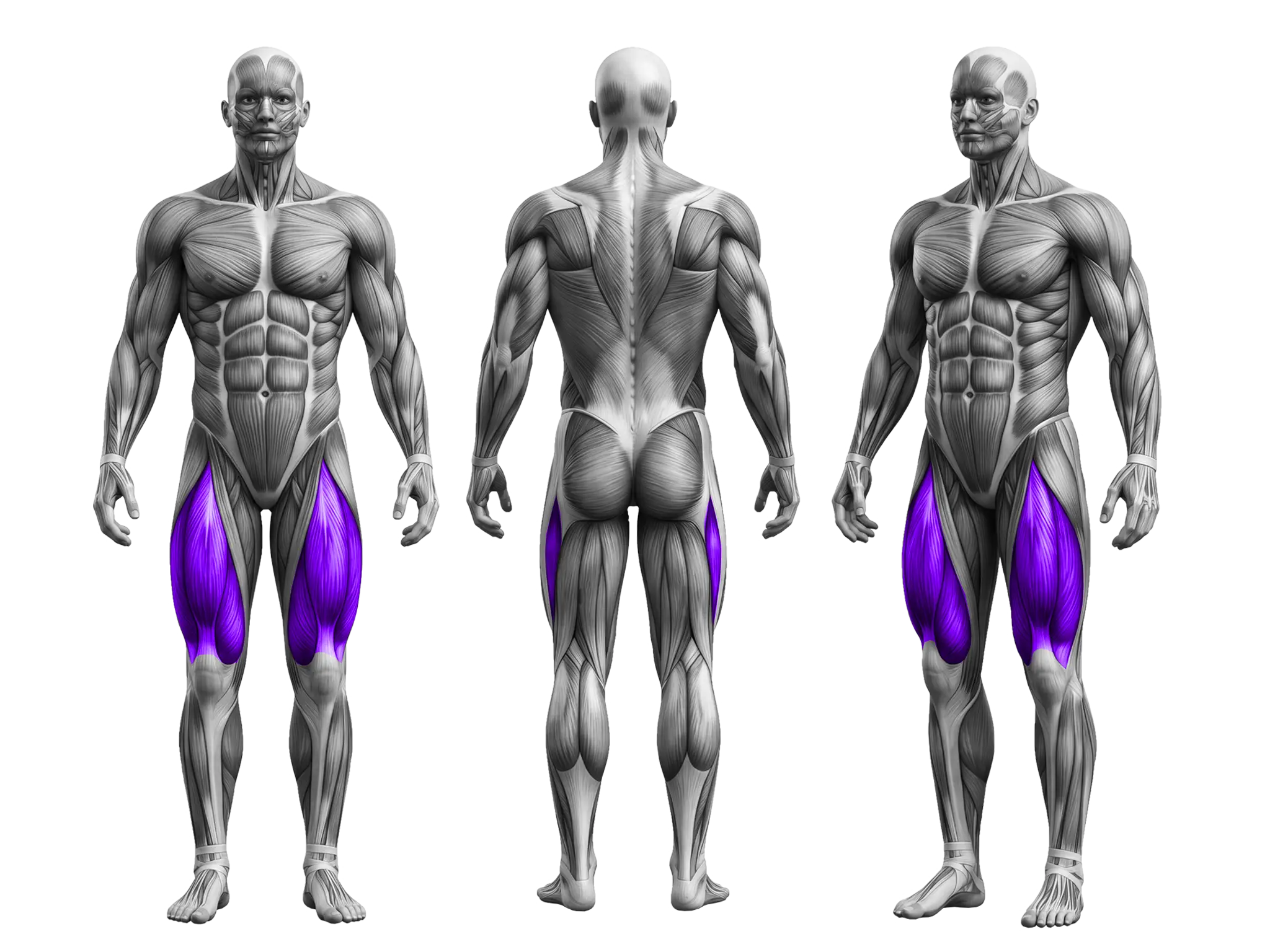
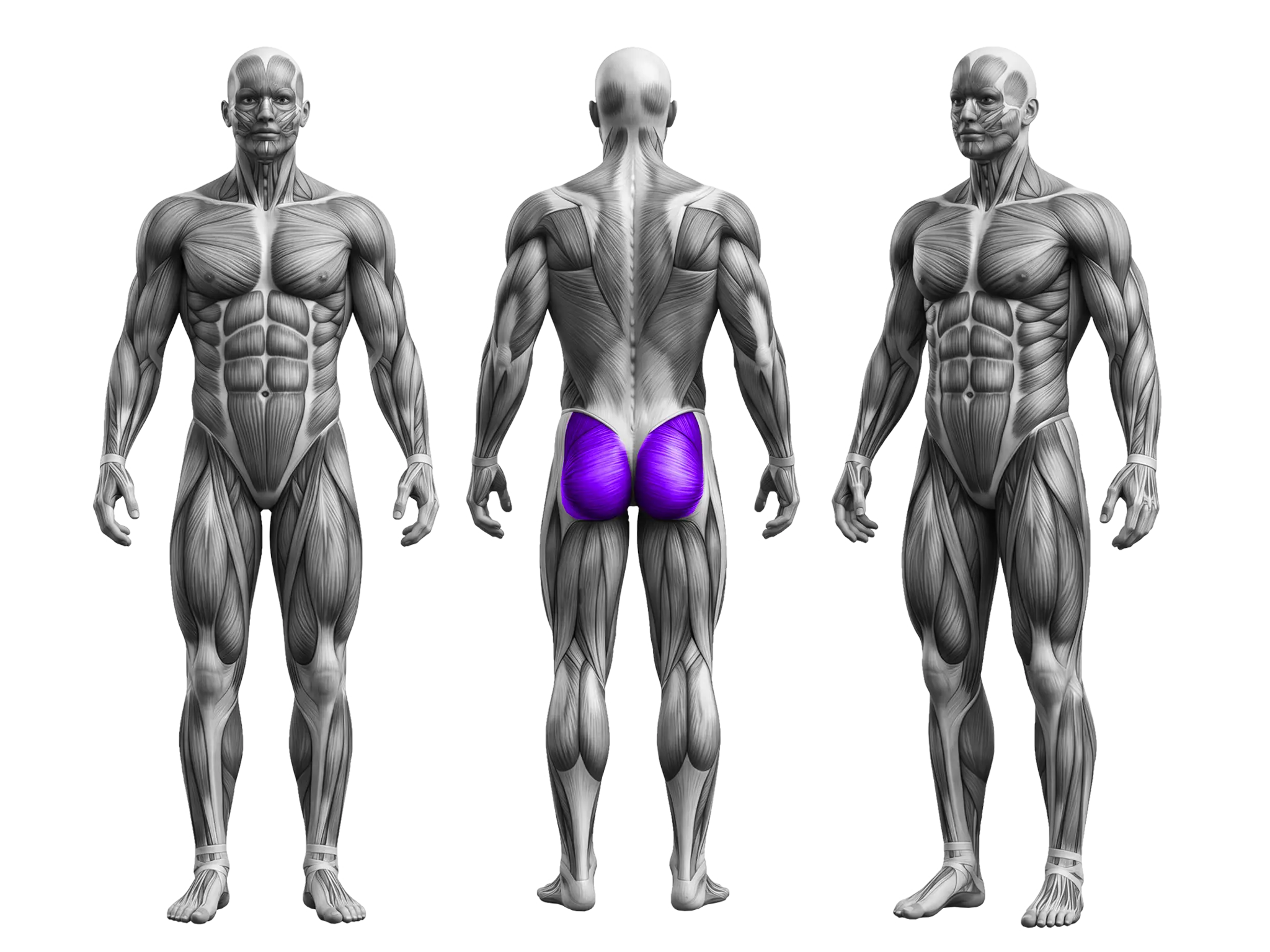
Target Muscles
Quadriceps
Primary
Gluteus Maximus
Assisting
Hamstrings, Adductors & Calves
Assisting
Recommended Equipment

45-Degree Leg Press Machine
The angled sled machine with a padded seat and backrest, a large footplate above you, and weight horns on each side for plates.

Before your first rep, do two things. Sit all the way back so your whole lower back and hips are flat against the pad — that contact is what keeps the load off your spine. Then place your feet about shoulder-width apart in the middle of the platform, toes turned out slightly. Feet higher on the plate shifts work toward your glutes and hamstrings; feet lower shifts it toward your quads. Middle is your default.

Know where the safety catches are before you load up. Every leg press has handles or levers that lock the sled in place — find them, use them to rack the weight at the end of a set, and never load the machine so heavy you can't reach them.

Hold the side handles while you press. Never push on your knees with your hands.

Exercise Instructions

Leg Press (Gym)

Exercise guide — Setup / Technique / Tips / Mistakes

Why this one is in the program

This is where you load your legs heavy without loading your spine.

A squat is the king of leg exercises, but it costs you something: a heavy bar sits on your back, your lower back works the whole time, and your core gives out before your legs do. The leg press removes all of that. Your back is supported, there's no balancing, and your legs can keep working long after your core would have quit.

That means two things. You can use a lot of weight, and you can push much closer to failure safely — there's nothing above you and the machine has safety catches.

It's also the best heavy leg option if your lower back is tired or beat up. You get the quads and glutes without asking anything of your spine.

This is a partner to squats, not a replacement. Squats train your whole body to work as one piece. The leg press lets you hammer the legs themselves. You want both.

Setup

  • Sit all the way back so your whole back and hips are against the pad.
  • Place your feet on the platform about shoulder-width apart, toes turned out slightly.
  • Put your feet roughly in the middle of the platform — not right at the top, not at the bottom edge.
  • Press the sled up, then release the safety handles.
  • Grip the side handles and pull yourself down into the seat.
  • Keep your knees in line with your toes.
  • Take a breath into your stomach and brace.

Why the setup does the work here

Your lower back must stay flat against the pad. This is the one safety rule on this machine. If your hips curl up off the seat at the bottom of the rep — what lifters call "butt wink" — your lower spine takes the whole load while it's rounded. That's where leg press injuries come from, and it's entirely avoidable.

Foot placement changes the target. Feet higher on the platform shifts work toward your glutes and hamstrings. Feet lower shifts it toward your quads. Middle is the balanced default — start there, and adjust once you know what you want more of.

Feet too narrow jams your hips before you reach depth. Shoulder-width with toes slightly out lets your hips open so you can go deep with your back flat.

Technique

  • Start with your legs almost straight, knees not locked.
  • Lower the platform slowly, about 2–3 seconds.
  • Bring your knees down toward your chest until your thighs are at roughly 90 degrees — or as deep as you can go with your lower back still flat.
  • Stop the moment your hips start to lift off the seat. That's your depth.
  • Push back up through your whole foot, driving with your heels and mid-foot.
  • Stop just short of locking your knees at the top.
  • Keep your knees tracking over your toes — don't let them cave inward.

Why technique decides everything here

Depth is decided by your back, not by the machine. Go as deep as you can while your hips stay planted. For some people that's a long way; for others it's much shorter. Both are correct — the one thing that isn't correct is pushing past the point where your hips roll up.

Don't lock out at the top. Snapping your knees straight under a heavy sled puts the load on the joint instead of the muscle. Stop just short and keep tension on the legs.

Keep your heels down. If your heels lift off the platform as you go deep, you've gone too far or your feet are too low. Whole foot pressed down, every rep.

And knees out, not in. If your knees cave inward as you push, the weight is too heavy.

Common Mistakes

  • Letting the hips curl off the seat at the bottom — the one that hurts people.
  • Locking the knees hard at the top.
  • Going too deep for your own range and rounding the lower back.
  • Feet too narrow, so the hips jam before depth.
  • Heels lifting off the platform.
  • Knees caving inward on the way up.
  • Half reps — only moving the sled a few inches.
  • Putting your hands on your knees to push.

Where people lose results

Hips lifting off the seat. The number one fault, and the only genuinely dangerous one. It happens when you chase depth your hips can't reach, or when the weight is too heavy. Your lower back ends up rounded under a loaded sled. Fix: go only as deep as you can with your hips planted. Watch for it on the last reps of a set, because that's when it appears.

Locking out at the top. Hard lockouts under a heavy sled strain the knee for no benefit. Fix: stop just short of straight.

Half reps. The leg press is the easiest machine in the gym to fake. People load it enormously and move it ten centimetres. It looks impressive and builds almost nothing. Fix: go to a real depth with a flat back, and accept the weight that allows.

Hands on the knees. Pushing your knees with your hands means your arms are helping. Fix: hold the side handles.

Too heavy, or too light. Too heavy and all of the above show up at once: the range shrinks, the hips lift, the knees cave. Too light and nothing grows.

The honest test: back and hips flat on the pad, 2–3 seconds down, real depth, no lockout slam. If you can't do that for your full rep range, that's not your weight.

Stay in the 8–15 rep range. Your back is supported and nothing is above you, so the last set can go to failure — and the leg press is one of the best places in the gym for a dropset, since you just pull a plate off each side and keep going.
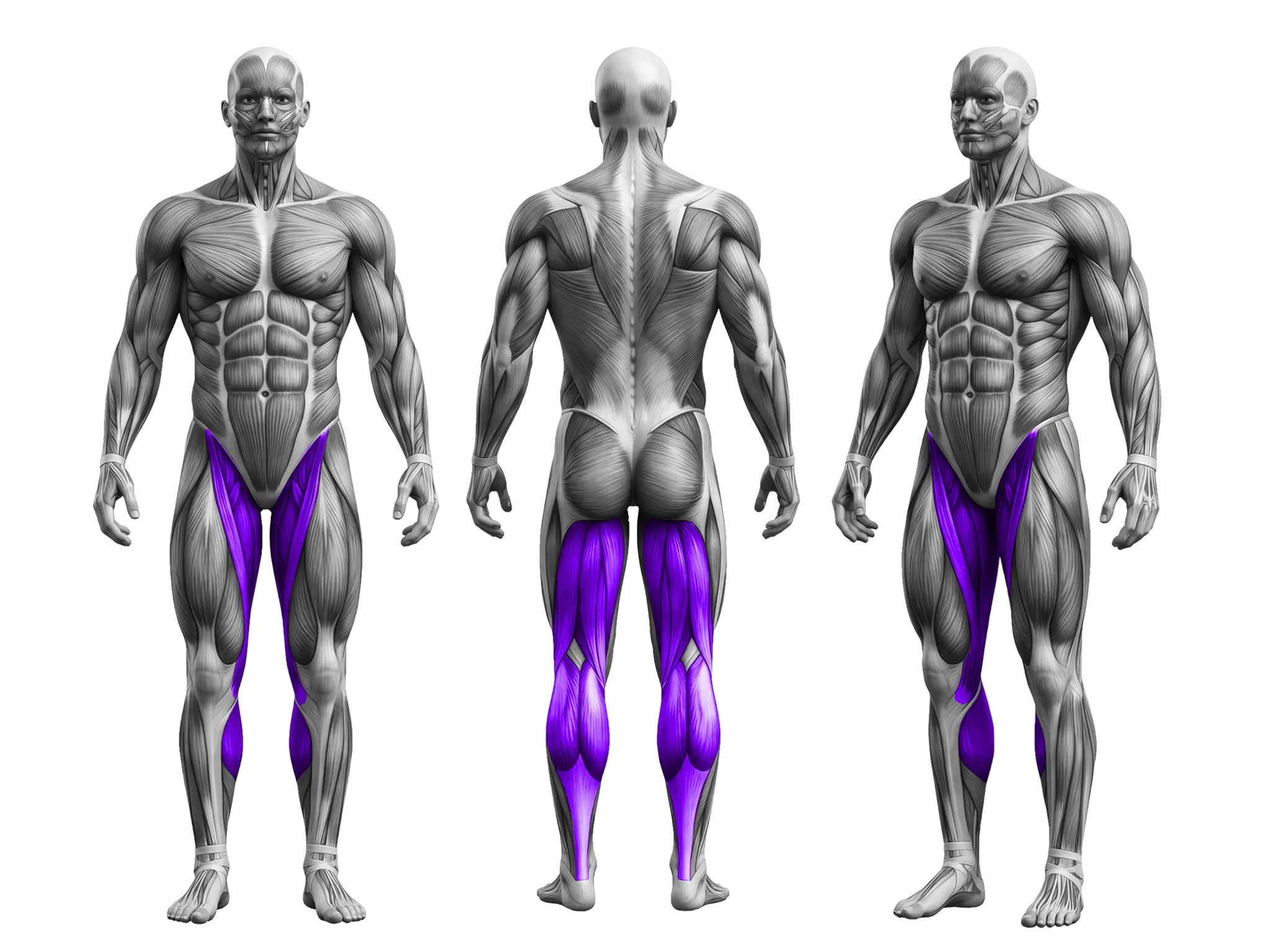
Target Muscles
Quadriceps
Primary
Gluteus Maximus
Assisting
Hamstrings, Adductors & Calves
Assisting
Recommended Equipment

45-Degree Leg Press Machine
The angled sled machine with a padded seat and backrest, a large footplate above you, and weight horns on each side for plates.

Before your first rep, do two things. Sit all the way back so your whole lower back and hips are flat against the pad — that contact is what keeps the load off your spine. Then place your feet about shoulder-width apart in the middle of the platform, toes turned out slightly. Feet higher on the plate shifts work toward your glutes and hamstrings; feet lower shifts it toward your quads. Middle is your default.

Know where the safety catches are before you load up. Every leg press has handles or levers that lock the sled in place — find them, use them to rack the weight at the end of a set, and never load the machine so heavy you can't reach them.

Hold the side handles while you press. Never push on your knees with your hands.

Gym Alternative
Smith Machine Squat

Yes, this works well as an alternative. The bar runs on a fixed track with safety hooks, so you don't have to balance it and you can push hard on your own. It brings back some of the core and lower-back work the leg press removes, which is useful — but if your lower back is the reason you're on the leg press in the first place, pick one of the options below instead.

Additional gym alternatives, best to worst:

Additional gym alternatives:

  1. Hack Squat Machine — back supported, very quad-focused, safe to push near failure; the closest match
  2. Pendulum Squat — if your gym has one; an excellent, very knee-friendly option
  3. Bulgarian Split Squat — one leg at a time; far less total load needed for the same effect
Home Alternative
Goblet Squat

Hold one dumbbell, kettlebell or a loaded backpack against your chest, feet shoulder-width with toes slightly out, and squat down to at least parallel with a flat back.

Holding the weight at your chest keeps you upright, which makes good depth much easier than with a barbell. It's a genuinely good exercise, not a compromise. The only limit is how heavy your weight goes — once that runs out, move to the single-leg options below.

Additional home alternatives:

Additional home alternatives:

  1. Bulgarian Split Squat — back foot on a chair, one leg at a time; brutal with very little weight
  2. Backpack Squat — a loaded backpack worn on your back or held at your chest
  3. Slow-Tempo Bodyweight Squat — 3 seconds down, 2-second pause at the bottom; no weight needed and it still works