Exercise Instructions
Machine Hip Thrust

Why this one is in the program
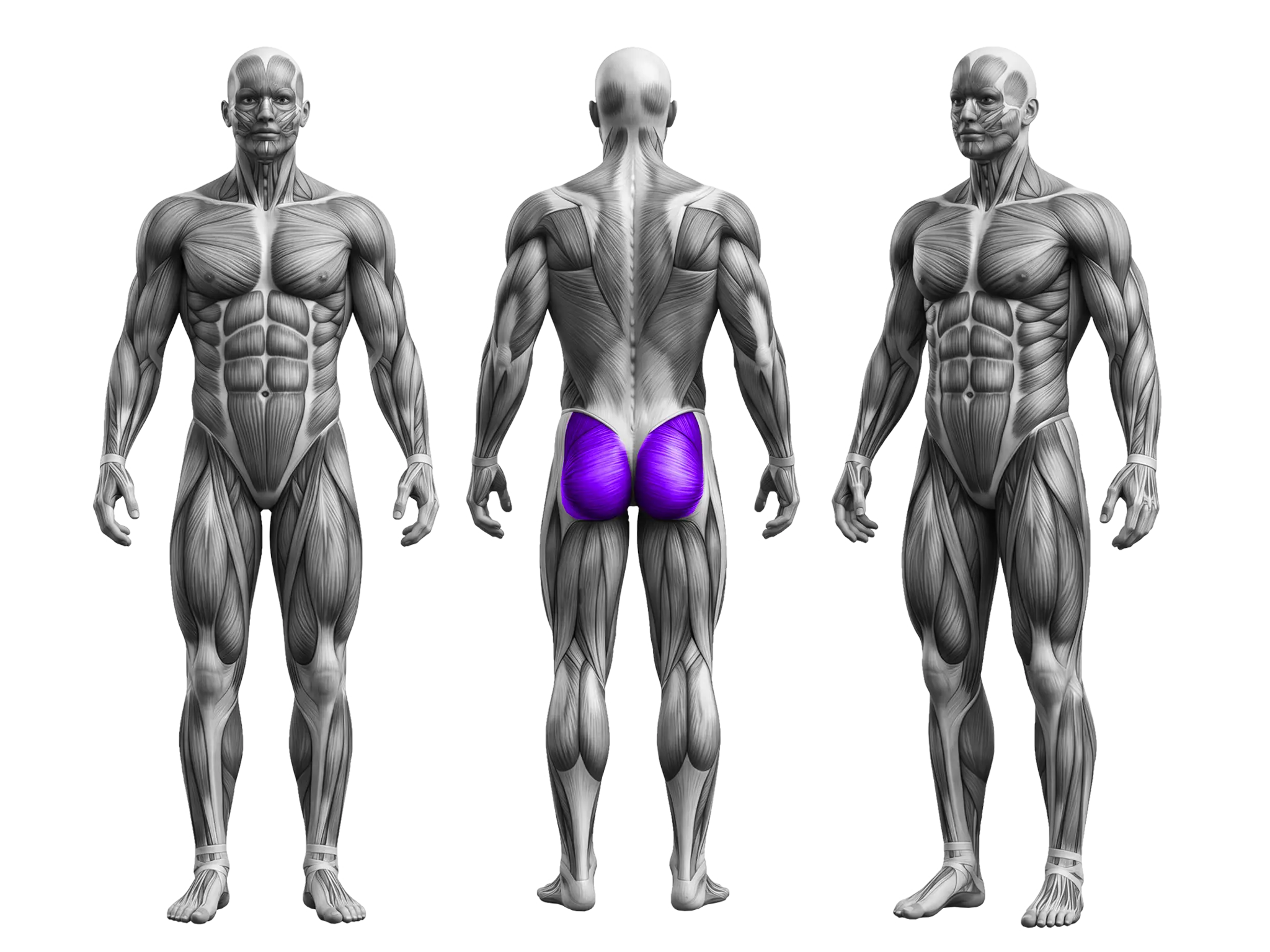
This is the most direct glute exercise there is.
Squats and leg presses work your glutes, but they load them hardest at the bottom, when your hips are bent. The hip thrust does the opposite: it loads them hardest at the top, when your hips are fully straight and your glutes are squeezed. That's the position where the glute is strongest and where almost nothing else trains it.
Your glutes are also the largest muscle in your body, and they do more than fill out a pair of jeans. They extend your hip — which is what you do every time you stand up, sprint, climb stairs or lift something off the floor. Strong glutes also take load off your lower back and your knees.
And the machine version is the practical one. A barbell hip thrust works brilliantly but is a hassle: rolling the bar over your hips, padding it so it doesn't hurt, setting up a bench. The machine gives you the same movement with a padded belt or lap pad, a proper back rest and a weight stack. You sit down and work — which means you'll actually do it, and you can push it hard.
Setup
- Sit down and set the back pad so the top edge sits just under your shoulder blades.
- Lower the lap pad or belt across your hips — on the bony front of your pelvis, not your stomach.
- Place your feet shoulder-width apart, flat on the platform.
- Position your feet so that at the top of the rep, your shins are vertical and your knees are at about 90 degrees.
- Grip the handles and pull yourself into the seat.
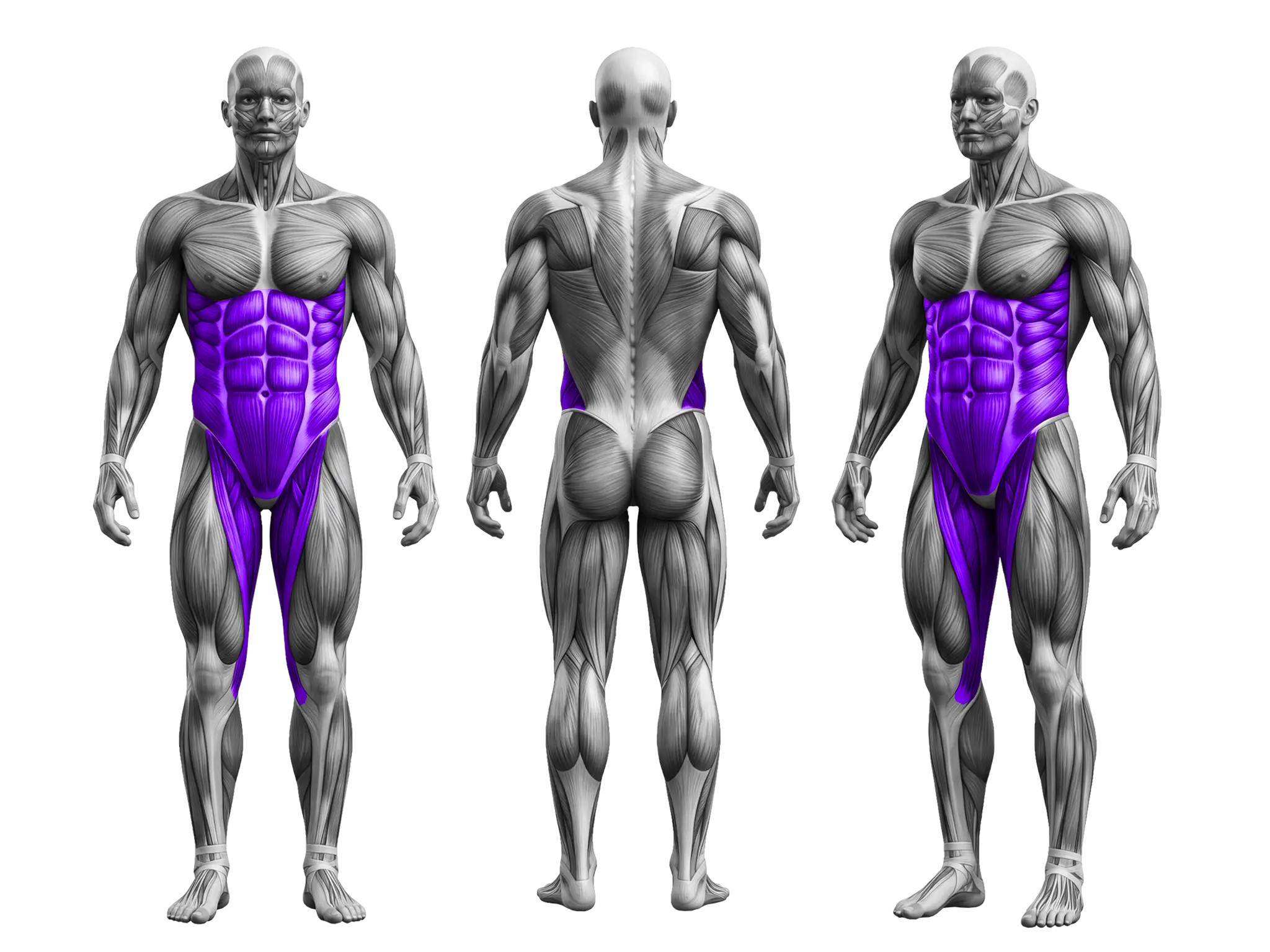
- Tuck your ribs down and tighten your stomach.
- Start with your hips lowered and your glutes stretched.
Why the setup does the work here
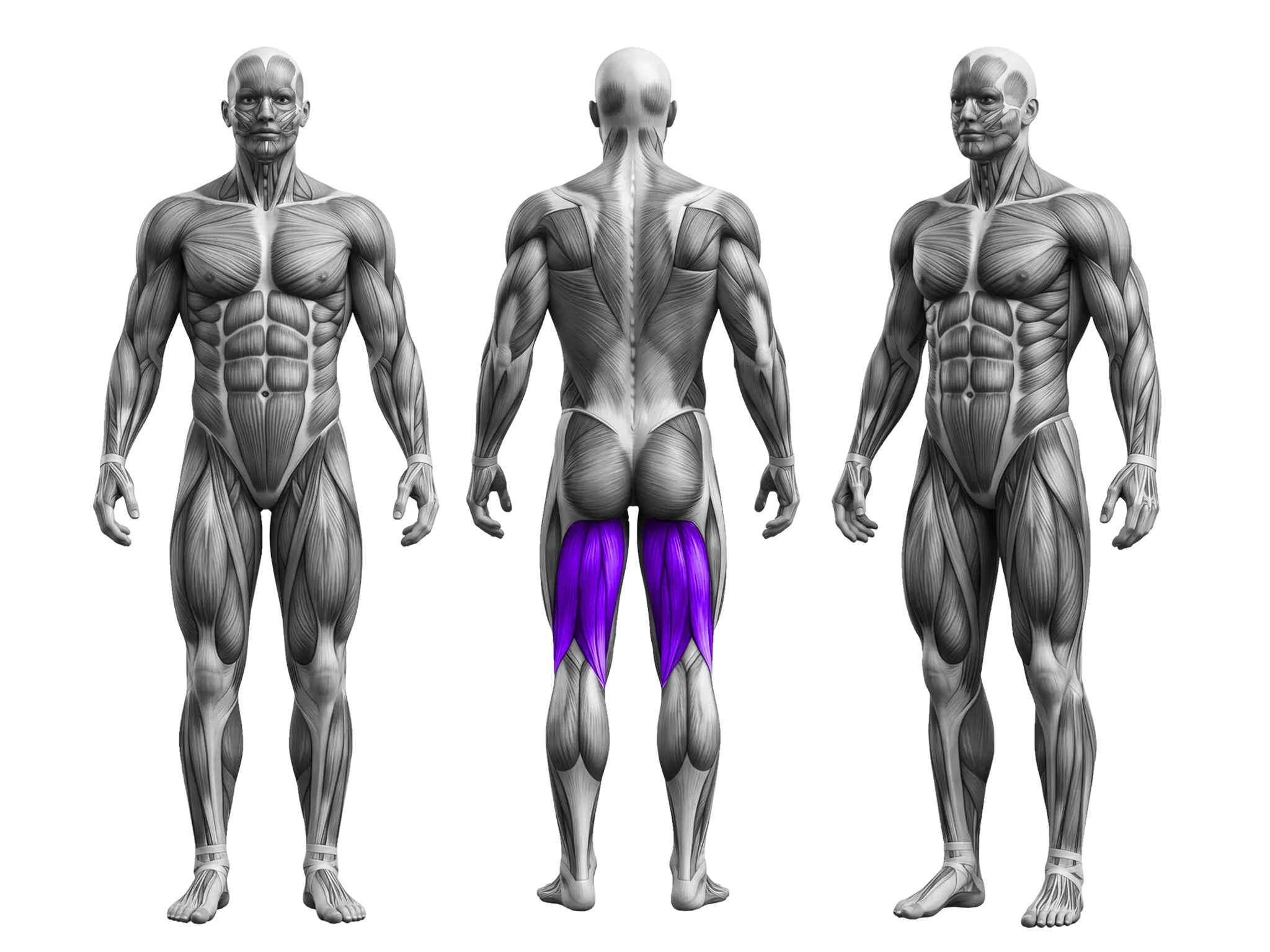
Foot position decides which muscle gets the work. Feet too close to you and your quads take over. Feet too far away and your hamstrings do the job. The test is simple: at the top of the rep, your shins should be straight up and down. Press out one rep before your working sets and check.
The pad goes on your pelvis, not your belly. On the hard bony part at the front of your hips. Too high and it digs into your stomach and you'll never be comfortable enough to push.
Ribs down is the safety cue. This is the one most people miss. If your ribs flare up and your lower back arches hard at the top, your spine is doing the work instead of your glutes. Keep your ribcage pulled down and your stomach tight, and the movement stays in your hips where it belongs.
Technique
- Start with your hips down and your glutes stretched.
- Drive through your heels and push your hips straight up.
- Finish when your hips are fully straight — body flat from knees to shoulders.
- Squeeze your glutes hard for one full second at the top.
- Keep your ribs down and your chin slightly tucked — don't throw your head back.
- Lower slowly, about 3 seconds, back to the stretch.
- Keep your knees tracking out over your toes, not caving in.
Why technique decides everything here
The squeeze at the top is the entire exercise. This is the one movement where the top position is the point. One honest second with your hips locked out and your glutes clenched. Rush it and you've done a lot of nothing.
Stop at straight, not past it. "Fully extended" means your body is flat from knees to shoulders. Pushing further means arching your lower back — that's your spine bending, not your hips extending, and it's the main way people get sore from this exercise.
Drive through your heels. Push the platform away with the back half of your foot. Pushing through the toes brings your quads into it.
And don't rush the way down. Three seconds, letting your hips sink until you feel the stretch. Bouncing off the bottom skips the muscle and uses momentum.
Common Mistakes
- Arching the lower back at the top instead of stopping at straight hips.
- Feet too close, so the quads take over.
- Feet too far away, so the hamstrings take over.
- Pad sitting on the stomach instead of the hip bones.
- Throwing the head back at the top.
- Bouncing out of the bottom.
- Short, half-range reps through the middle.
- Knees caving inward on the way up.
Where people lose results
Over-arching at the top. The number one fault. People think more range is better, so they push past straight hips and arch their lower back. That extra movement comes from the spine, not the glutes — you get back ache instead of glute growth. Fix: ribs down, stomach tight, stop when your body is flat from knees to shoulders.
Wrong foot position. The most common reason people say "I don't feel it in my glutes." Too close and it's a quad exercise; too far and it's a hamstring exercise. Fix: shins vertical at the top. Check it once and remember where your feet go.
No squeeze at the top. The hip thrust loads the glute hardest at full extension — skip the pause and you've skipped the whole reason to do it. Fix: one full second, every rep.
Half reps. Easy on a machine with a big stack. Lots of weight, little movement, no result. Fix: full range at both ends, including the stretch at the bottom.
Too heavy, or too light. Too heavy and all of the above show up at once: the arch appears, the range shrinks, the pause disappears. Too light and nothing grows — this is a strong muscle and it can handle real load.
The honest test: ribs down, hips to straight, one-second squeeze, three seconds down. If you can't do that for your full rep range, that's not your weight.
Stay in the 8–15 rep range. You're seated with nothing above you, so the last set can go all the way to failure — and this is a great place to finish with a dropset.

Hip Thrust Machine (Glute Drive)
The seated machine with a back rest, a padded lap bar or belt that sits across your hips, a foot platform in front of you, and a weight stack or plate loading.
Two adjustments decide the exercise. First, set the back pad so its top edge sits just under your shoulder blades — that's the pivot point your body rotates around. Second, and more importantly, set your feet so that when your hips are fully extended at the top, your shins are vertical and your knees are at about 90 degrees. Feet too close turns it into a quad exercise; too far and your hamstrings take over. Press out one rep before your working sets and check.
Bring the lap pad down onto the bony front of your pelvis, not onto your stomach. Grip the side handles, pull yourself into the seat, and keep your ribs pulled down and your stomach tight throughout.
Find your settings once and remember the numbers.