Consistency training
No perfect days. Just consistent ones.
Back to workout

Exercise Instructions

Machine Preacher Curl

Exercise guide — Setup / Technique / Tips / Mistakes

Why this one is in the program

This is the strictest biceps exercise in the gym — and the one you can push hardest on.

The machine does two jobs for you. The pad locks your upper arms so nothing can swing, and the fixed path means you don't have to balance anything. That leaves one muscle with one job. Nothing to drop, nothing to control — so you can take this one all the way to failure safely.

That's why it belongs at the end of your arm work. The barbell curls build you; this empties what's left.

There's a second advantage people miss. A machine holds tension on the muscle through the whole rep. With a free bar, the bottom of the curl goes light because gravity pulls straight down. On a machine the resistance stays honest from the stretch to the squeeze.

Setup

  • Sit down and adjust the seat first.
  • Set it so your armpits sit snugly against the top edge of the pad.
  • Plant both feet flat on the floor.
  • Lay both upper arms flat along the pad — armpit, upper arm and elbow all in contact.
  • Grip the handles with your palms facing up.
  • Sit tall, chest against the pad, shoulders pulled down and back.
  • Let your arms straighten at the bottom — but don't lock the elbows.

Why the setup does the work here

Seat height is the setting that decides everything. Too low and your armpits sit below the pad, so your shoulders lift and your body starts helping — exactly what this machine exists to prevent. Too high and you're perched and unstable. Snug against the top edge is the window.

Your whole arm stays flat on the pad. If your elbow slides around or lifts up, the strictness is gone and you may as well be curling standing.

And don't lock out at the bottom. Stop just short of straight. On a preacher pad the bottom is already a hard stretch, and snapping a locked elbow there under load is the one genuine injury risk on this exercise.

Technique

  • Start with your arms nearly straight and your biceps stretched.
  • Curl up smoothly — no jerk off the bottom.
  • Keep your upper arms glued to the pad the whole way.
  • Curl until your forearms are just past vertical and squeeze for one second.
  • Lower slowly, about 3 seconds, back to the stretch.
  • Stop just short of a locked elbow, then go again.
  • Keep your chest on the pad and your shoulders down.

Why technique decides everything here

The lowering is where the work is. On a preacher pad the bottom is genuinely hard — your biceps is stretched and still holding the weight. Three slow seconds down, every rep. Letting it drop throws away the best part and puts your elbow at risk at the same time.

Don't shrug. As the set gets hard, people pull their shoulders up to help. The moment that happens, your upper arms lift off the pad and the exercise stops being strict. Shoulders down, chest on the pad.

No bouncing out of the bottom. A little jerk to start each rep is how biceps tendons get strained. Smooth start, smooth finish.

Common Mistakes

  • Seat set too low, so the armpits don't reach the top of the pad.
  • Lifting the elbows or shoulders off the pad.
  • Snapping the elbows into full lockout at the bottom.
  • Bouncing out of the bottom instead of starting smoothly.
  • Letting the weight drop back down with no control.
  • Lifting the chest off the pad and leaning back.
  • Stopping halfway down and never using the stretch.
  • Gripping the handles so hard that the forearms take over.

Where people lose results

Seat too low. The most common setup fault, and most people never check it. Your armpits sit below the pad, your shoulders lift, your body joins in — and you've just rebuilt the standing curl this machine was meant to replace. Fix: armpits snug against the top edge, every session.

Elbows lifting off the pad. Always a sign the weight is too heavy. Fix: lighten it until your arms stay flat for every rep.

Locking out at the bottom. Deep stretch plus a locked joint plus load is the one real risk here. Fix: stop just short of straight.

Dropping the weight. Wastes the most valuable part of the rep, and it's exactly where the stretched position gets dangerous. Fix: three seconds down, always.

Half reps. Easy to do on a machine — you end up pumping through the middle of the range and feeling busy. You lose the stretch at the bottom and the squeeze at the top. Fix: full range, both ends.

Too heavy, or too light. Too heavy and all of the above happens at once. Too light and nothing grows.

The honest test: arms flat on the pad, no bounce at the bottom, one-second squeeze, three seconds down. If you can't do that for your full rep range, that's not your weight.

Stay in the 10–15 rep range. You're seated with nothing above you, so the last set can go all the way to failure — and this is a great place to finish with a dropset: just move the pin up and keep going.
Target Muscles
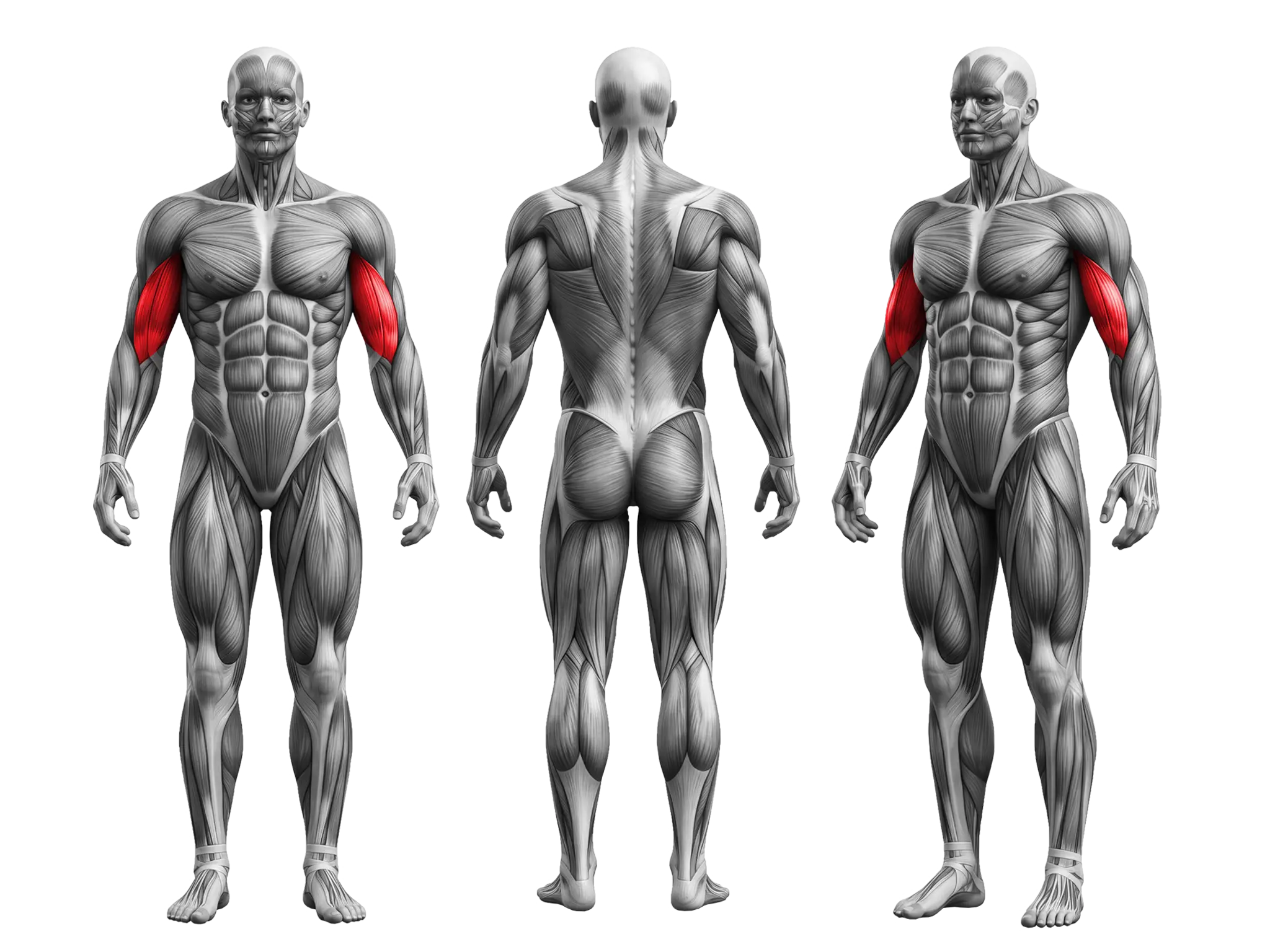
Biceps Brachii (Short Head emphasis)
Primary
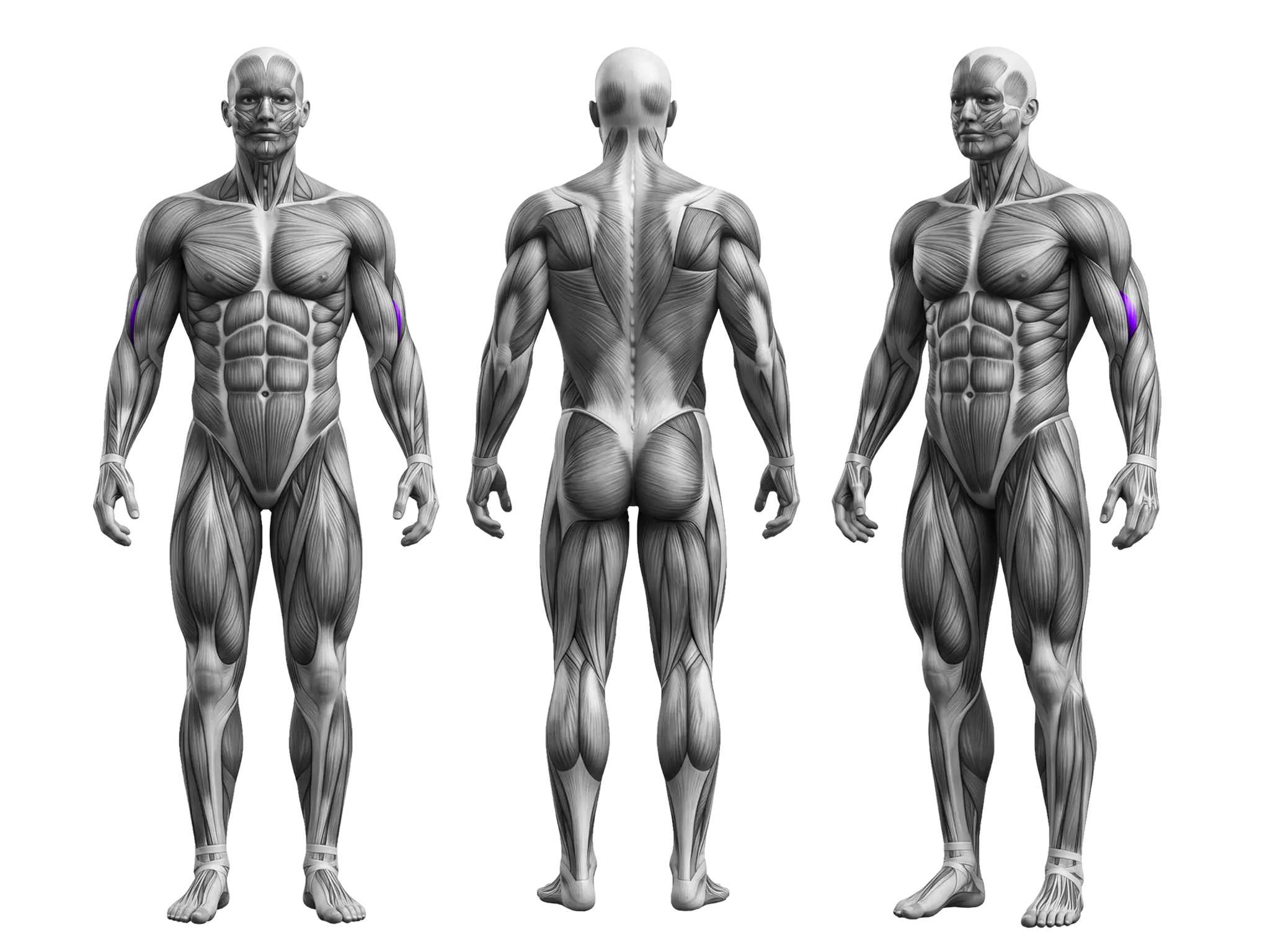
Brachialis
Assisting
Brachioradialis & Forearm Flexors
Assisting
Recommended Equipment

Exercise Instructions

Machine Preacher Curl

Exercise guide — Setup / Technique / Tips / Mistakes

Why this one is in the program

This is the strictest biceps exercise in the gym — and the one you can push hardest on.

The machine does two jobs for you. The pad locks your upper arms so nothing can swing, and the fixed path means you don't have to balance anything. That leaves one muscle with one job. Nothing to drop, nothing to control — so you can take this one all the way to failure safely.

That's why it belongs at the end of your arm work. The barbell curls build you; this empties what's left.

There's a second advantage people miss. A machine holds tension on the muscle through the whole rep. With a free bar, the bottom of the curl goes light because gravity pulls straight down. On a machine the resistance stays honest from the stretch to the squeeze.

Setup

  • Sit down and adjust the seat first.
  • Set it so your armpits sit snugly against the top edge of the pad.
  • Plant both feet flat on the floor.
  • Lay both upper arms flat along the pad — armpit, upper arm and elbow all in contact.
  • Grip the handles with your palms facing up.
  • Sit tall, chest against the pad, shoulders pulled down and back.
  • Let your arms straighten at the bottom — but don't lock the elbows.

Why the setup does the work here

Seat height is the setting that decides everything. Too low and your armpits sit below the pad, so your shoulders lift and your body starts helping — exactly what this machine exists to prevent. Too high and you're perched and unstable. Snug against the top edge is the window.

Your whole arm stays flat on the pad. If your elbow slides around or lifts up, the strictness is gone and you may as well be curling standing.

And don't lock out at the bottom. Stop just short of straight. On a preacher pad the bottom is already a hard stretch, and snapping a locked elbow there under load is the one genuine injury risk on this exercise.

Technique

  • Start with your arms nearly straight and your biceps stretched.
  • Curl up smoothly — no jerk off the bottom.
  • Keep your upper arms glued to the pad the whole way.
  • Curl until your forearms are just past vertical and squeeze for one second.
  • Lower slowly, about 3 seconds, back to the stretch.
  • Stop just short of a locked elbow, then go again.
  • Keep your chest on the pad and your shoulders down.

Why technique decides everything here

The lowering is where the work is. On a preacher pad the bottom is genuinely hard — your biceps is stretched and still holding the weight. Three slow seconds down, every rep. Letting it drop throws away the best part and puts your elbow at risk at the same time.

Don't shrug. As the set gets hard, people pull their shoulders up to help. The moment that happens, your upper arms lift off the pad and the exercise stops being strict. Shoulders down, chest on the pad.

No bouncing out of the bottom. A little jerk to start each rep is how biceps tendons get strained. Smooth start, smooth finish.

Common Mistakes

  • Seat set too low, so the armpits don't reach the top of the pad.
  • Lifting the elbows or shoulders off the pad.
  • Snapping the elbows into full lockout at the bottom.
  • Bouncing out of the bottom instead of starting smoothly.
  • Letting the weight drop back down with no control.
  • Lifting the chest off the pad and leaning back.
  • Stopping halfway down and never using the stretch.
  • Gripping the handles so hard that the forearms take over.

Where people lose results

Seat too low. The most common setup fault, and most people never check it. Your armpits sit below the pad, your shoulders lift, your body joins in — and you've just rebuilt the standing curl this machine was meant to replace. Fix: armpits snug against the top edge, every session.

Elbows lifting off the pad. Always a sign the weight is too heavy. Fix: lighten it until your arms stay flat for every rep.

Locking out at the bottom. Deep stretch plus a locked joint plus load is the one real risk here. Fix: stop just short of straight.

Dropping the weight. Wastes the most valuable part of the rep, and it's exactly where the stretched position gets dangerous. Fix: three seconds down, always.

Half reps. Easy to do on a machine — you end up pumping through the middle of the range and feeling busy. You lose the stretch at the bottom and the squeeze at the top. Fix: full range, both ends.

Too heavy, or too light. Too heavy and all of the above happens at once. Too light and nothing grows.

The honest test: arms flat on the pad, no bounce at the bottom, one-second squeeze, three seconds down. If you can't do that for your full rep range, that's not your weight.

Stay in the 10–15 rep range. You're seated with nothing above you, so the last set can go all the way to failure — and this is a great place to finish with a dropset: just move the pin up and keep going.
Target Muscles
Biceps Brachii (Short Head emphasis)
Primary
Brachialis
Assisting
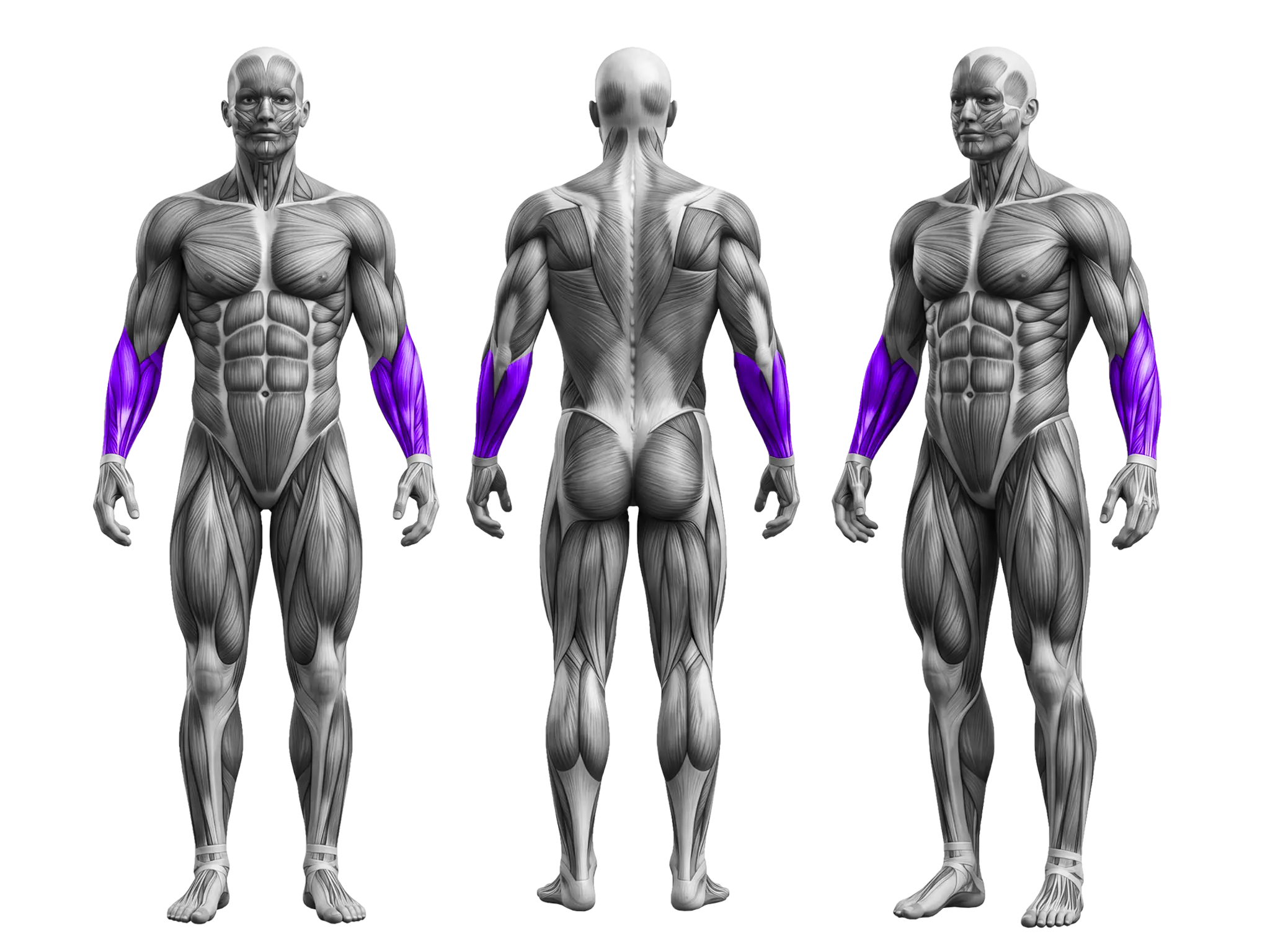
Brachioradialis & Forearm Flexors
Assisting
Recommended Equipment
Gym Alternative
EZ-Bar Preacher Curl

The same bench, the same locked position, with an EZ bar instead of the machine. You can load it heavier and the angled grip is easy on the wrists. The only trade-off is that the bottom of the rep goes slightly light, where the machine would still be pulling.

Additional gym alternatives, best to worst:

Additional gym alternatives:

  1. Single-Arm Dumbbell Preacher Curl — one side at a time, so a weaker arm can't hide
  2. Incline Dumbbell Curl — arms hanging behind the body; the deepest biceps stretch there is
  3. Cable Bar Curl (low pulley) — constant tension through the whole rep, standing
Home Alternative
Standing Dumbbell Hammer Curl

A dumbbell in each hand, palms facing up, elbows pressed firmly into your sides. Curl up, squeeze for a second, lower over three seconds, and straighten your arms fully at the bottom.

You don't have a pad at home, so your elbows have to do that job: squeeze your chest and pin them to your ribs so nothing swings. If your body is rocking, the dumbbells are too heavy.

Additional home alternatives:

Additional home alternatives:

  1. Concentration Curl — sit, lean forward, press your upper arm against the inside of your thigh; the strictest curl you can do at home
  2. Preacher Curl on a sofa arm — kneel beside the sofa and lay your upper arm along its arm, armpit against the top edge
  3. Resistance Band Curl — stand on the band, palms up, curl both arms