Consistency training
No perfect days. Just consistent ones.
Back to workout

Exercise Instructions

Overhead Rope Cable Triceps Extension

Overhead Triceps Extension
Exercise guide — Setup / Technique / Tips / Mistakes

Why this one is in the program

This is the only triceps exercise that properly trains the long head — and the long head is the biggest of the three, the one that runs down the back of your arm and gives it that thickness you see from the side.

Here's why it needs a special exercise. The long head is the only triceps head that crosses your shoulder joint as well as your elbow. On a pushdown or a close-grip press, your arms are down at your sides, and in that position the long head is short and lazy — the other two heads do most of the work. Lift your arms overhead and the long head gets pulled into a deep stretch. Now it has to do the job, and it's loaded exactly where growth happens.

That's the whole point of this movement. Pushdowns finish your triceps. This one builds them.

And the cable is what makes it work. With a dumbbell, the resistance disappears at the top of the rep. With a cable pulling from behind you, tension stays on the muscle from the deepest stretch all the way to lockout. Nothing gets a free ride.

One warning before anything else: how you get into this exercise matters as much as how you do it. More people ruin this movement in the setup than in the set. Read the next section carefully.

Setup

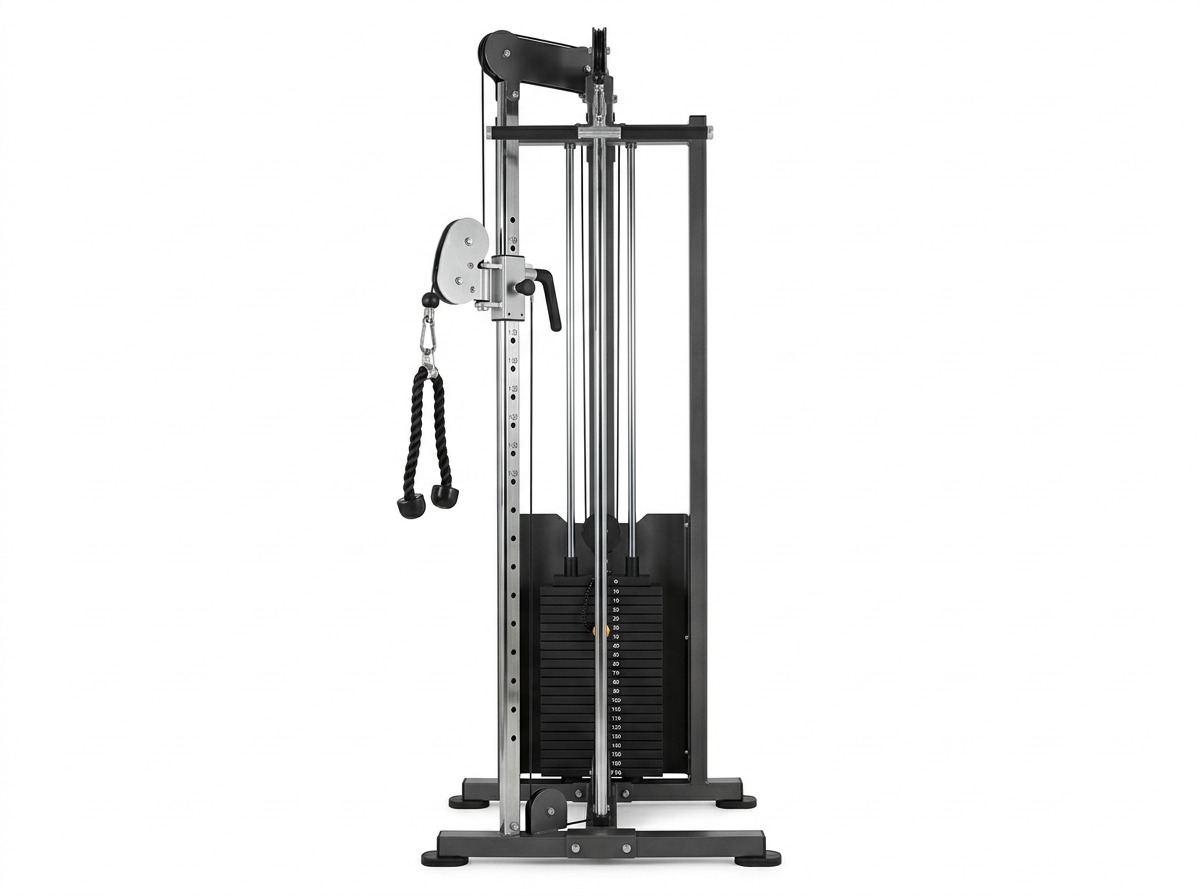
  • Attach a rope to the pulley and set it to about head height or slightly above — not down at the floor.
  • If your gym's ropes are short, clip two ropes onto the same carabiner so you have enough length to work with.
  • Stand with your back to the machine.
  • Squat down, take the rope, and bring it over your shoulders while you're still low — then stand up. Do not stand upright and twist yourself into position.
  • Step forward one or two steps until the cable is under tension.
  • Stagger your feet, one in front of the other, and brace your abs.
  • Lean your torso forward slightly and lift your elbows up beside your ears, pointing straight ahead.
  • Keep your elbows at shoulder width. That's your start position.

Why the setup does the work here

The way you get into this exercise decides the weight you can use — and whether your back survives it.

Watch what most people do. They set the pulley at the floor, stand up straight, then twist and haul the rope up over their shoulder from behind. Now they're loading a heavy cable through a rotated spine, one arm at a time. That's how people herniate a disc. And even when it doesn't hurt them, it caps the weight: you can only get up there what you can awkwardly wrench over your shoulder standing.

Do it my way instead. Raise the pulley to head height so the rope is already close to where you need it. Squat down, take the rope with both hands, bring it over your shoulders while you're low and your spine is neutral — then stand up and let your legs lift the load into position. No twisting, no strain, and suddenly you can handle a weight that's actually worth doing. Most people can jump two or three plates the first time they set up properly.

Rope length matters more than you'd think. Short ropes force your hands too close together and cut your range. Two ropes on one carabiner fixes it. But don't overcorrect — long ropes let your hands drift far apart, your elbows flare out wide, and the tension leaks off the long head. Elbows at shoulder width, always. That's the rule regardless of what rope you're using.

The forward lean and the staggered stance do one job: keep you stable so the cable can't drag you backwards. If you're fighting for balance, you're not training your triceps.

Technique

  • Start with your elbows high beside your ears and your hands behind your head, triceps fully stretched.
  • Keep your upper arms completely still — only your forearms move.
  • Extend your arms forward and up until they're straight.
  • Pull your hands slightly apart as you lock out.
  • Squeeze the triceps hard for one full second at the top.
  • Lower slowly, 3 seconds, letting your hands travel back behind your head.
  • Let the stretch happen — that's the most valuable part of the rep.
  • Keep your elbows at shoulder width the whole time.

Why technique decides everything here

Your elbows are the hinge, and a hinge doesn't move. That's the whole exercise in one sentence. The second your elbows start drifting forward, down, or out, your shoulders and lats take over and your triceps get a rest. Fix the elbows beside your ears and hold them there — if they're moving, drop the weight.

Elbows in, not out. Flaring is the sneakiest way to make this easier. Wide elbows change the angle, take the long head out of its stretched position, and turn a triceps exercise into a shoulder exercise. Shoulder width, pointing forward.

Don't rush the way back. That deep stretch behind your head, where the long head is longest under load, is the single most valuable second of the rep. Three seconds down, every time. Fast reps here are wasted reps.

And finish. Straight arms, full lockout, one honest second of squeeze. The last few degrees are where the triceps contract hardest — stop short and you've cut off the best part.

Common Mistakes

  • Setting the pulley at the floor and twisting the rope up over the shoulder while standing.
  • Elbows drifting forward or flaring out wide.
  • Letting the upper arms swing so the shoulders and lats do the work.
  • Using a rope that's too short, which jams the hands together and cuts the range.
  • Letting long ropes pull the hands and elbows too far apart.
  • Cutting the stretch short — not letting the hands travel fully behind the head.
  • Not locking out at the top.
  • Standing with feet square and getting dragged backwards by the cable.
  • Rounding the lower back to lean into the movement.

Where people lose results

Here's the surprise on this exercise: the most common problem is going too light — and it's usually the setup's fault, not yours.

Almost everyone sets this up badly. Low pulley, stand upright, twist the rope over one shoulder, start pulling. From that position you can't handle real weight — the cable is dragging down and back on you before the set even begins, and your spine is doing half the work just to hold you there. So you settle for a light stack, feel almost nothing, and quietly decide this exercise "doesn't work for you."

It works. Your setup was fighting you. Raise the pulley to head height, squat down, take the rope over your shoulders while you're low, then stand up. Legs lift the load, spine stays neutral, and you'll find yourself using two or three plates more than before — with better position and zero risk to your back. That one change transforms this movement.

Then there's the other direction. Once you can handle real weight, too heavy shows up immediately: the elbows drift and flare, the upper arms start swinging, the stretch gets cut short and the lockout disappears. At that point you're not doing an overhead extension anymore, you're doing a bad standing pullover. If your elbows won't stay beside your ears, that's your signal.

And the third one, specific to this movement: the elbow width. Short ropes squeeze your hands together; long ropes let them fly apart. Both drag your elbows out of position and take tension off the long head — the exact muscle this exercise exists for. Two ropes on one carabiner for length, elbows at shoulder width for position. Check it on your first rep of every set.

Stay in the 10–20 rep range here. This is an elbow-heavy movement with a deep stretch — it responds to controlled reps and volume, not to grinding. Once every working set hits the top of the range with clean form, add the smallest increment the stack allows and climb again.
Target Muscles
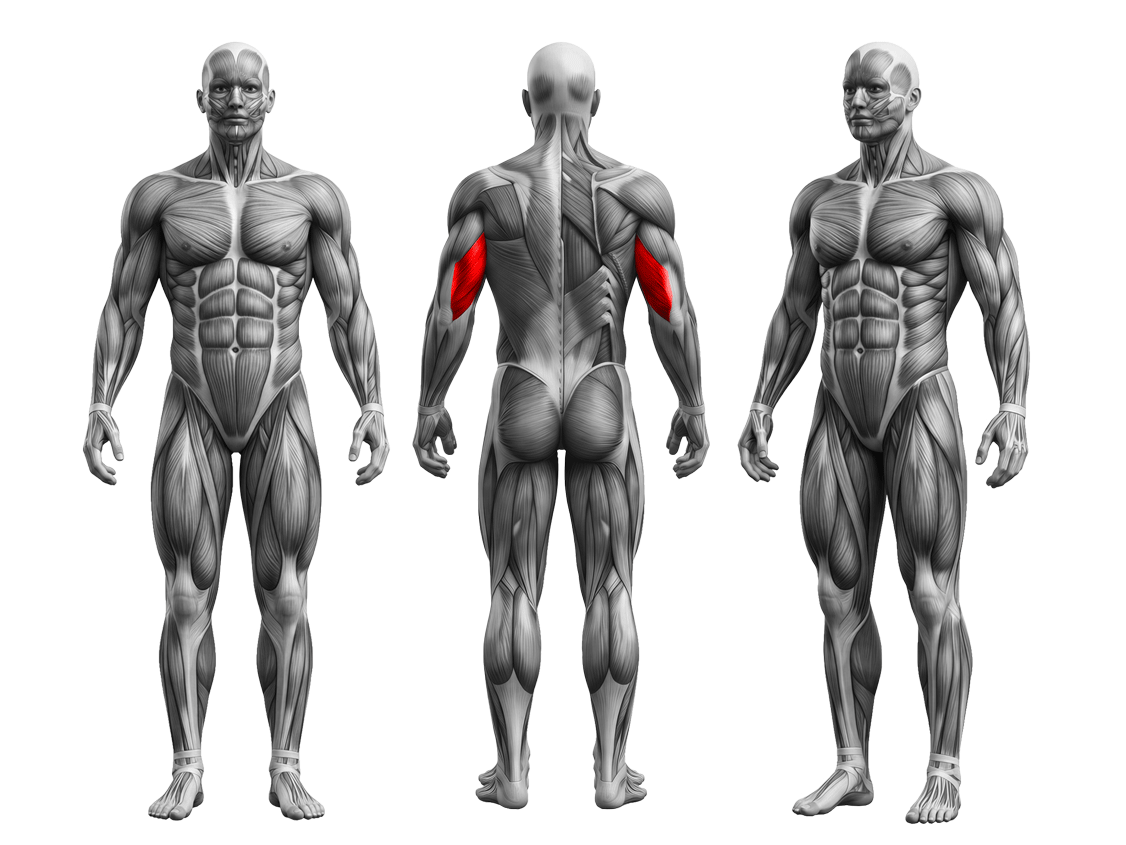
Triceps Brachii — Long Head
Primary
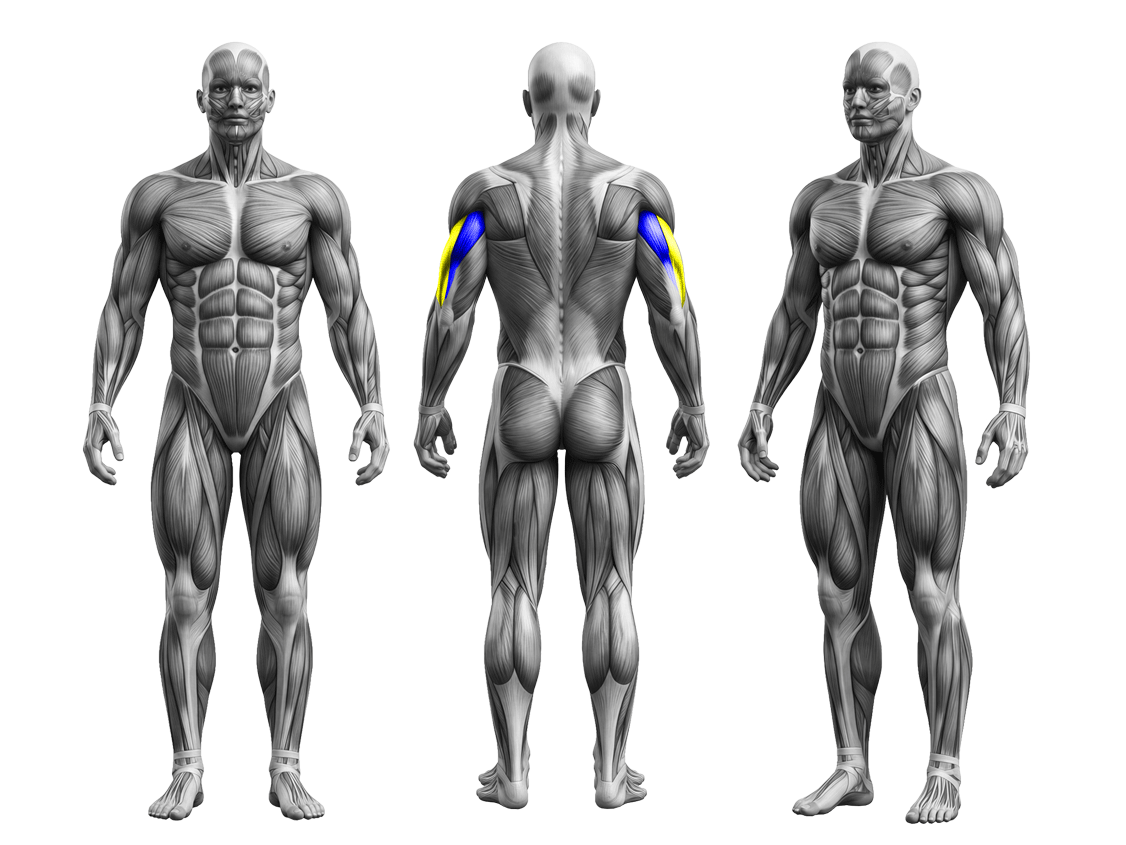
Triceps Brachii — Lateral & Medial Heads
Assisting
Anconeus, Core & Shoulder Stabilisers
Assisting
Recommended Equipment

Cable Machine with Adjustable Pulley
Any cable column where the pulley height can be adjusted. Set it to head height or slightly above — this is the detail that makes or breaks the exercise. A pulley at the floor forces you to twist the rope up over your shoulder while standing, which loads your spine in rotation and caps the weight you can use. Set it high, squat down, take the rope over your shoulders while you're low, then stand up and step forward. The cable is the right tool here because it keeps constant tension on the triceps from the deep stretch behind your head all the way to lockout — unlike a dumbbell, which goes light at the top.

Exercise Instructions

Overhead Rope Cable Triceps Extension

(
Overhead Triceps Extension
)
Exercise guide — Setup / Technique / Tips / Mistakes

Why this one is in the program

This is the only triceps exercise that properly trains the long head — and the long head is the biggest of the three, the one that runs down the back of your arm and gives it that thickness you see from the side.

Here's why it needs a special exercise. The long head is the only triceps head that crosses your shoulder joint as well as your elbow. On a pushdown or a close-grip press, your arms are down at your sides, and in that position the long head is short and lazy — the other two heads do most of the work. Lift your arms overhead and the long head gets pulled into a deep stretch. Now it has to do the job, and it's loaded exactly where growth happens.

That's the whole point of this movement. Pushdowns finish your triceps. This one builds them.

And the cable is what makes it work. With a dumbbell, the resistance disappears at the top of the rep. With a cable pulling from behind you, tension stays on the muscle from the deepest stretch all the way to lockout. Nothing gets a free ride.

One warning before anything else: how you get into this exercise matters as much as how you do it. More people ruin this movement in the setup than in the set. Read the next section carefully.

Setup

  • Attach a rope to the pulley and set it to about head height or slightly above — not down at the floor.
  • If your gym's ropes are short, clip two ropes onto the same carabiner so you have enough length to work with.
  • Stand with your back to the machine.
  • Squat down, take the rope, and bring it over your shoulders while you're still low — then stand up. Do not stand upright and twist yourself into position.
  • Step forward one or two steps until the cable is under tension.
  • Stagger your feet, one in front of the other, and brace your abs.
  • Lean your torso forward slightly and lift your elbows up beside your ears, pointing straight ahead.
  • Keep your elbows at shoulder width. That's your start position.

Why the setup does the work here

The way you get into this exercise decides the weight you can use — and whether your back survives it.

Watch what most people do. They set the pulley at the floor, stand up straight, then twist and haul the rope up over their shoulder from behind. Now they're loading a heavy cable through a rotated spine, one arm at a time. That's how people herniate a disc. And even when it doesn't hurt them, it caps the weight: you can only get up there what you can awkwardly wrench over your shoulder standing.

Do it my way instead. Raise the pulley to head height so the rope is already close to where you need it. Squat down, take the rope with both hands, bring it over your shoulders while you're low and your spine is neutral — then stand up and let your legs lift the load into position. No twisting, no strain, and suddenly you can handle a weight that's actually worth doing. Most people can jump two or three plates the first time they set up properly.

Rope length matters more than you'd think. Short ropes force your hands too close together and cut your range. Two ropes on one carabiner fixes it. But don't overcorrect — long ropes let your hands drift far apart, your elbows flare out wide, and the tension leaks off the long head. Elbows at shoulder width, always. That's the rule regardless of what rope you're using.

The forward lean and the staggered stance do one job: keep you stable so the cable can't drag you backwards. If you're fighting for balance, you're not training your triceps.

Technique

  • Start with your elbows high beside your ears and your hands behind your head, triceps fully stretched.
  • Keep your upper arms completely still — only your forearms move.
  • Extend your arms forward and up until they're straight.
  • Pull your hands slightly apart as you lock out.
  • Squeeze the triceps hard for one full second at the top.
  • Lower slowly, 3 seconds, letting your hands travel back behind your head.
  • Let the stretch happen — that's the most valuable part of the rep.
  • Keep your elbows at shoulder width the whole time.

Why technique decides everything here

Your elbows are the hinge, and a hinge doesn't move. That's the whole exercise in one sentence. The second your elbows start drifting forward, down, or out, your shoulders and lats take over and your triceps get a rest. Fix the elbows beside your ears and hold them there — if they're moving, drop the weight.

Elbows in, not out. Flaring is the sneakiest way to make this easier. Wide elbows change the angle, take the long head out of its stretched position, and turn a triceps exercise into a shoulder exercise. Shoulder width, pointing forward.

Don't rush the way back. That deep stretch behind your head, where the long head is longest under load, is the single most valuable second of the rep. Three seconds down, every time. Fast reps here are wasted reps.

And finish. Straight arms, full lockout, one honest second of squeeze. The last few degrees are where the triceps contract hardest — stop short and you've cut off the best part.

Common Mistakes

  • Setting the pulley at the floor and twisting the rope up over the shoulder while standing.
  • Elbows drifting forward or flaring out wide.
  • Letting the upper arms swing so the shoulders and lats do the work.
  • Using a rope that's too short, which jams the hands together and cuts the range.
  • Letting long ropes pull the hands and elbows too far apart.
  • Cutting the stretch short — not letting the hands travel fully behind the head.
  • Not locking out at the top.
  • Standing with feet square and getting dragged backwards by the cable.
  • Rounding the lower back to lean into the movement.

Where people lose results

Here's the surprise on this exercise: the most common problem is going too light — and it's usually the setup's fault, not yours.

Almost everyone sets this up badly. Low pulley, stand upright, twist the rope over one shoulder, start pulling. From that position you can't handle real weight — the cable is dragging down and back on you before the set even begins, and your spine is doing half the work just to hold you there. So you settle for a light stack, feel almost nothing, and quietly decide this exercise "doesn't work for you."

It works. Your setup was fighting you. Raise the pulley to head height, squat down, take the rope over your shoulders while you're low, then stand up. Legs lift the load, spine stays neutral, and you'll find yourself using two or three plates more than before — with better position and zero risk to your back. That one change transforms this movement.

Then there's the other direction. Once you can handle real weight, too heavy shows up immediately: the elbows drift and flare, the upper arms start swinging, the stretch gets cut short and the lockout disappears. At that point you're not doing an overhead extension anymore, you're doing a bad standing pullover. If your elbows won't stay beside your ears, that's your signal.

And the third one, specific to this movement: the elbow width. Short ropes squeeze your hands together; long ropes let them fly apart. Both drag your elbows out of position and take tension off the long head — the exact muscle this exercise exists for. Two ropes on one carabiner for length, elbows at shoulder width for position. Check it on your first rep of every set.

Stay in the 10–20 rep range here. This is an elbow-heavy movement with a deep stretch — it responds to controlled reps and volume, not to grinding. Once every working set hits the top of the range with clean form, add the smallest increment the stack allows and climb again.
Target Muscles
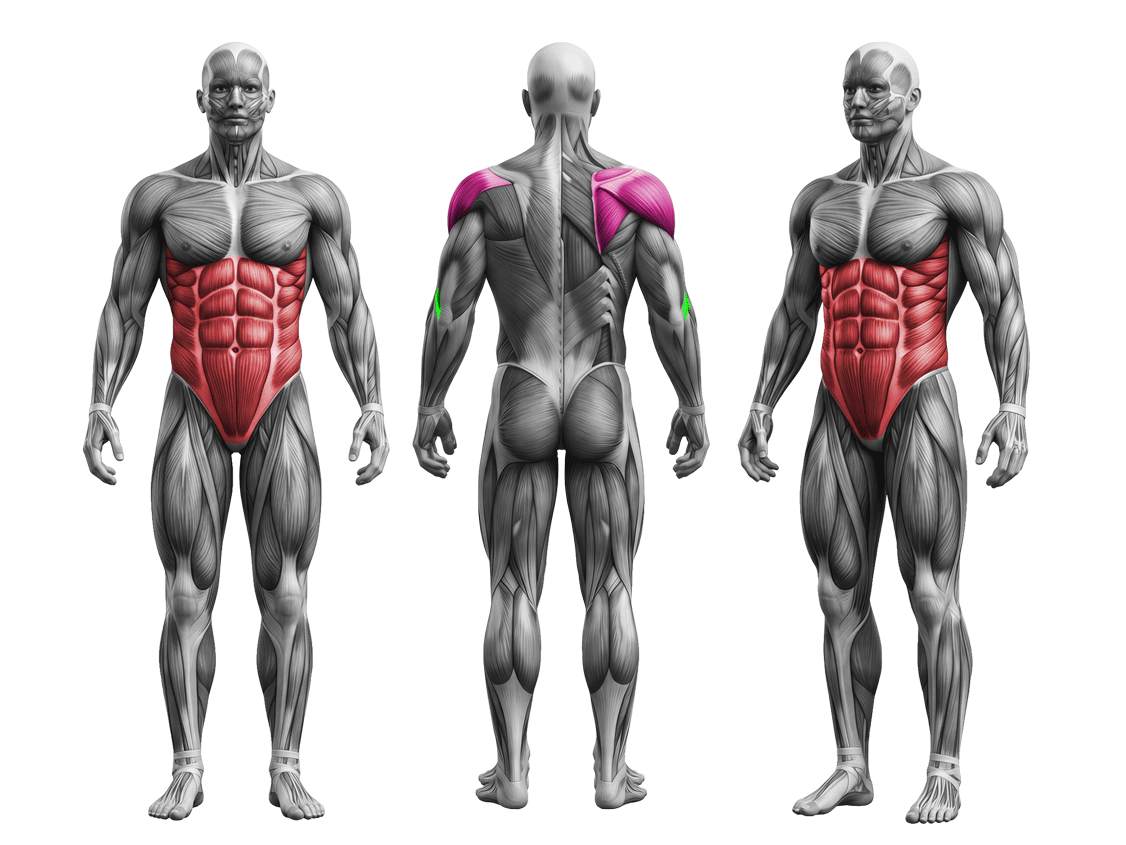
Triceps Brachii — Long Head
Primary
Triceps Brachii — Lateral & Medial Heads
Assisting
Anconeus, Core & Shoulder Stabilisers
Assisting
Recommended Equipment

Cable Machine with Adjustable Pulley
Any cable column where the pulley height can be adjusted. Set it to head height or slightly above — this is the detail that makes or breaks the exercise. A pulley at the floor forces you to twist the rope up over your shoulder while standing, which loads your spine in rotation and caps the weight you can use. Set it high, squat down, take the rope over your shoulders while you're low, then stand up and step forward. The cable is the right tool here because it keeps constant tension on the triceps from the deep stretch behind your head all the way to lockout — unlike a dumbbell, which goes light at the top.

Rope Attachment (use two ropes on one carabiner if yours are short)
A double-ended rope clipped to the pulley. The rope is the right attachment because it lets your hands rotate and pull slightly apart at lockout, which gives you a harder contraction than a fixed bar. Length matters: if your gym's rope is short, your hands get jammed together and your range gets cut — clip two ropes onto the same carabiner to fix it. But don't take that as licence to go wide. Long ropes let the hands drift far apart, the elbows flare out, and tension slides off the long head. Whatever rope you're using, keep your elbows at shoulder width, pointing forward beside your ears.

Gym Alternative
Overhead Dumbbell Triceps Extension

Overhead Dumbbell Triceps Extension (seated, two hands on one dumbbell)
Sit on an upright bench, hold one dumbbell overhead with both hands, and lower it behind your head. Same overhead position, same long-head stretch. The back support locks your torso so nothing can cheat. The trade-off: tension drops off near the top, where the cable would still be pulling.

Additional gym alternatives, best to worst:

Additional gym alternatives, best to worst:

  1. EZ-Bar Overhead Extension (seated or standing — heavier loading, easier on the wrists than a straight bar)
  2. Single-Arm Overhead Cable Extension (one side at a time, more range, fixes imbalances)
  3. Incline Bench Skull Crusher (long-head stretch with the arms angled back)
  4. Cable Overhead Extension Kneeling on a Bench (locks the torso, removes all swing)
  5. Overhead Machine Triceps Extension, if your gym has one
Home Alternative
Overhead Dumbbell Triceps Extension

Overhead Dumbbell Triceps Extension
One dumbbell held with both hands, seated on a chair with your back supported or standing with your abs braced. Elbows beside your ears, lower slowly behind your head, lock out fully at the top. It's the same movement with the same target, and one dumbbell is all you need.

Additional home alternatives:

Additional home alternatives:

  1. Overhead Band Triceps Extension — band anchored low behind you, or stood on with both feet; the band's rising tension mimics the cable well
  2. Single-Arm Overhead Dumbbell Extension — more range per side
  3. Backpack Overhead Extension — loaded backpack held with both hands by the straps
  4. Lying Dumbbell Skull Crusher on the floor or a bench
  5. Bodyweight Triceps Extension — hands on a table or chair edge, body leaning forward, lower your forehead toward your hands and press back out