Exercise Instructions
Standing Reverse-Grip Dumbbell Shoulder Press

Why this one is in the program
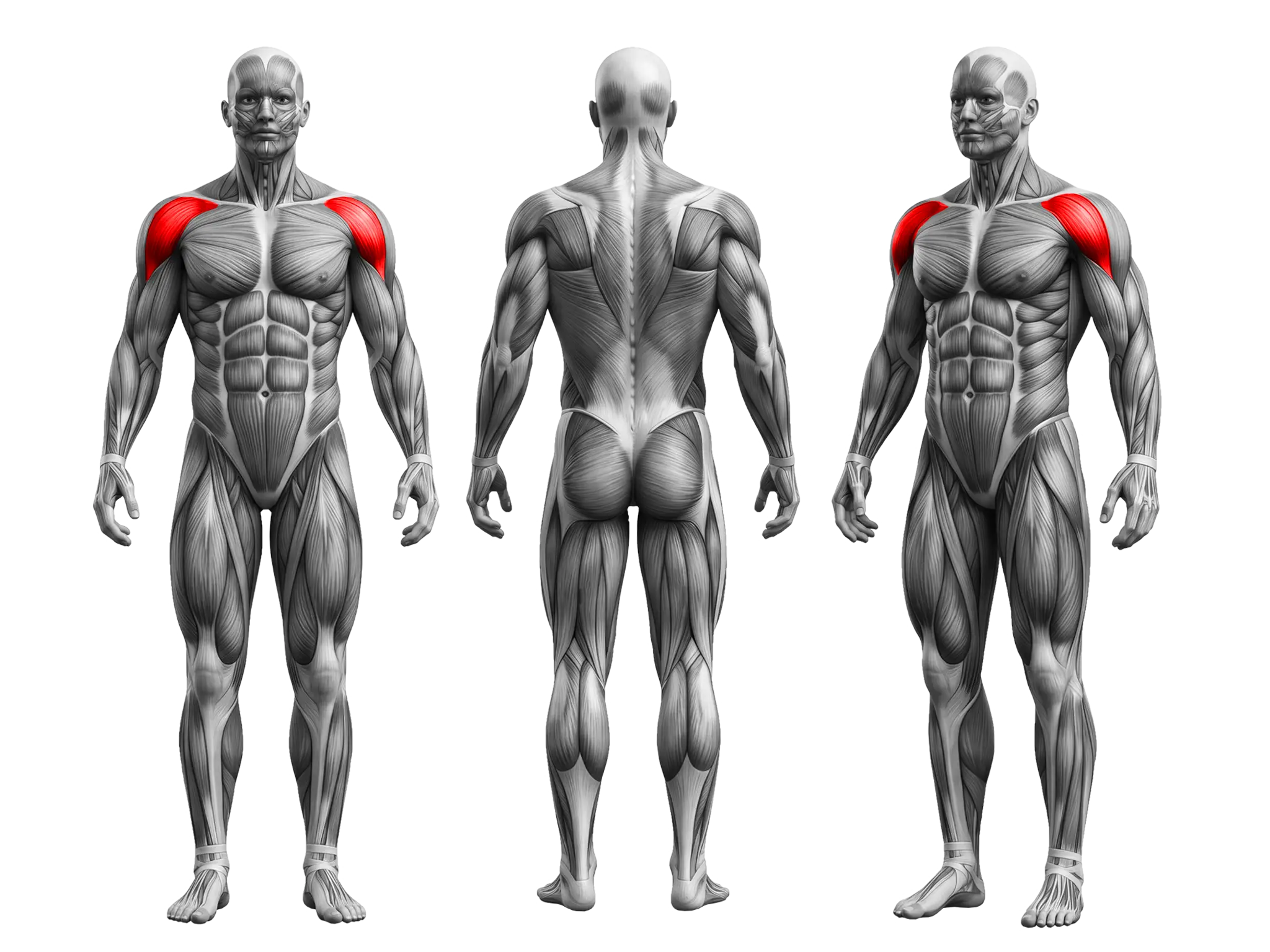
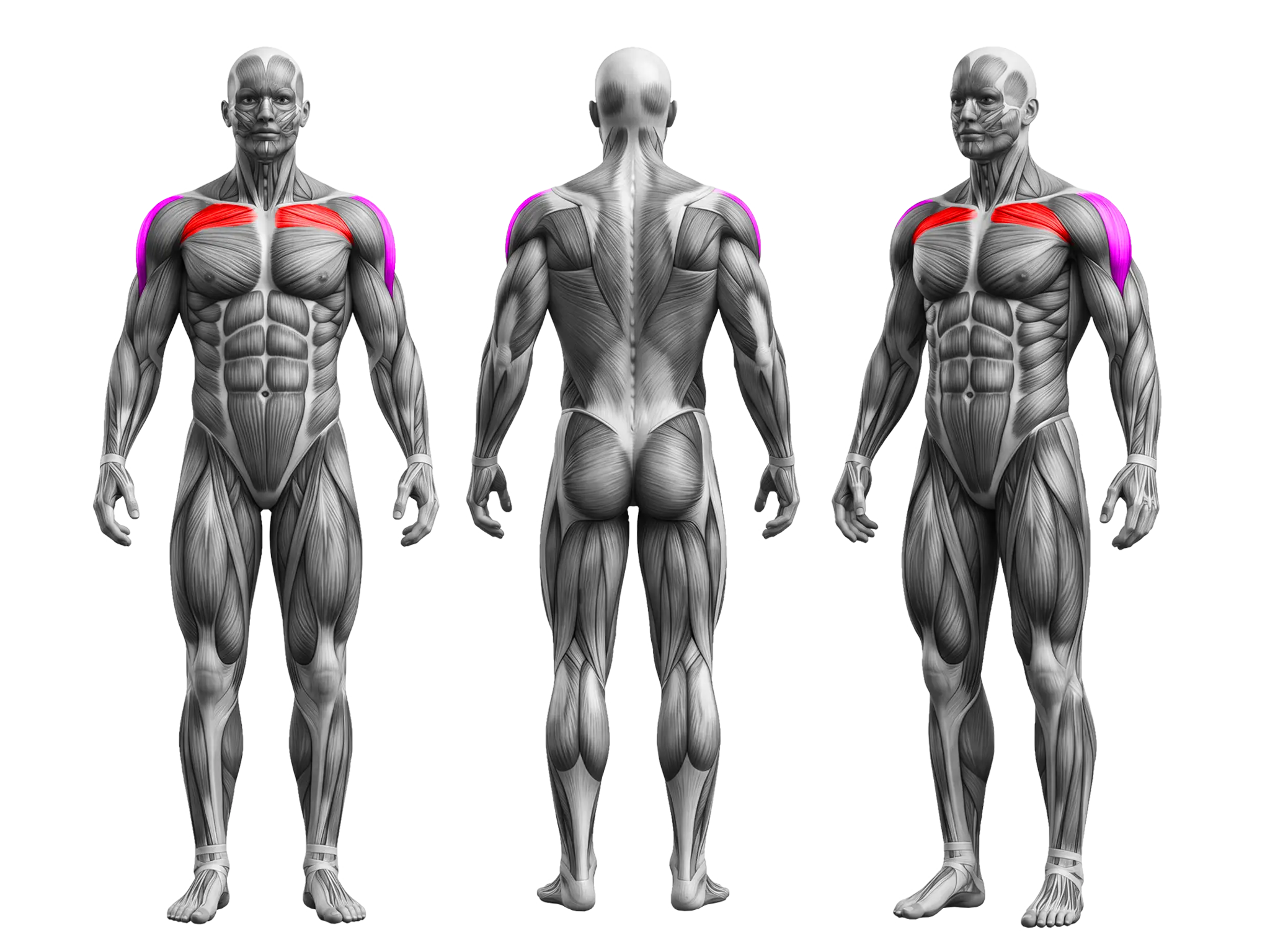
This is a shoulder press built for one job: the front of your shoulder.
The normal press, with your palms facing forward, spreads the work around — front delt, side delt, triceps. Turn your palms to face you and keep them there, and the front delt becomes the main worker. Same movement, one grip change, a much sharper target.
People often confuse this with the Arnold press. They're not the same. In the Arnold press you twist your hands outward on the way up, and at the top you finish like a normal press. Here there's no twist at all. Your palms face you at the bottom, at the top, and everywhere in between. Nothing rotates, and the front delt never gets a break.
I also do this one standing, not seated — with a small bend in the knees. That little bend gives you a bit of spring, lets you lean back slightly, and that's what lets you finish the movement properly over your head. More on that below.
Setup
- Take a dumbbell in each hand and stand up, feet about shoulder-width apart.
- Bring the dumbbells up to shoulder height, palms facing you. They should sit in front of your shoulders, almost touching your collarbones.
- Keep your elbows pointing down and forward — in front of your body, not out to the sides.
- Bend your knees slightly. Just a soft bend, not a squat.
- Tighten your stomach hard and squeeze your glutes.
- Lean your upper body back just a little. Chest up, ribs down.
- Pull your shoulders down, away from your ears. That's your start.
Why the setup does the work here
The palms-facing-you grip is the exercise. Turn them even halfway forward and you're doing a normal press again. Palms to you, all the way up, all the way down.
The soft knee bend does two things. It gives you a bit of cushion so your knees and lower back aren't stiff under load, and it lets you handle a bit more weight without your whole body going rigid. Soft knees, not bouncing knees — there's a big difference, and we'll get to it.
The small lean back is what lets you finish the rep. With your palms facing you and your elbows in front, your arms travel in front of your body — not straight up the sides of your head. If you stand bolt upright, you can't press all the way to the top without your shoulders jamming. Lean back slightly and the path opens up, so you can lock out properly over your head.
But small means small. We're talking a few degrees — your chest up, your ribs stacked over your hips. The moment you're leaning back like a bench press, the work slides off your shoulders and onto your chest, and your lower back takes the rest.
Technique
- Start with the dumbbells at your shoulders, palms facing you.
- Press straight up, keeping your palms facing you the whole way. No twisting.
- Let the dumbbells come together slightly as they rise.
- Press all the way up until your arms are straight. Full lockout, every rep.
- Squeeze for one second at the top.
- Lower slowly, about 3 seconds, back down to your shoulders.
- Come down far enough that you feel the stretch — don't stop halfway.
- Keep your body still. Legs don't push, hips don't swing.
Why technique decides everything here
No rotation. That's rule one. If your hands start turning outward on the way up, you've drifted into an Arnold press and the front delt stops being the target. Check your palms at the top of your first rep — they should be facing you, just like at the bottom.
Finish the rep. Arms fully straight, one honest second at the top. A lot of people press to eye level and stop. That's not a safer version, it's just a shorter one — and the top is exactly where the shoulder works hardest.
Your legs are there for balance, not for lifting. Soft knees are fine. Dipping and driving the weight up with your legs is not. The moment your knees start pumping on every rep, your shoulders are getting a ride. If you need the legs, the weight is too heavy.
Keep your elbows in front of you. Not flared out to the sides and not pulled back behind you. In front, pointing down. That's the position where the front delt works best and the shoulder joint stays happy.
Common Mistakes
- Twisting the palms outward — that's an Arnold press, not this.
- Leaning too far back, which hands the work to the chest.
- Bouncing with the knees to throw the weight up.
- Stopping short at the top instead of locking out.
- Only coming halfway down, so the muscle never stretches.
- Flaring the elbows out to the sides.
- Shrugging the shoulders up toward the ears.
- Letting the dumbbells drop fast instead of lowering them.
Where people lose results
Three things kill this exercise, and they almost always come as a package.
Leaning back too far. A small lean opens the path so you can finish the rep. A big lean turns this into a standing incline chest press — your front delts get less, your chest takes over, and your lower back carries the rest. Chest up, ribs over hips, just a few degrees. If you feel it in your lower back, you've gone too far.
Bouncing with the legs. Soft knees are part of the setup. Dipping and driving is cheating. The weight goes up, your shoulders barely work, and the number in your notebook means nothing. Stand solid, let the shoulders press.
Half reps. Not locking out at the top, or not coming all the way down to your shoulders. Both ends of the rep matter: the top is where the muscle squeezes hardest, the bottom is where it stretches. Cut either one and you've shortened the exercise.
Then the weight itself. Too heavy and all three faults show up at once — the lean grows, the knees start pumping, the lockout disappears. Too light and nothing happens at all.
The honest test: stand still, knees soft but motionless, lean just slightly, press all the way to straight arms, three seconds down. If you can't do that for your full rep range, that's not your weight.
Stay in the 8–15 rep range. When every working set hits the top of that range with clean form and a full lockout, move up to the next pair of dumbbells and climb back.