Consistency training
No perfect days. Just consistent ones.
Back to workout

Exercise Instructions

Seated Calf Raise

Exercise guide — Setup / Technique / Tips / Mistakes

Why this one is in the program

Your calf is two muscles, not one — and this exercise trains the one most people never touch.

The big visible muscle on top is the gastrocnemius. Underneath it sits the soleus — a wide, thick muscle that actually makes up a large share of your calf's total size. When it grows, it pushes the gastrocnemius out and makes your whole lower leg look fuller from the front and the side.

Bending your knees is what targets it. The gastrocnemius crosses your knee joint; the soleus doesn't. Sit down with your knees bent and the gastrocnemius goes slack and loses most of its pulling power — so the soleus has to do the work. Standing calf raises train the top muscle. This trains the one underneath. You want both.

And like all calf work, it only works if you take it slow and deep. Your calves walk all day — quick bouncy reps don't register.

Setup

  • Sit down and place the balls of your feet on the edge of the foot platform — heels hanging off.
  • Feet about hip-width apart, toes pointing straight forward.
  • Lower the knee pad onto your thighs, just above your knees, and adjust it until it's snug — tight against your legs with no gap.
  • Push up onto your toes slightly to take the weight.
  • Release the safety lever.
  • Let your heels drop as low as they can go. That's your start position.

Why the setup does the work here

The pad must be snug. If there's a gap between the pad and your thighs, the weight jumps around and the first part of every rep is wasted. Tight against your legs means the load is on your calves from the very first centimetre.

Only the balls of your feet on the platform. That's what lets your heels drop below the edge into a deep stretch — the most valuable part of this exercise.

Pad above the knees, on the thigh. Not on the knee cap itself. On the lower thigh, where it's comfortable enough that you can actually push hard.

And know your safety lever. Release it to start, and put it back on before you stand up at the end of the set.

Technique

  • Start with your heels as low as they can go and your calves stretched.
  • Pause at the bottom for 1–2 seconds. No bounce.
  • Push up onto the balls of your feet as high as you can.
  • Squeeze for one second at the top.
  • Lower slowly, about 2–3 seconds, back into the deep stretch.
  • Keep your upper body still — don't rock forward to help.
  • At the end of the set, lock the safety lever before you take your feet off.

Why technique decides everything here

The pause at the bottom changes everything. Your Achilles tendon works like a spring. Drop fast and bounce, and the tendon throws the weight back up — the muscle barely works. A 1–2 second pause in the stretch takes that spring away and makes the calf do the lifting.

The stretch is where the growth is. Calves respond especially well to work in the stretched position. Cutting the bottom short is the most common way people waste this exercise.

Don't rock with your body. Leaning forward and pulling on the handles to help means your upper body is lifting the weight. Sit still, push with your feet.

And go all the way up. Full height, one second squeeze. Both ends of the rep count.

Common Mistakes

  • Bouncing out of the bottom instead of pausing.
  • Not letting the heels drop below the platform.
  • Knee pad set loose, so the weight jumps around.
  • Pad sitting on the kneecaps instead of the thighs.
  • Short, fast reps through the middle of the range.
  • Rocking the upper body to help lift.
  • Rising only halfway up.
  • Forgetting to lock the safety lever before getting off.

Where people lose results

Bouncing. The number one calf mistake. Fast reps let your Achilles tendon do the work and your soleus gets almost nothing. Fix: pause 1–2 seconds at the bottom of every rep.

No stretch. Cutting the bottom short removes the part calves respond to most. Fix: heels all the way down, every rep.

Loose pad. A gap between the pad and your thighs means the weight lurches and the first part of every rep does nothing. Fix: snug before you release the safety.

Too heavy. This machine invites big stacks and tiny movements. Lots of weight, a few centimetres of range, no growth. Fix: a weight you can take through the full range with a pause.

Too light, or too easy. Your calves work all day. Easy sets don't register. The last reps need to burn and be a real fight.

The honest test: pause at the bottom, full height at the top, one-second squeeze, slow down, body still. If you can't do that for your full rep range, that's not your weight.

Stay in the 12–20 rep range. You're seated with a safety lever and nothing above you, so the last set can go to failure — and calves are a great place for a dropset.
Target Muscles
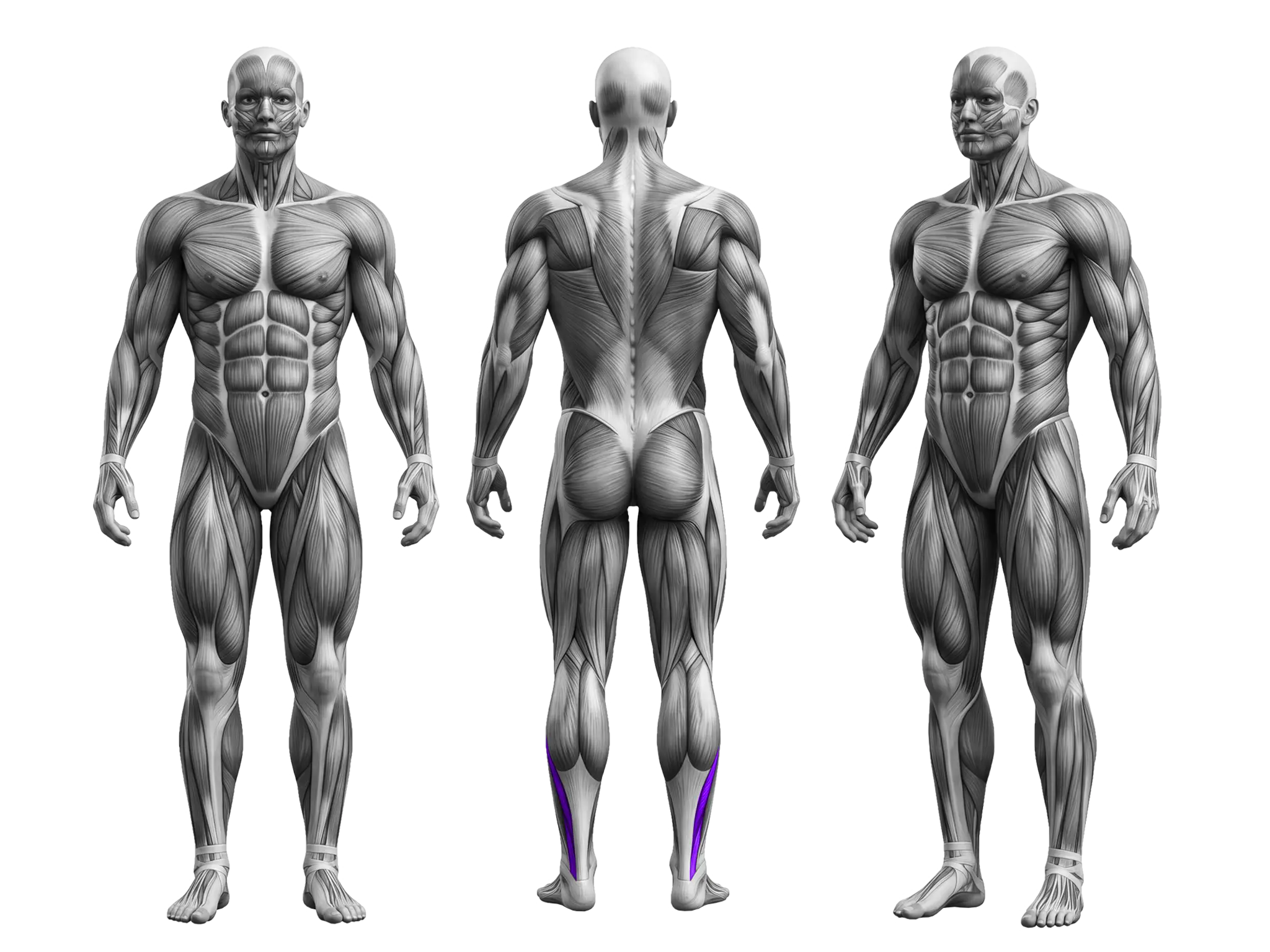
Soleus
Primary
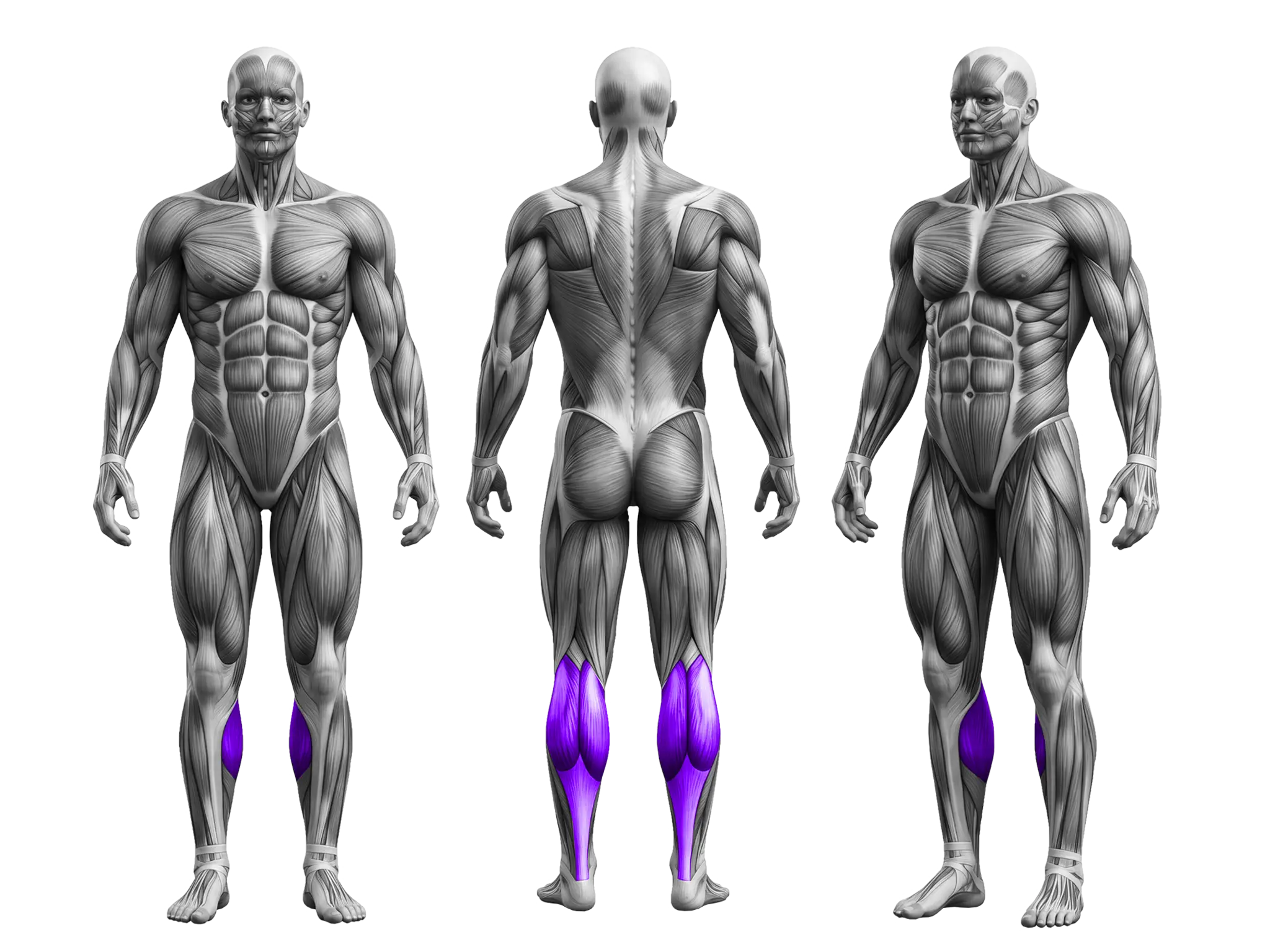
Gastrocnemius (Calf)
Assisting
Tibialis Posterior, Peroneals & Foot Flexors
Assisting
Recommended Equipment

Seated Calf Raise Machine
The seated machine with a foot platform in front of you, an adjustable padded lever that sits across your thighs, and a safety lever that locks the weight in place.

Sit down and place the balls of your feet on the edge of the platform, heels hanging off, feet hip-width and toes forward. Then lower the knee pad onto your lower thighs, just above the knees, and adjust it until it's snug — no gap between pad and legs. Push up onto your toes slightly, release the safety lever, and you're ready.

At the end of the set, lock the safety lever back before you take your feet off the platform.

Exercise Instructions

Seated Calf Raise

Exercise guide — Setup / Technique / Tips / Mistakes

Why this one is in the program

Your calf is two muscles, not one — and this exercise trains the one most people never touch.

The big visible muscle on top is the gastrocnemius. Underneath it sits the soleus — a wide, thick muscle that actually makes up a large share of your calf's total size. When it grows, it pushes the gastrocnemius out and makes your whole lower leg look fuller from the front and the side.

Bending your knees is what targets it. The gastrocnemius crosses your knee joint; the soleus doesn't. Sit down with your knees bent and the gastrocnemius goes slack and loses most of its pulling power — so the soleus has to do the work. Standing calf raises train the top muscle. This trains the one underneath. You want both.

And like all calf work, it only works if you take it slow and deep. Your calves walk all day — quick bouncy reps don't register.

Setup

  • Sit down and place the balls of your feet on the edge of the foot platform — heels hanging off.
  • Feet about hip-width apart, toes pointing straight forward.
  • Lower the knee pad onto your thighs, just above your knees, and adjust it until it's snug — tight against your legs with no gap.
  • Push up onto your toes slightly to take the weight.
  • Release the safety lever.
  • Let your heels drop as low as they can go. That's your start position.

Why the setup does the work here

The pad must be snug. If there's a gap between the pad and your thighs, the weight jumps around and the first part of every rep is wasted. Tight against your legs means the load is on your calves from the very first centimetre.

Only the balls of your feet on the platform. That's what lets your heels drop below the edge into a deep stretch — the most valuable part of this exercise.

Pad above the knees, on the thigh. Not on the knee cap itself. On the lower thigh, where it's comfortable enough that you can actually push hard.

And know your safety lever. Release it to start, and put it back on before you stand up at the end of the set.

Technique

  • Start with your heels as low as they can go and your calves stretched.
  • Pause at the bottom for 1–2 seconds. No bounce.
  • Push up onto the balls of your feet as high as you can.
  • Squeeze for one second at the top.
  • Lower slowly, about 2–3 seconds, back into the deep stretch.
  • Keep your upper body still — don't rock forward to help.
  • At the end of the set, lock the safety lever before you take your feet off.

Why technique decides everything here

The pause at the bottom changes everything. Your Achilles tendon works like a spring. Drop fast and bounce, and the tendon throws the weight back up — the muscle barely works. A 1–2 second pause in the stretch takes that spring away and makes the calf do the lifting.

The stretch is where the growth is. Calves respond especially well to work in the stretched position. Cutting the bottom short is the most common way people waste this exercise.

Don't rock with your body. Leaning forward and pulling on the handles to help means your upper body is lifting the weight. Sit still, push with your feet.

And go all the way up. Full height, one second squeeze. Both ends of the rep count.

Common Mistakes

  • Bouncing out of the bottom instead of pausing.
  • Not letting the heels drop below the platform.
  • Knee pad set loose, so the weight jumps around.
  • Pad sitting on the kneecaps instead of the thighs.
  • Short, fast reps through the middle of the range.
  • Rocking the upper body to help lift.
  • Rising only halfway up.
  • Forgetting to lock the safety lever before getting off.

Where people lose results

Bouncing. The number one calf mistake. Fast reps let your Achilles tendon do the work and your soleus gets almost nothing. Fix: pause 1–2 seconds at the bottom of every rep.

No stretch. Cutting the bottom short removes the part calves respond to most. Fix: heels all the way down, every rep.

Loose pad. A gap between the pad and your thighs means the weight lurches and the first part of every rep does nothing. Fix: snug before you release the safety.

Too heavy. This machine invites big stacks and tiny movements. Lots of weight, a few centimetres of range, no growth. Fix: a weight you can take through the full range with a pause.

Too light, or too easy. Your calves work all day. Easy sets don't register. The last reps need to burn and be a real fight.

The honest test: pause at the bottom, full height at the top, one-second squeeze, slow down, body still. If you can't do that for your full rep range, that's not your weight.

Stay in the 12–20 rep range. You're seated with a safety lever and nothing above you, so the last set can go to failure — and calves are a great place for a dropset.
Target Muscles
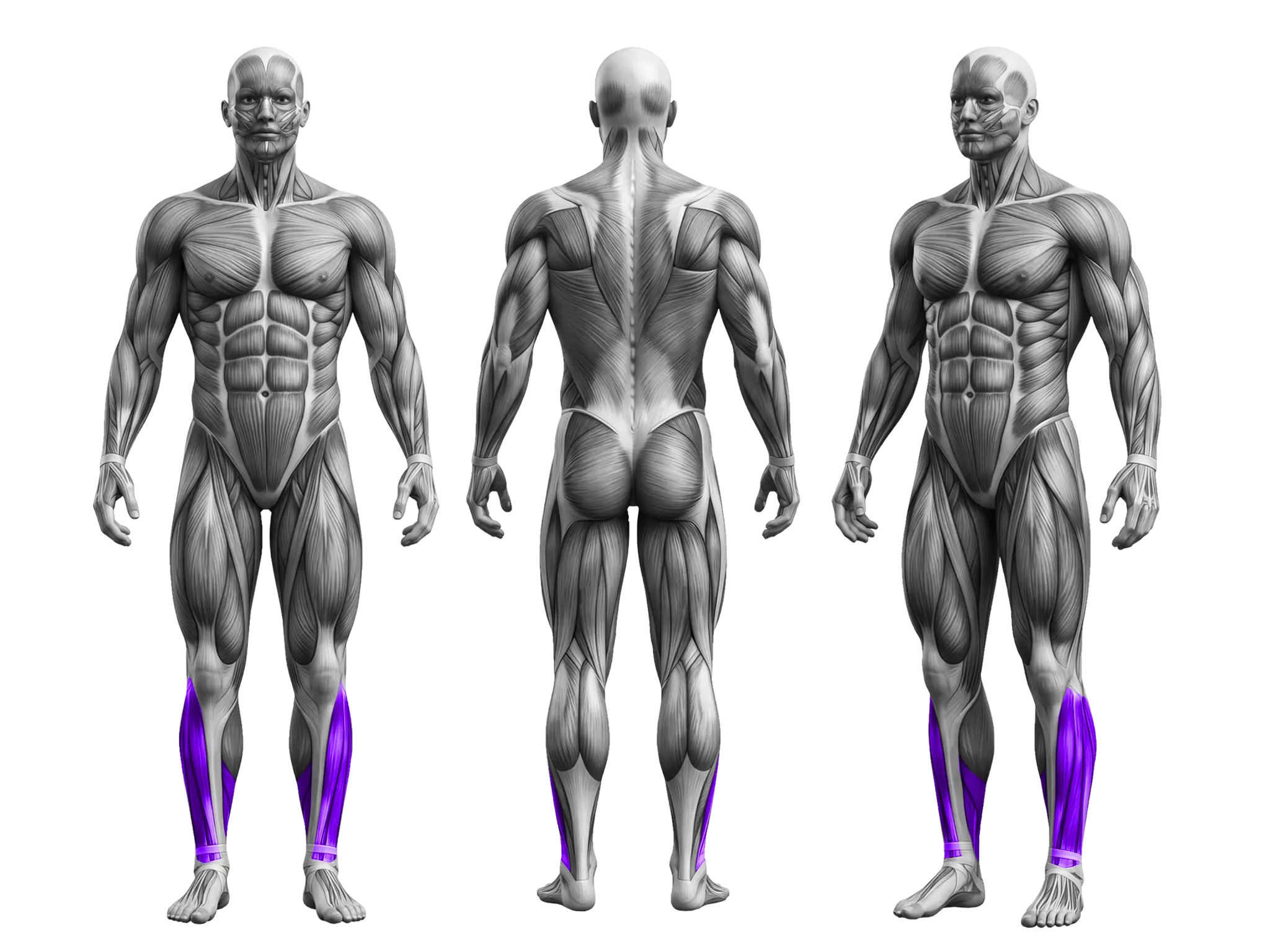
Soleus
Primary
Gastrocnemius (Calf)
Assisting
Tibialis Posterior, Peroneals & Foot Flexors
Assisting
Recommended Equipment

Seated Calf Raise Machine
The seated machine with a foot platform in front of you, an adjustable padded lever that sits across your thighs, and a safety lever that locks the weight in place.

Sit down and place the balls of your feet on the edge of the platform, heels hanging off, feet hip-width and toes forward. Then lower the knee pad onto your lower thighs, just above the knees, and adjust it until it's snug — no gap between pad and legs. Push up onto your toes slightly, release the safety lever, and you're ready.

At the end of the set, lock the safety lever back before you take your feet off the platform.

Gym Alternative
Smith Machine Seated Calf Raise

Sit on a bench under the Smith machine with the bar resting across your thighs above the knees (with a pad or a folded towel under it), balls of your feet on a plate or step. Same rules: knees bent, deep stretch, pause, full height. The fixed bar track makes it stable and easy to load.

Additional gym alternatives, best to worst:

Additional gym alternatives:

  1. Seated Dumbbell Calf Raise — sit on a bench, toes on a plate, a heavy dumbbell resting on each knee
  2. Leg Press Calf Raise with knees slightly bent — hits the soleus more than the straight-leg version
  3. Standing Calf Raise Machine — trains the gastrocnemius instead; a partner exercise rather than a swap
Home Alternative
Seated Dumbbell Calf Raise

Sit on a chair with the balls of your feet on a thick book or a step, heels hanging off. Rest a heavy dumbbell on your knee (or one on each knee), with a folded towel underneath so it doesn't dig in. Let your heels drop, pause, rise all the way up, squeeze, lower slowly.

Same muscle, same bent knees, same cues as the machine. Do one leg at a time if your dumbbell is light — that roughly doubles the load on each calf.

Additional home alternatives:

Additional home alternatives:

  1. Single-Leg Seated Calf Raise — one dumbbell on one knee; best when you only have lighter weights
  2. Backpack Seated Calf Raise — a loaded backpack across your knees instead of a dumbbell
  3. Bent-Knee Calf Raise on a stair — standing, knees bent and held at the same angle the whole set