Consistency training
No perfect days. Just consistent ones.
Back to workout

Exercise Instructions

Seated Dumbbell Shoulder Press

Dumbbell Overhead Press
Exercise guide — Setup / Technique / Tips / Mistakes

Why this one is in the program

This is the main builder for the front of your shoulders — and it's the only shoulder exercise where you can move real weight.

Raises and face pulls are light by nature. They have to be. This one is different: it's a press, so you can load it properly and add weight for years. That's what actually grows a muscle.

Dumbbells beat a barbell here for two reasons. Your hands can move freely, so your shoulders sit in a natural position instead of being locked into one path. And each arm works alone — a weak side can't hide behind a strong one.

A small note on the bench. You can do this bolt upright, or with the backrest tilted back just a little — about 75 to 80 degrees, so it's almost vertical. That small tilt gives your back something to push against and takes strain off your lower back. It's a good option, especially with heavier weights. But keep it small. Tilt too far and it stops being a shoulder exercise.

Setup

  • Set the backrest upright, or tilt it back just a little — no more than 10–15 degrees from vertical.
  • Sit down with a dumbbell resting on each thigh.
  • Kick them up to shoulder height one at a time, using your knees to help.
  • Hold them just outside your shoulders, palms facing forward.
  • Press your back flat into the pad and plant both feet on the floor.
  • Tighten your stomach and pull your shoulders down, away from your ears.

Why the setup does the work here

The backrest angle is the whole thing. Almost vertical keeps the work on your shoulders. Lean it back further and your chest starts taking over — now you're doing an incline chest press and wondering why your shoulders aren't growing. If you're not sure, sit more upright.

Push your back into the pad. That's your foundation. If your back is loose, you'll arch your lower back as the set gets hard, and the weight goes into your spine instead of your shoulders.

Feet flat on the floor. They stop you wobbling once the dumbbells are heavy.

And pull your shoulders down before you start. If they're already up by your ears, your traps take over from rep one.

Technique

  • Start with the dumbbells just outside your shoulders, at about ear height.
  • Press straight up and slightly in, so the dumbbells come close together at the top.
  • Press all the way up until your arms are straight. Full lockout, every rep.
  • Squeeze for one second at the top.
  • Lower slowly, about 3 seconds, back down to ear level.
  • Keep your elbows slightly in front of you — not pulled way back.
  • Keep your back on the pad and your stomach tight the whole time.

Why technique decides everything here

Finish every rep. This is the mistake you see everywhere online — people press up only to eye or ear level and stop. That's half a rep. The top part, where your arms straighten, is exactly where the shoulder does its hardest work. Cut it off and you've thrown away the best part of the exercise. Arms straight, one second squeeze, then down.

Elbows slightly forward, not flared way back. Pulling your elbows far behind you feels stronger, but it puts your shoulder joint in a bad spot. Keep them just in front of your body — safer, and the muscle works better there.

Don't bounce. Lower under control for three seconds. Dropping the dumbbells fast and catching them at the bottom is how shoulders get hurt.

And keep your back on the pad. The classic cheat is arching your lower back to push the weight up. That turns it into a standing incline press and puts your spine under load. If your back lifts off, the weight is too heavy.

Common Mistakes

  • Tilting the bench back too far, so the chest takes over.
  • Stopping short at the top instead of locking the arms out.
  • Arching the lower back off the pad to force reps up.
  • Flaring the elbows way back behind the body.
  • Bouncing the dumbbells at the bottom.
  • Shrugging the shoulders up toward the ears.
  • Dropping the weights down fast with no control.

Where people lose results

Two things go wrong here, and they feed each other.

First, the bench angle. Tilt it back too far and this quietly becomes a chest exercise. You'll feel strong, the numbers will go up, and your shoulders will get almost nothing. Keep it upright, or close to it — no more than 10–15 degrees back.

Second, the half reps. A lot of people never straighten their arms at the top — some don't even get the dumbbells above ear height. You'll see this all over the internet. It's not a "safer version," it's just a shorter one, and it removes the part of the movement where the shoulder works hardest. Lock out every rep.

Then the weight, both ways. Too heavy and everything falls apart at once: the back arches off the pad, the lockout disappears, and the last reps turn into a fight to get the dumbbells anywhere at all. Too light and nothing happens — clean form with a weight you could press ten more times trains nothing.

The honest test: back flat on the pad, arms fully straight at the top, three seconds down. If you can't do that for your whole rep range, that's not your weight.

Stay in the 8–15 rep range. When every working set hits the top of the range with clean form and a full lockout, move up to the next pair of dumbbells and climb back.
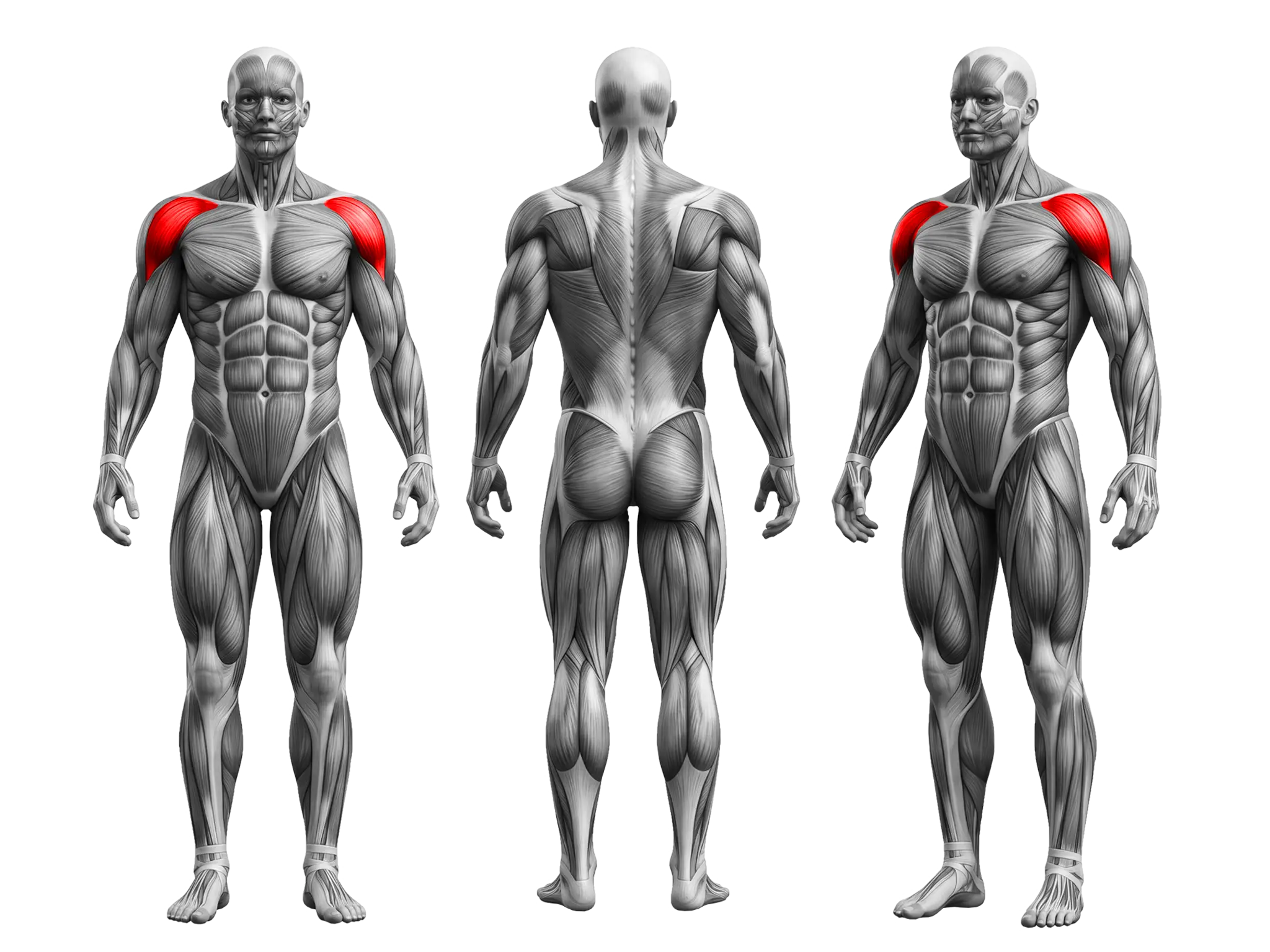
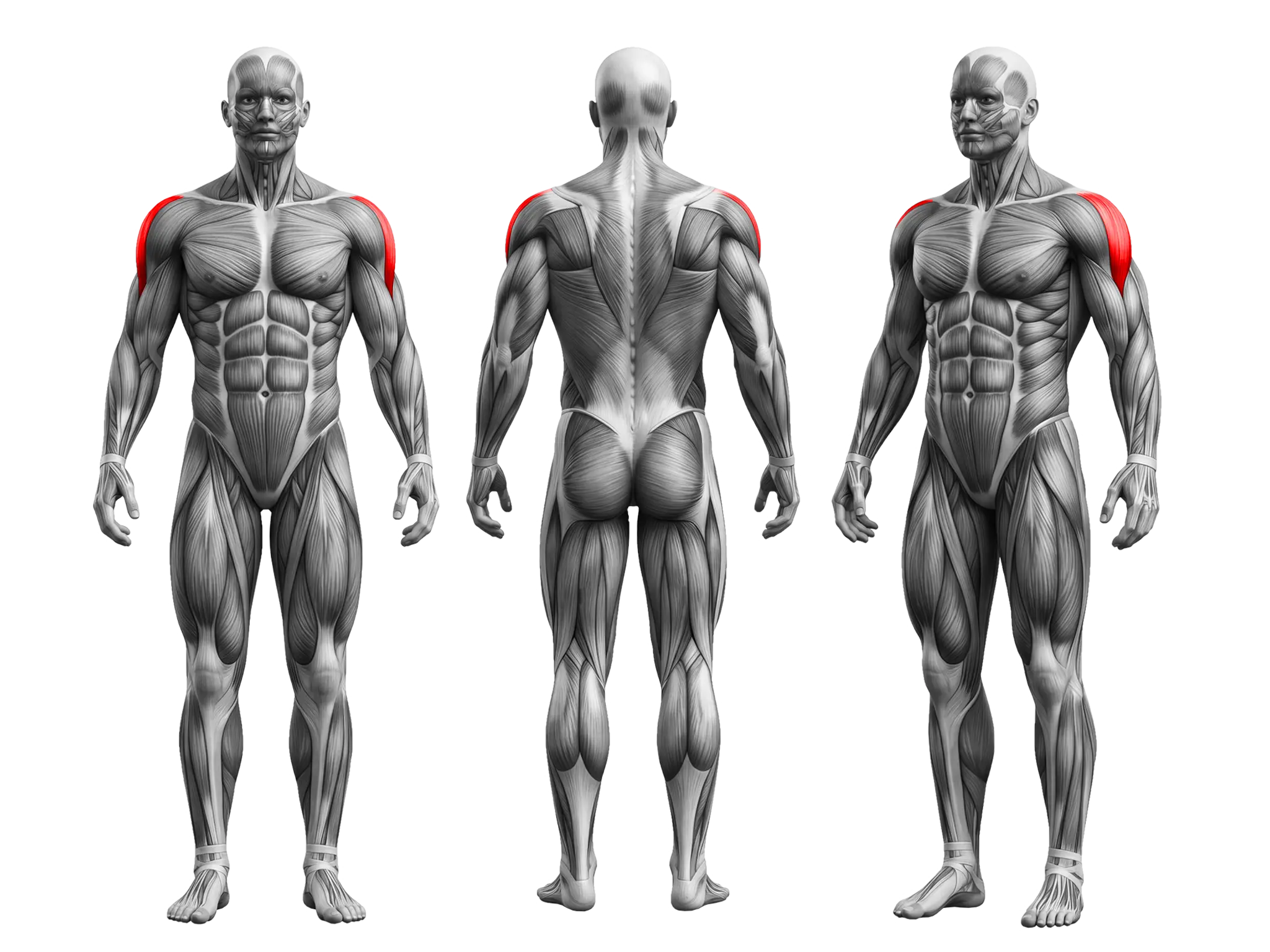
Target Muscles
Anterior (Front) Deltoid
Primary
Lateral (Middle) Deltoid
Assisting
Triceps Brachii, Upper Trapezius & Serratus Anterior
Assisting
Recommended Equipment

Exercise Instructions

Seated Dumbbell Shoulder Press

(
Dumbbell Overhead Press
)
Exercise guide — Setup / Technique / Tips / Mistakes

Why this one is in the program

This is the main builder for the front of your shoulders — and it's the only shoulder exercise where you can move real weight.

Raises and face pulls are light by nature. They have to be. This one is different: it's a press, so you can load it properly and add weight for years. That's what actually grows a muscle.

Dumbbells beat a barbell here for two reasons. Your hands can move freely, so your shoulders sit in a natural position instead of being locked into one path. And each arm works alone — a weak side can't hide behind a strong one.

A small note on the bench. You can do this bolt upright, or with the backrest tilted back just a little — about 75 to 80 degrees, so it's almost vertical. That small tilt gives your back something to push against and takes strain off your lower back. It's a good option, especially with heavier weights. But keep it small. Tilt too far and it stops being a shoulder exercise.

Setup

  • Set the backrest upright, or tilt it back just a little — no more than 10–15 degrees from vertical.
  • Sit down with a dumbbell resting on each thigh.
  • Kick them up to shoulder height one at a time, using your knees to help.
  • Hold them just outside your shoulders, palms facing forward.
  • Press your back flat into the pad and plant both feet on the floor.
  • Tighten your stomach and pull your shoulders down, away from your ears.

Why the setup does the work here

The backrest angle is the whole thing. Almost vertical keeps the work on your shoulders. Lean it back further and your chest starts taking over — now you're doing an incline chest press and wondering why your shoulders aren't growing. If you're not sure, sit more upright.

Push your back into the pad. That's your foundation. If your back is loose, you'll arch your lower back as the set gets hard, and the weight goes into your spine instead of your shoulders.

Feet flat on the floor. They stop you wobbling once the dumbbells are heavy.

And pull your shoulders down before you start. If they're already up by your ears, your traps take over from rep one.

Technique

  • Start with the dumbbells just outside your shoulders, at about ear height.
  • Press straight up and slightly in, so the dumbbells come close together at the top.
  • Press all the way up until your arms are straight. Full lockout, every rep.
  • Squeeze for one second at the top.
  • Lower slowly, about 3 seconds, back down to ear level.
  • Keep your elbows slightly in front of you — not pulled way back.
  • Keep your back on the pad and your stomach tight the whole time.

Why technique decides everything here

Finish every rep. This is the mistake you see everywhere online — people press up only to eye or ear level and stop. That's half a rep. The top part, where your arms straighten, is exactly where the shoulder does its hardest work. Cut it off and you've thrown away the best part of the exercise. Arms straight, one second squeeze, then down.

Elbows slightly forward, not flared way back. Pulling your elbows far behind you feels stronger, but it puts your shoulder joint in a bad spot. Keep them just in front of your body — safer, and the muscle works better there.

Don't bounce. Lower under control for three seconds. Dropping the dumbbells fast and catching them at the bottom is how shoulders get hurt.

And keep your back on the pad. The classic cheat is arching your lower back to push the weight up. That turns it into a standing incline press and puts your spine under load. If your back lifts off, the weight is too heavy.

Common Mistakes

  • Tilting the bench back too far, so the chest takes over.
  • Stopping short at the top instead of locking the arms out.
  • Arching the lower back off the pad to force reps up.
  • Flaring the elbows way back behind the body.
  • Bouncing the dumbbells at the bottom.
  • Shrugging the shoulders up toward the ears.
  • Dropping the weights down fast with no control.

Where people lose results

Two things go wrong here, and they feed each other.

First, the bench angle. Tilt it back too far and this quietly becomes a chest exercise. You'll feel strong, the numbers will go up, and your shoulders will get almost nothing. Keep it upright, or close to it — no more than 10–15 degrees back.

Second, the half reps. A lot of people never straighten their arms at the top — some don't even get the dumbbells above ear height. You'll see this all over the internet. It's not a "safer version," it's just a shorter one, and it removes the part of the movement where the shoulder works hardest. Lock out every rep.

Then the weight, both ways. Too heavy and everything falls apart at once: the back arches off the pad, the lockout disappears, and the last reps turn into a fight to get the dumbbells anywhere at all. Too light and nothing happens — clean form with a weight you could press ten more times trains nothing.

The honest test: back flat on the pad, arms fully straight at the top, three seconds down. If you can't do that for your whole rep range, that's not your weight.

Stay in the 8–15 rep range. When every working set hits the top of the range with clean form and a full lockout, move up to the next pair of dumbbells and climb back.

Target Muscles
Anterior (Front) Deltoid
Primary
Lateral (Middle) Deltoid
Assisting
Triceps Brachii, Upper Trapezius & Serratus Anterior
Assisting
Recommended Equipment
Gym Alternative
Smith Machine Seated Shoulder Press

Set a bench upright inside the Smith machine and press the bar overhead. The bar runs on a fixed track with safety hooks, so you can push much harder without a spotter and without worrying about balance. You lose some of the free movement dumbbells give you, but you gain the ability to really load it.

Additional gym alternatives, best to worst:

Additional gym alternatives:

  1. Seated Barbell Shoulder Press — heavier and simpler, but your hands are locked in one path
  2. Shoulder Press Machine — fixed path, very safe, easy to push near failure
  3. Standing Dumbbell Overhead Press — no bench, so your core works too; use lighter weights
Home Alternative
Seated Dumbbell Shoulder Press on a chair

It's the same exercise. Sit on a chair with a solid back and press. If the backrest is low or soft, put a cushion or a folded towel behind your lower back so you've got something firm to press into — that's what stops your back arching when it gets hard.

Additional home alternatives:

Additional home alternatives:

  1. Standing Dumbbell Shoulder Press — no chair needed; keep your stomach tight and your ribs down
  2. Resistance Band Overhead Press — stand on the band with both feet and press up
  3. Pike Push-Ups — hands and feet on the floor, hips high, lower your head toward the ground; bodyweight option if you have no weights