Exercise Instructions
Seated Leg Curl

Why this one is in the program
Squats and deadlifts build a lot, but they don't finish your hamstrings.
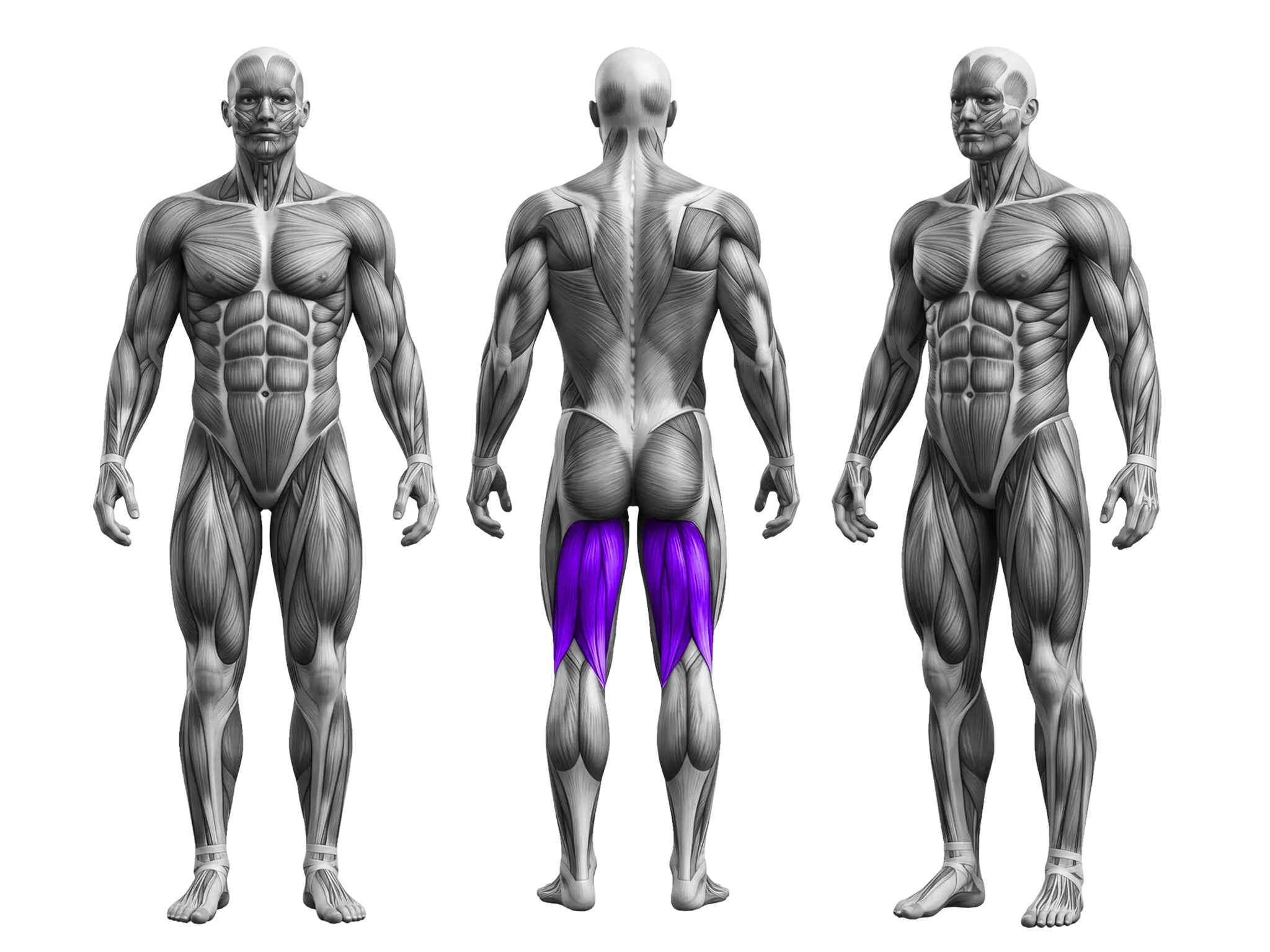
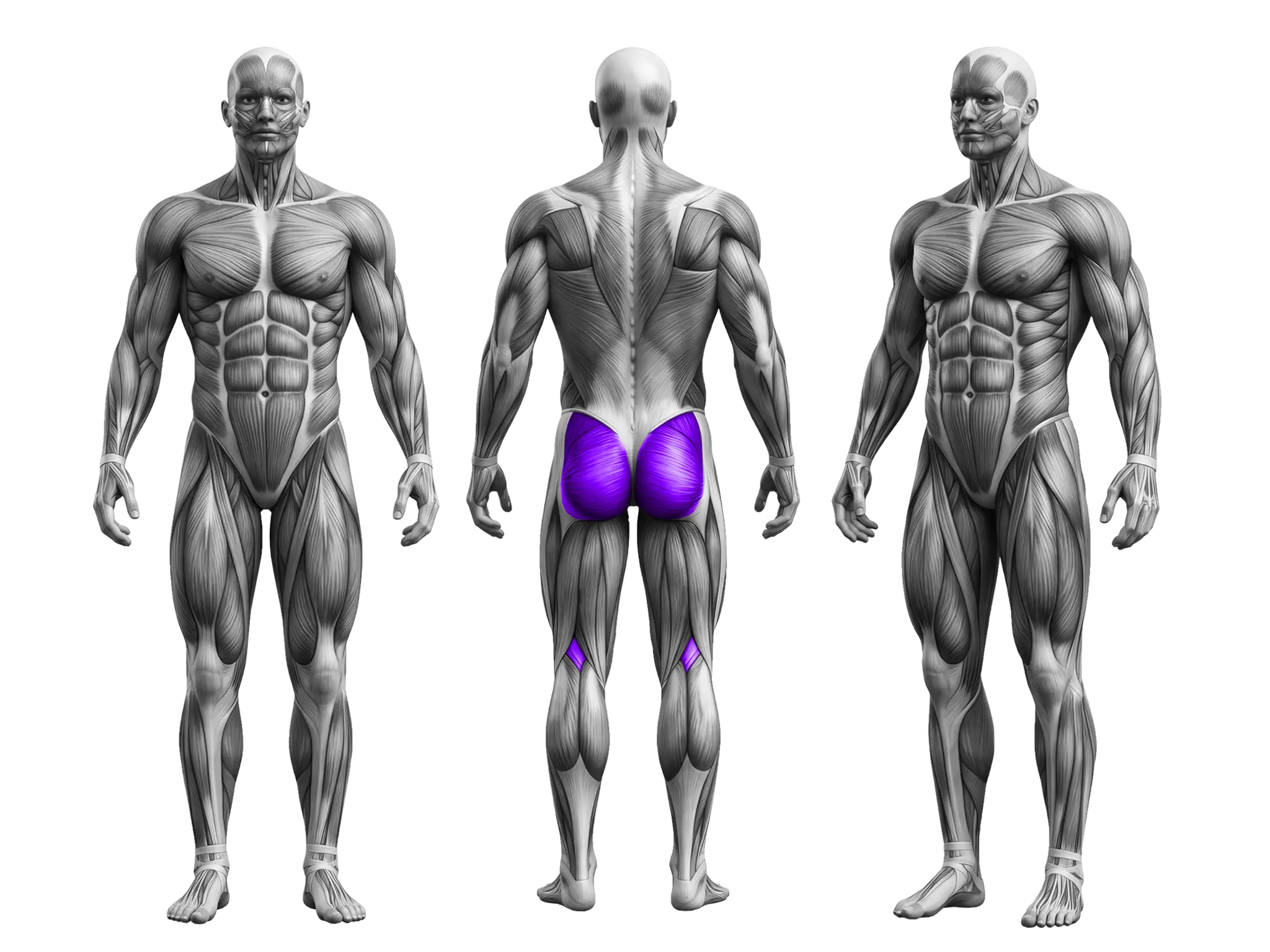
Your hamstrings do two jobs: they bend your knee and they extend your hip. Squats and deadlifts train the hip part. Nothing in a normal leg day trains the knee part — and that's exactly what a leg curl does.
Skip it and you end up with strong quads and underdeveloped hamstrings. That's a problem beyond looks: a big strength gap between the front and back of your thigh is one of the known risk factors for knee and hamstring injuries. This exercise closes that gap.
And here's why seated beats lying. Sitting up puts your hips at a bend, which means your hamstrings start the movement already stretched. A muscle working while stretched is one of the strongest growth signals there is — and research comparing the two versions consistently favours the seated one for hamstring growth. Same machine idea, better position.
Setup
- Sit down and adjust the back pad so your knees line up with the machine's pivot point.
- Set the ankle pad so it sits just above your heels, on your lower calves — not on your Achilles.
- Lower the thigh pad firmly across your legs, just above your knees.
- Push your whole back into the backrest.
- Grip the handles at your sides and pull yourself down into the seat.
- Point your toes up toward your shins, not away.
Why the setup does the work here
Knee lined up with the pivot is the whole setup. If your knee sits in front of or behind the machine's hinge, the resistance fights your joint instead of your muscle. Most machines have a visible pivot bolt — line your knee up with it and adjust the seat until it matches.
The thigh pad has to be tight. Loose, and your legs lift off on every rep so your hips start helping. Clamp it down firmly — it should feel snug before you begin.
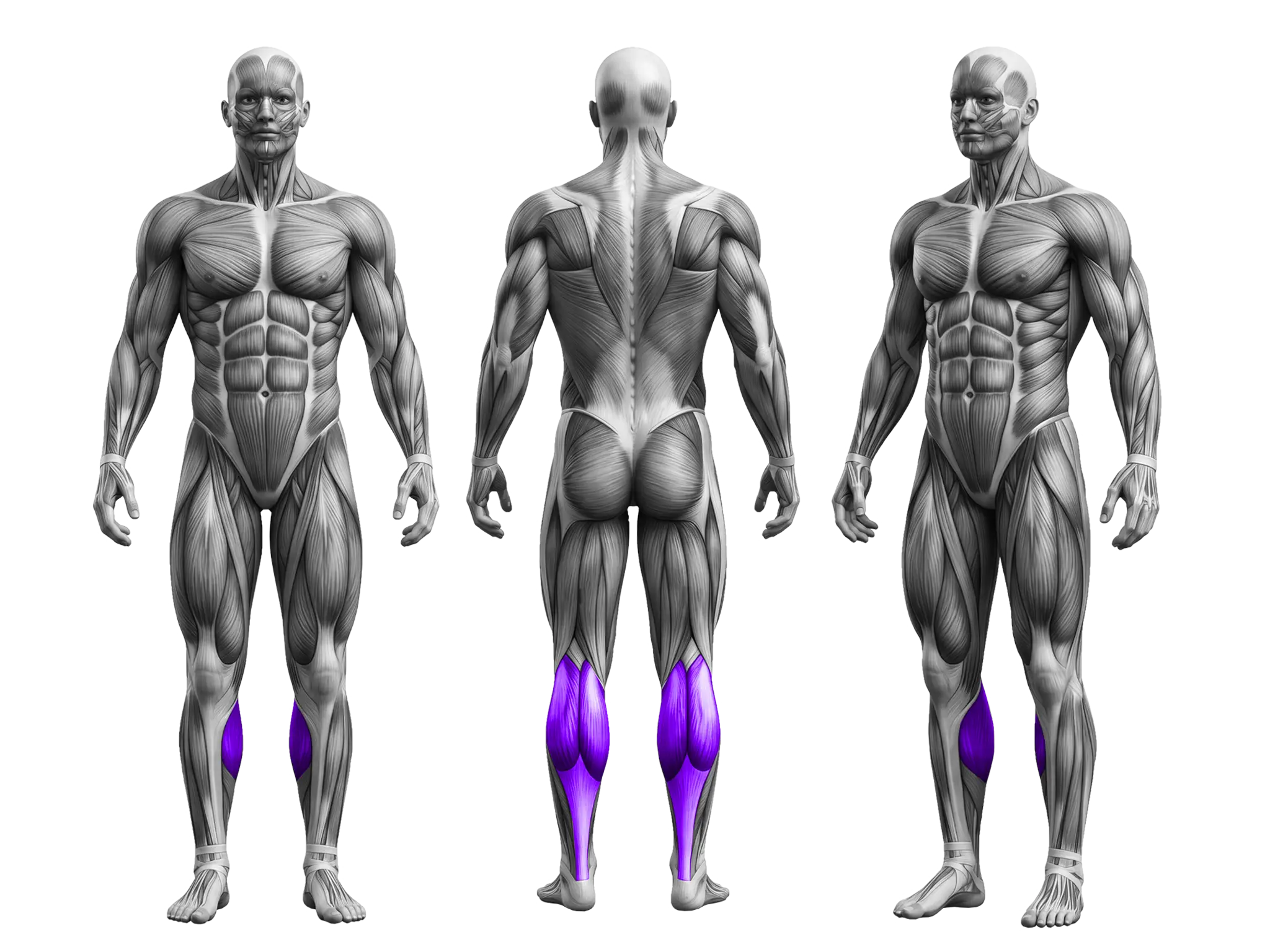
Toes pulled up toward your shins. This small detail matters: it takes your calves out of the movement and leaves the work on the hamstrings. Pointing your toes away lets the calves join in.
Technique
- Start with your legs nearly straight and your hamstrings stretched.
- Curl your heels down and under the seat, as far as the machine allows.
- Keep your hips and back pressed into the pad — don't lift off.
- Squeeze your hamstrings hard for one second at the bottom.
- Return slowly, about 3 seconds, until your legs are nearly straight.
- Don't fully lock the knees at the top — stop just short.
- Keep your toes pulled up the whole set.
Why technique decides everything here
The return is where the growth is. Your hamstrings are stretched and still holding the weight on the way back — three slow seconds, every rep. Letting the pad snap your legs straight throws away the best part.
Don't let your hips lift. As the set gets hard, people push their backside off the seat to help. The moment that happens, your hips are doing the work. Pull down on the handles and stay glued to the pad.
Squeeze at the bottom. One honest second. That's where the muscle contracts hardest and it's the first thing people skip.
And don't bounce at the top. Snapping straight against a locked knee under load is unnecessary strain. Stop just short.
Common Mistakes
- Knee not lined up with the machine's pivot point.
- Thigh pad set too loose, so the legs lift off.
- Lifting the hips off the seat to force reps.
- Pointing the toes away instead of pulling them up.
- Letting the weight snap the legs straight.
- Cutting the range short at both ends.
- Not squeezing at the bottom.
- Going so heavy that only half the range gets used.
Where people lose results
Machine set wrong. The number one fault, and most people never adjust anything — they just sit down and go. If your knee isn't at the pivot, the load fights your joint instead of your hamstring, and you'll feel it in your knee rather than the muscle. Fix: thirty seconds of adjusting before your first set. Find your settings once and remember the numbers.
Loose thigh pad. Your legs lift, your hips swing in to help, and the exercise stops being strict. Fix: clamp it down tight.
Hips lifting off the seat. Always a sign the weight is too heavy. Fix: hold the handles, pull yourself down, lighten the stack.
Letting the weight snap back. The most expensive mistake here, because the return is the most valuable part of the rep. Fix: three seconds, every time.
Half reps. Easy to do on a machine — you pump through the middle and feel busy while losing the stretch at the top and the squeeze at the bottom. Fix: full range, both ends.
Too heavy, or too light. Too heavy and everything above arrives at once. Too light and nothing grows — clean reps with a weight you could do twenty-five more times train nothing.
The honest test: hips glued to the seat, full curl at the bottom with a one-second squeeze, three seconds back. If you can't do that for your full rep range, that's not your weight.
Stay in the 10–20 rep range. You're seated with nothing above you, so the last set can go all the way to failure — and this is a great place for a dropset.

Seated Leg Curl Machine
The seated machine with a backrest, a pad that clamps across your thighs, and a roller pad for your lower legs.
Three adjustments, and all three matter. First, set the back pad so your knees line up with the machine's pivot point — the visible bolt where the lever arm rotates. Second, set the ankle roller so it sits just above your heels, on your lower calves, never on your Achilles tendon. Third, clamp the thigh pad down firmly across your legs just above the knees — loose, and your legs lift off and your hips start cheating.
Sit with your whole back against the pad, grip the side handles and pull yourself down into the seat, and keep your toes pulled up toward your shins to keep your calves out of it.
Find your three settings once and write them down. After that it's ten seconds before every session.