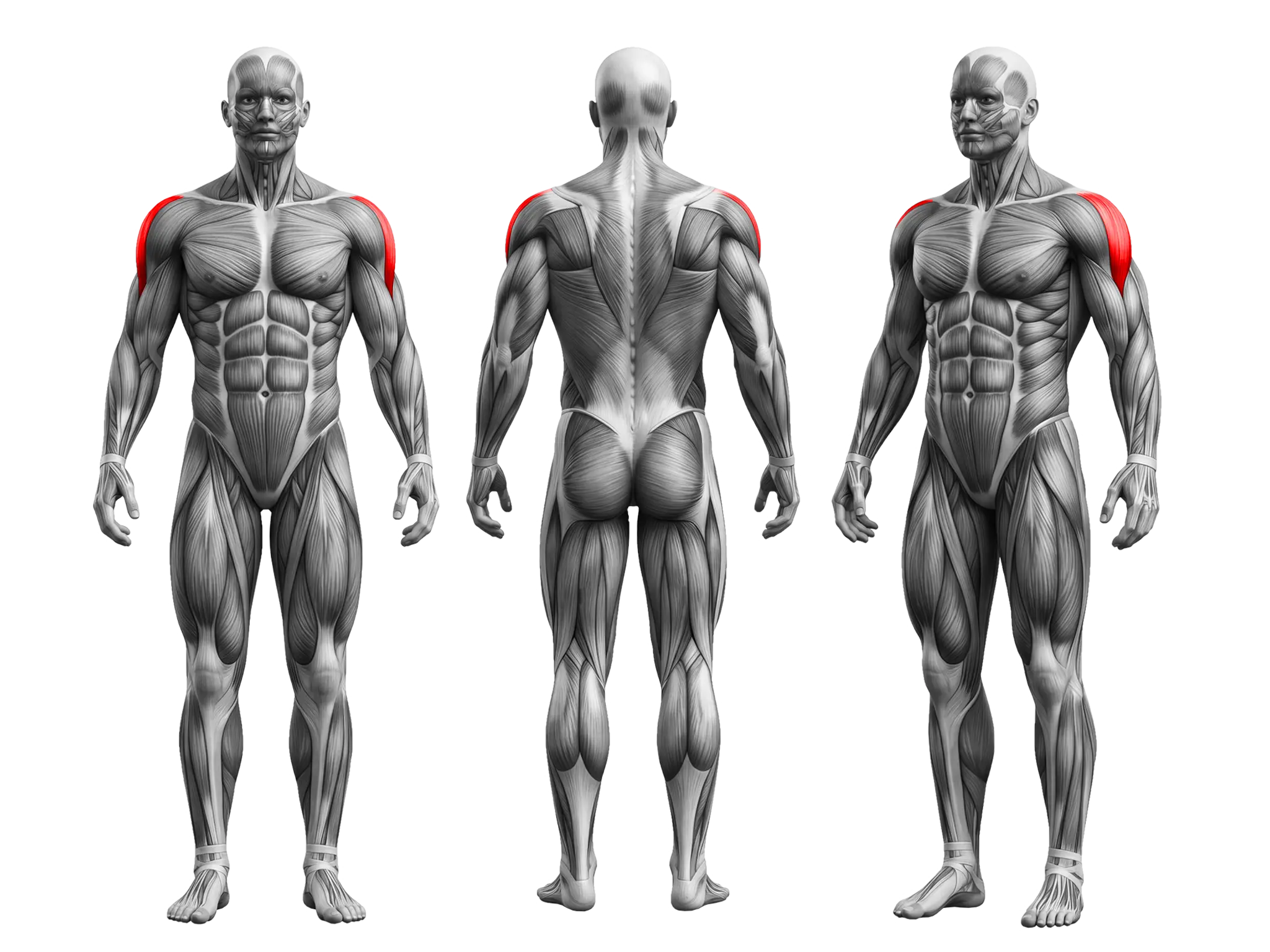
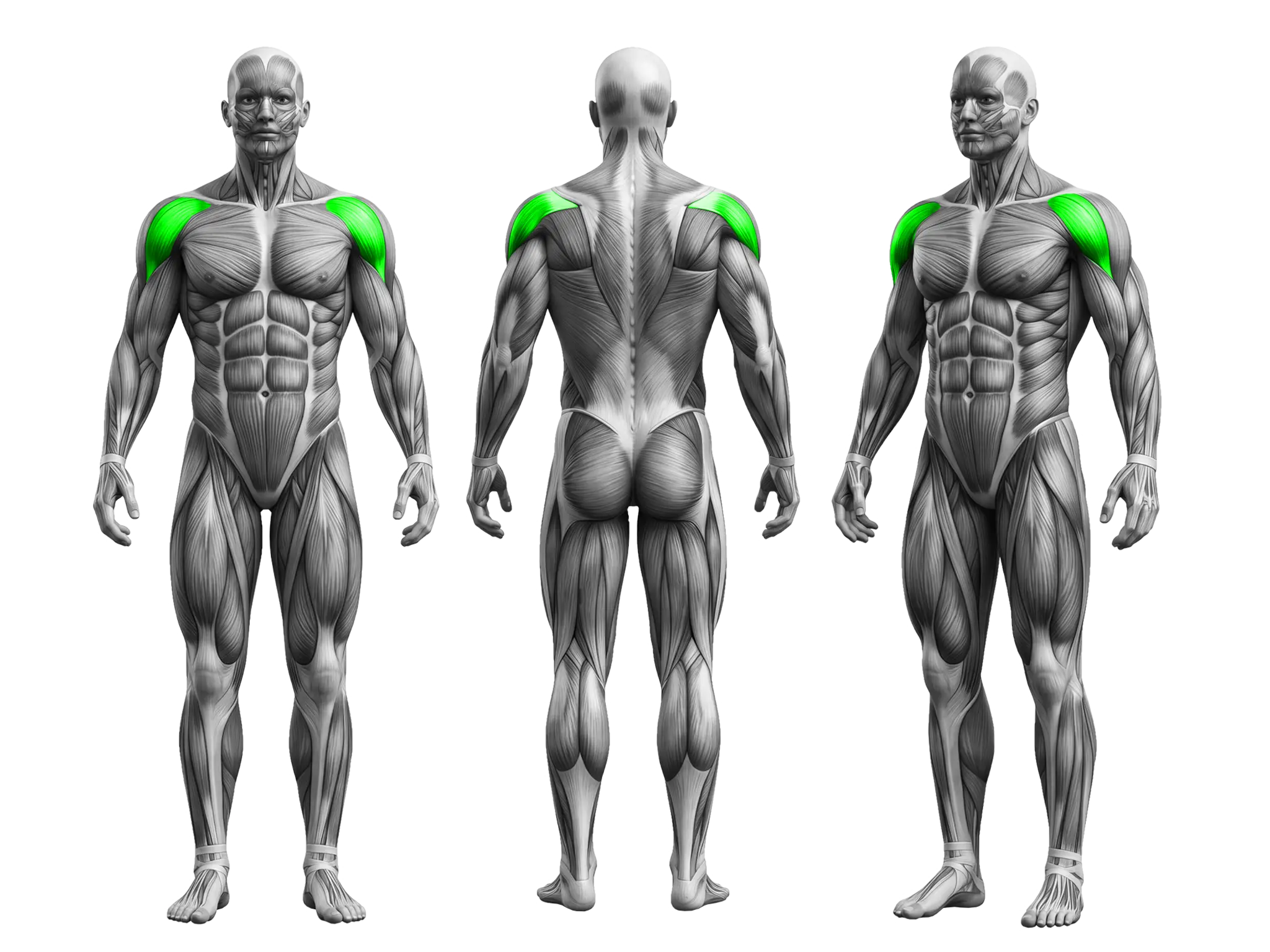
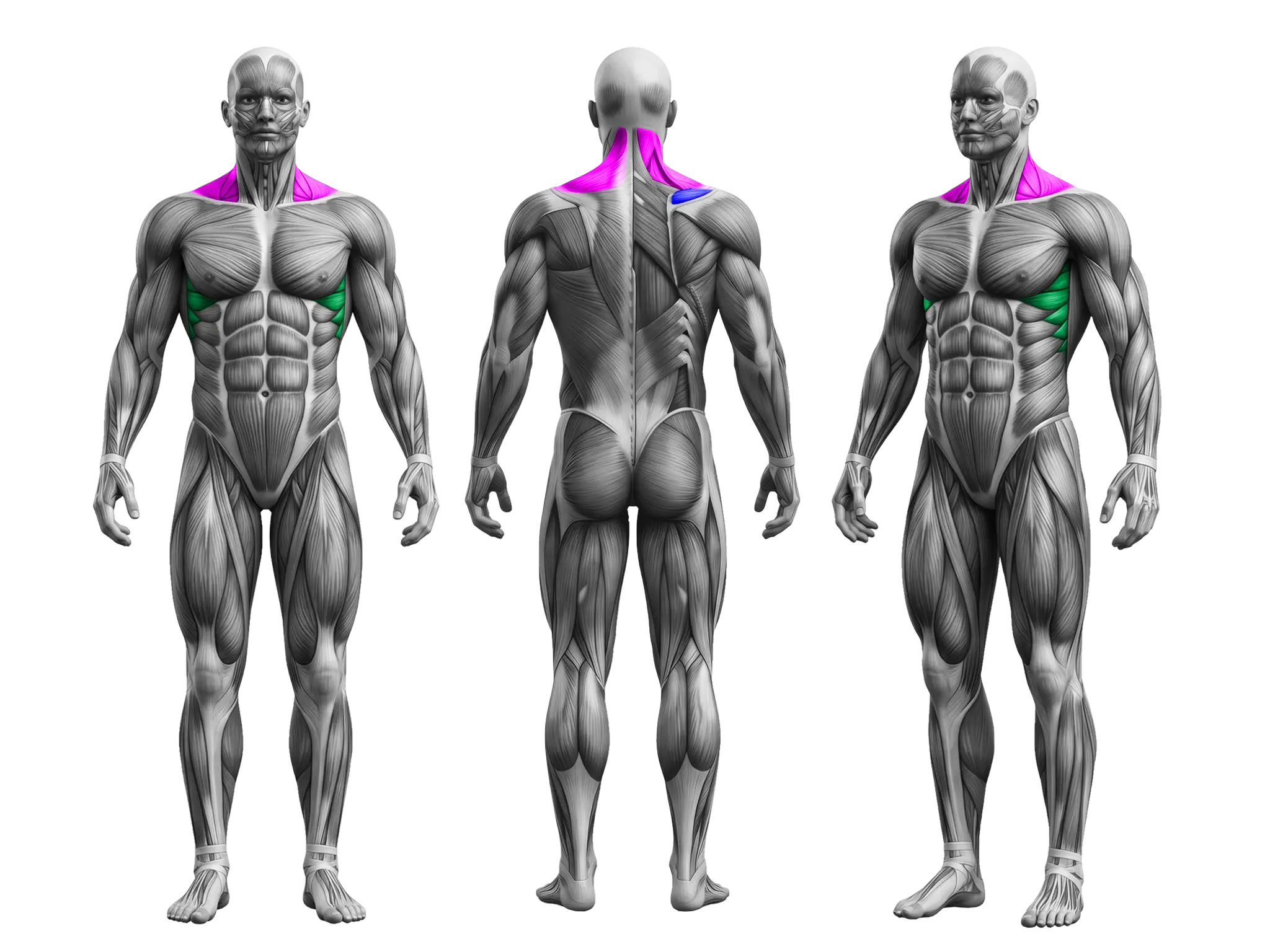
Exercise Instructions
Single-Arm Cable Lateral Raise

Why this one is in the program
This is the other half of your side delt work — and it does the job the dumbbell can't.
Remember what happens with a dumbbell. Gravity pulls straight down, so at the bottom of the rep, with your arm hanging at your side, there's almost no load on the muscle. The dumbbell only gets hard near the top.
The cable is different. It pulls sideways, from below and across your body. That means the muscle is working from the very first inch — including at the bottom, where it's stretched. And a muscle working while it's stretched is one of the strongest growth signals we know of.
So: dumbbells own the top of the movement. Cables own the bottom. Together they cover the whole muscle, and that's why both are in your program.
There's a second reason, and it's just as useful. One arm at a time. You can't hide a weak side behind a strong one, and you can hold onto something with your free hand — which means your body stays completely still and every bit of the weight goes into your shoulder.
Setup
- Set the pulley to the lowest position and clip on a single handle.
- Stand side-on to the machine, so the stack is on the side away from the arm you're training.
- Reach across your body and take the handle in your far hand. The cable should run in front of your legs.
- Take one or two steps away so there's tension on the cable before you even start.
- Grab the machine frame with your free hand and hold on.
- Stand tall, tighten your stomach, feet planted.
- Bend your working elbow slightly, about 10–20 degrees, and keep that bend the whole set.
- Pull your shoulder down, away from your ear. That's your start position.
Why the setup does the work here
The pulley goes low. This is the number one thing people get wrong.
Set it at hip height or higher and you've thrown the exercise away — the cable now pulls from the side instead of from below, the bottom of the rep goes light, and you've just made a worse version of a dumbbell raise. All the way down, every time. That low angle is the entire reason you're using a cable.
Hold on with your free hand. This isn't laziness, it's what makes the exercise strict. With one hand anchored, your body physically can't bounce or swing, so the only thing that can move the handle is your shoulder.
The small elbow bend does the same job as on dumbbells. A straight arm is a long, heavy lever, so you're stuck with a tiny weight. A small bend shortens it — now you can use more weight, and that weight lands on your side delt. Set the bend once and hold it. If your elbow is opening and closing, you're doing a curl.
And pull your shoulder down before you start. If your shoulder is already up near your ear, your trap has the exercise before the first rep. Down, and stay down.
Technique
- Start with your arm across your body and the cable already tight.
- Lift your elbow, not your hand. Think: "raise my elbow out to the side."
- Keep your elbow higher than your hand the whole way up.
- Raise until your arm is level with the floor — about shoulder height.
- Keep your shoulder pressed down the entire time. Don't let it ride up.
- Hold for one second at the top and feel the outside of your shoulder.
- Lower slowly, about 3 seconds, all the way back across your body.
- Let the muscle stretch at the bottom, then start the next rep.
- Do all your reps on one arm, then switch — or alternate arm by arm. Both work.
Why technique decides everything here
Three things decide this exercise, and they're all about position.
One: lift the elbow, not the hand. Your hand just holds the handle. The moment you think about lifting your hand, it rises above your elbow — and that's where the exercise dies. Your shoulder turns into a position where the side delt can't finish the job, and your trap steps in. You feel it in your neck instead of your shoulder. Elbow leads, hand follows, always a bit lower.
Two: keep the elbow high enough. A dropped elbow at the top means you've stopped short of the position where the muscle actually works hardest. Up to shoulder level — no lower.
Three: keep the shoulder down. This is the one people never notice themselves doing. As the set gets hard, the whole shoulder creeps up toward the ear. The second that happens, your trap is lifting the weight and your delt is along for the ride. Press the shoulder down and hold it there for every single rep.
And go down slowly. Three seconds. The cable is pulling on the muscle the whole way back — that's free growth, and letting it snap back throws it away.
Common Mistakes
- Setting the pulley too high, which kills the tension at the bottom.
- Letting the shoulder shrug up toward the ear as you lift.
- Dropping the elbow below shoulder level at the top.
- Letting the hand rise higher than the elbow.
- Keeping the arm completely straight, forcing a tiny weight.
- Bending the elbow more and more as the set gets hard.
- Swinging the body instead of holding on with the free hand.
- Standing too close to the stack, so there's no tension at the start.
- Letting the handle pull the arm back fast with no control.
Where people lose results
This exercise fails for one of two reasons: the weight is wrong, or the position is wrong. Usually both at once.
Start with the setup, because it's what most people get wrong first.
Pulley too high. If it's not at the bottom, you've removed the tension at the stretch — the exact thing you came here for. You're now doing a worse dumbbell raise with a cable attached.
Elbow too low at the top. Stop short and you miss the part of the range where the muscle contracts hardest.
Shoulder riding up. The sneakiest one. Let that shoulder creep toward your ear and your trap takes over completely. Your side delt does almost nothing and you spend the set feeling your neck. Press the shoulder down, hold it down, every rep.
Now the weight. Too heavy and all three faults happen at the same time: the shoulder shrugs, the elbow bends more to cheat, the hand floats above the elbow, and your body starts leaning away from the stack to help. Too light and nothing happens at all — perfect form with a weight you could lift another twenty-five times trains nothing.
Here's the honest test. Hold the frame with your free hand. Lift with your body completely frozen, shoulder pressed down, elbow leading. Take three seconds coming down. If you can't do that for your full rep range, that's not your weight.
The side delt is small and likes volume, so live in the 12–25 rep range. The weight is right when both things are true: your position holds, and the last reps are a real fight. Then progress like everything else — when every working set hits the top of the range with clean form, move the pin up one and climb back.