Consistency training
No perfect days. Just consistent ones.
Back to workout

Exercise Instructions

Standing Barbell Curl

Barbell Curl
Exercise guide — Setup / Technique / Tips / Mistakes

Why this one is in the program

This is the main biceps builder — the one you load heavy and progress for years.

Why a straight bar and not an EZ bar? Because of the grip. With a straight bar your palms face fully up, and that fully turned-out position is where the biceps is strongest and works hardest. The EZ bar's bends take some of that away to be kinder on your wrists — easier on the joint, but slightly less biceps.

And there's a second reason this version is in the program: the stretch. Standing with the bar at your thighs and your arms fully straight, your biceps is in the longest position it can reach while holding weight. A muscle working while stretched is one of the strongest growth signals there is, and this exercise gives you the most of it.

The key to doing it right is one thing: squeeze your chest and press your elbows into your sides. Standing, nothing is holding you in place — so you hold yourself. Lock the elbows against your ribs and the swing has nowhere to go.

Setup

  • Stand tall, feet about hip-width apart.
  • Take the bar underhand — palms facing up — hands about shoulder-width apart.
  • Let the bar hang at your thighs with your arms fully straight.
  • Squeeze your chest and press your elbows firmly into your sides.
  • Tighten your stomach and squeeze your glutes.
  • Pull your shoulders down and back.
  • Keep your wrists straight, stacked over your forearms.

Why the setup does the work here

The elbow squeeze is the whole exercise. Tighten your chest and drive your elbows in against your ribs, like you're holding something under each arm. Now your upper arms can't swing forward or drift out — and without that movement, the biceps has to do everything.

Set that squeeze before rep one and keep it alive to the last one. The moment you relax, your shoulders and hips start helping, and the bar moves without your biceps getting more.

Straighten the arms fully at the bottom. This is where the stretch lives and it's the best thing this exercise has going for it. Most people stop halfway down and never touch it.

Glutes and stomach tight is what stops the hips rocking. If your body is moving, the bar is too heavy.

Technique

  • Start with arms fully straight, bar at your thighs.
  • Curl the bar up smoothly — no jerk off the bottom.
  • Keep your elbows pressed into your sides the whole way.
  • Keep your wrists straight — don't curl them in at the top.
  • Curl until your forearms are just past vertical and squeeze for one second.
  • Lower slowly, about 3 seconds, all the way back to straight arms.
  • Feel the stretch at the bottom, then go again.
  • Body stays frozen. The bar moves, you don't.

Why technique decides everything here

Use the full bottom. Straight arms, every rep. The stretch at the bottom is the single most valuable part of this exercise — and it's the first thing people cut when they get tired. A curl that stops at the halfway point is a much weaker exercise.

Elbows pinned. Check them on the last three reps, because that's when they slip. If your elbows are drifting forward, your front shoulders are lifting the bar.

Wrists straight. Don't curl them in at the top to "squeeze harder." That just loads the wrist and takes tension off the biceps.

No swing. The classic cheat is a hip rock on every rep. It moves the bar and trains almost nothing.

And three seconds down. Letting the bar drop wastes the best part — and the bottom of the rep is exactly where it matters most here.

Common Mistakes

  • Not straightening the arms at the bottom — losing the stretch.
  • Letting the elbows drift forward or away from the body.
  • Rocking the hips and torso to swing the bar up.
  • Leaning back at the top to help.
  • Curling the wrists in at the top.
  • Shrugging the shoulders up as the bar rises.
  • Dropping the bar down with no control.
  • Gripping much wider or narrower than shoulder-width.

Where people lose results

Half reps at the bottom. The most expensive fault here, and almost nobody notices it. People stop with their arms slightly bent, which removes the stretch — the exact thing that makes this version worth doing. Fix: straight arms at the bottom of every single rep.

Losing the elbow squeeze. The moment your elbows drift forward, your front shoulders take over. The bar still moves, your biceps gets less. Fix: squeeze the chest, press the elbows into your ribs, hold it all set.

Body swing. Standing exercises invite it. A small hip rock lets you use much more weight and trains much less. Fix: glutes and stomach tight, body frozen.

Leaning back at the top. Looks like effort, does nothing for the biceps, and squeezes your lower back for free. Fix: stand tall and still.

Too heavy. All of the above arrive together: the swing starts, the elbows drift, the bottom gets cut short. Too light is just as useless — clean reps with a weight you could curl twenty more times train nothing.

The honest test: elbows glued to your sides, body motionless, arms fully straight at the bottom, three seconds down. If you can't do that for your full rep range, that's not your weight.

One note on the straight bar. If your wrists hurt — not your biceps, your wrists — switch to an EZ bar. The fully turned-out grip suits most people, but not everyone, and there's no prize for training through wrist pain.

Stay in the 8–15 rep range. Nothing is above your body here, so the last set can go to failure — just keep the reps that got you there clean.
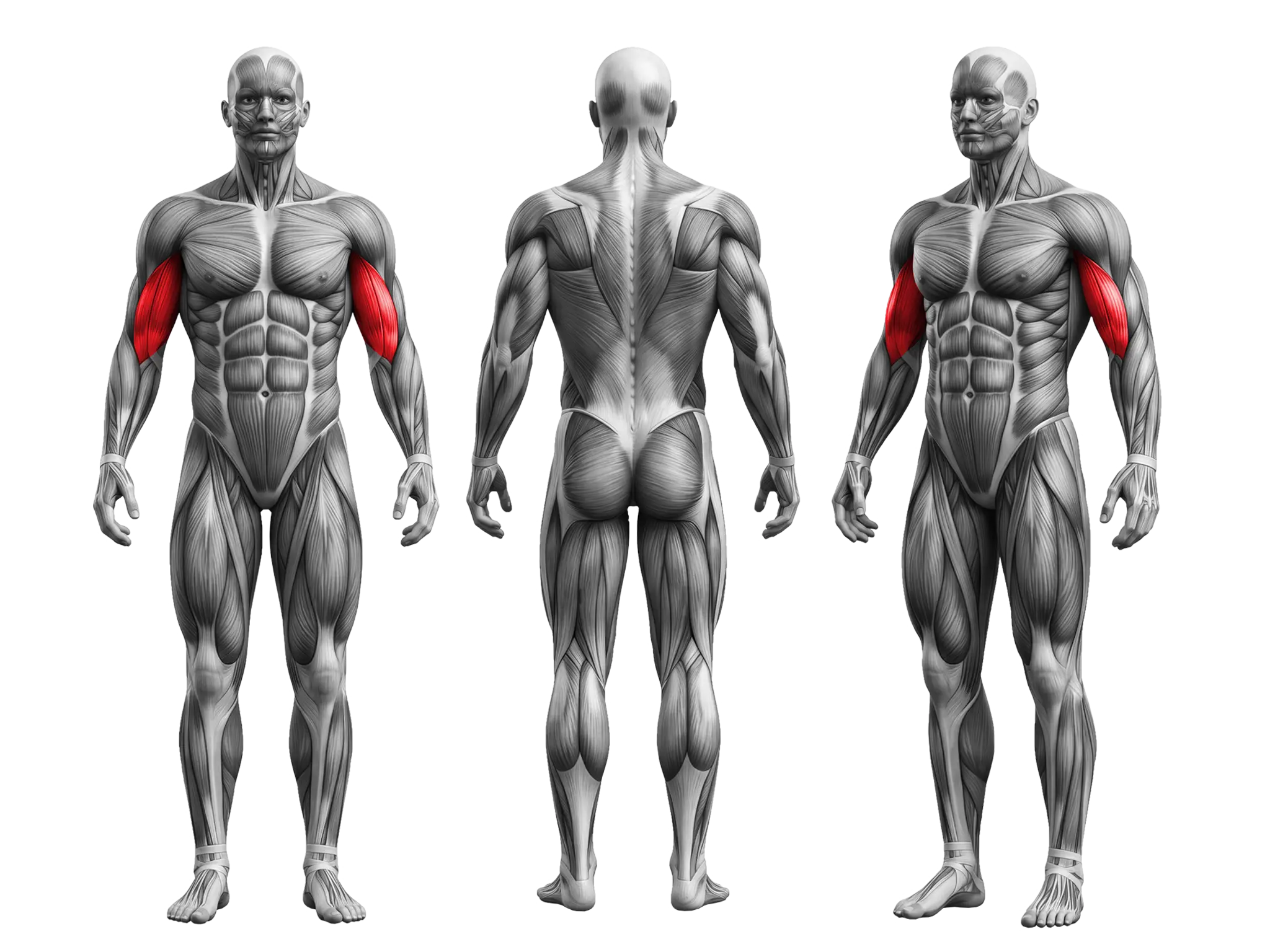
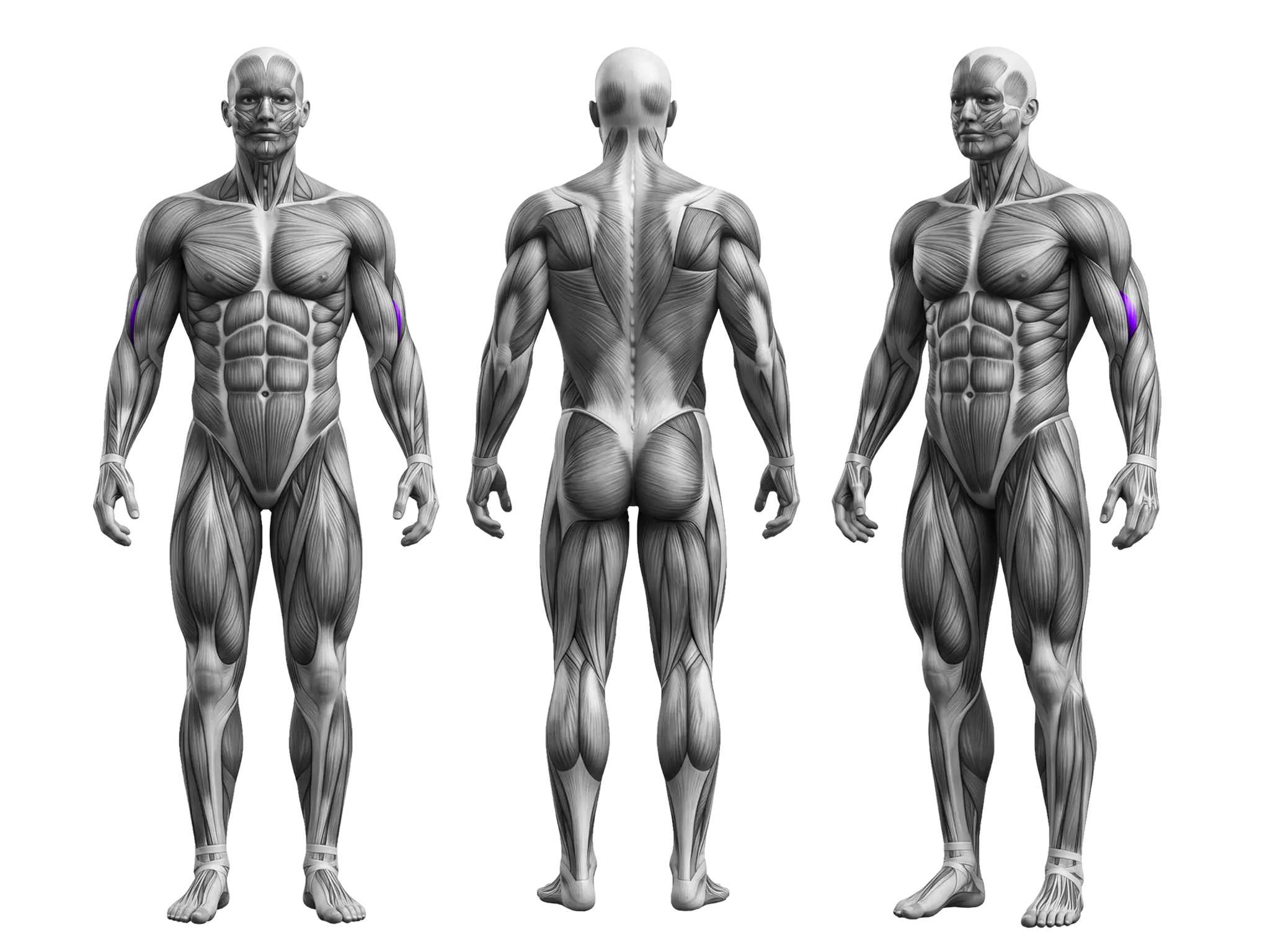
Target Muscles
Biceps Brachii
Primary
Brachialis
Assisting
Brachioradialis & Forearm Flexors
Assisting
Recommended Equipment

Straight Barbell with PlatesA straight bar loaded with plates, held underhand — palms facing up — with your hands about shoulder-width apart. The standard Olympic bar is 20 kg on its own; if that's too much, use a lighter fixed-weight bar or a shorter studio bar.

Stand tall with your elbows pressed into your sides, and go up in the smallest plates available once every working set hits the top of your rep range with your body staying still.

Exercise Instructions

Standing Barbell Curl

(
Barbell Curl
)
Exercise guide — Setup / Technique / Tips / Mistakes

Why this one is in the program

This is the main biceps builder — the one you load heavy and progress for years.

Why a straight bar and not an EZ bar? Because of the grip. With a straight bar your palms face fully up, and that fully turned-out position is where the biceps is strongest and works hardest. The EZ bar's bends take some of that away to be kinder on your wrists — easier on the joint, but slightly less biceps.

And there's a second reason this version is in the program: the stretch. Standing with the bar at your thighs and your arms fully straight, your biceps is in the longest position it can reach while holding weight. A muscle working while stretched is one of the strongest growth signals there is, and this exercise gives you the most of it.

The key to doing it right is one thing: squeeze your chest and press your elbows into your sides. Standing, nothing is holding you in place — so you hold yourself. Lock the elbows against your ribs and the swing has nowhere to go.

Setup

  • Stand tall, feet about hip-width apart.
  • Take the bar underhand — palms facing up — hands about shoulder-width apart.
  • Let the bar hang at your thighs with your arms fully straight.
  • Squeeze your chest and press your elbows firmly into your sides.
  • Tighten your stomach and squeeze your glutes.
  • Pull your shoulders down and back.
  • Keep your wrists straight, stacked over your forearms.

Why the setup does the work here

The elbow squeeze is the whole exercise. Tighten your chest and drive your elbows in against your ribs, like you're holding something under each arm. Now your upper arms can't swing forward or drift out — and without that movement, the biceps has to do everything.

Set that squeeze before rep one and keep it alive to the last one. The moment you relax, your shoulders and hips start helping, and the bar moves without your biceps getting more.

Straighten the arms fully at the bottom. This is where the stretch lives and it's the best thing this exercise has going for it. Most people stop halfway down and never touch it.

Glutes and stomach tight is what stops the hips rocking. If your body is moving, the bar is too heavy.

Technique

  • Start with arms fully straight, bar at your thighs.
  • Curl the bar up smoothly — no jerk off the bottom.
  • Keep your elbows pressed into your sides the whole way.
  • Keep your wrists straight — don't curl them in at the top.
  • Curl until your forearms are just past vertical and squeeze for one second.
  • Lower slowly, about 3 seconds, all the way back to straight arms.
  • Feel the stretch at the bottom, then go again.
  • Body stays frozen. The bar moves, you don't.

Why technique decides everything here

Use the full bottom. Straight arms, every rep. The stretch at the bottom is the single most valuable part of this exercise — and it's the first thing people cut when they get tired. A curl that stops at the halfway point is a much weaker exercise.

Elbows pinned. Check them on the last three reps, because that's when they slip. If your elbows are drifting forward, your front shoulders are lifting the bar.

Wrists straight. Don't curl them in at the top to "squeeze harder." That just loads the wrist and takes tension off the biceps.

No swing. The classic cheat is a hip rock on every rep. It moves the bar and trains almost nothing.

And three seconds down. Letting the bar drop wastes the best part — and the bottom of the rep is exactly where it matters most here.

Common Mistakes

  • Not straightening the arms at the bottom — losing the stretch.
  • Letting the elbows drift forward or away from the body.
  • Rocking the hips and torso to swing the bar up.
  • Leaning back at the top to help.
  • Curling the wrists in at the top.
  • Shrugging the shoulders up as the bar rises.
  • Dropping the bar down with no control.
  • Gripping much wider or narrower than shoulder-width.

Where people lose results

Half reps at the bottom. The most expensive fault here, and almost nobody notices it. People stop with their arms slightly bent, which removes the stretch — the exact thing that makes this version worth doing. Fix: straight arms at the bottom of every single rep.

Losing the elbow squeeze. The moment your elbows drift forward, your front shoulders take over. The bar still moves, your biceps gets less. Fix: squeeze the chest, press the elbows into your ribs, hold it all set.

Body swing. Standing exercises invite it. A small hip rock lets you use much more weight and trains much less. Fix: glutes and stomach tight, body frozen.

Leaning back at the top. Looks like effort, does nothing for the biceps, and squeezes your lower back for free. Fix: stand tall and still.

Too heavy. All of the above arrive together: the swing starts, the elbows drift, the bottom gets cut short. Too light is just as useless — clean reps with a weight you could curl twenty more times train nothing.

The honest test: elbows glued to your sides, body motionless, arms fully straight at the bottom, three seconds down. If you can't do that for your full rep range, that's not your weight.

One note on the straight bar. If your wrists hurt — not your biceps, your wrists — switch to an EZ bar. The fully turned-out grip suits most people, but not everyone, and there's no prize for training through wrist pain.

Stay in the 8–15 rep range. Nothing is above your body here, so the last set can go to failure — just keep the reps that got you there clean.
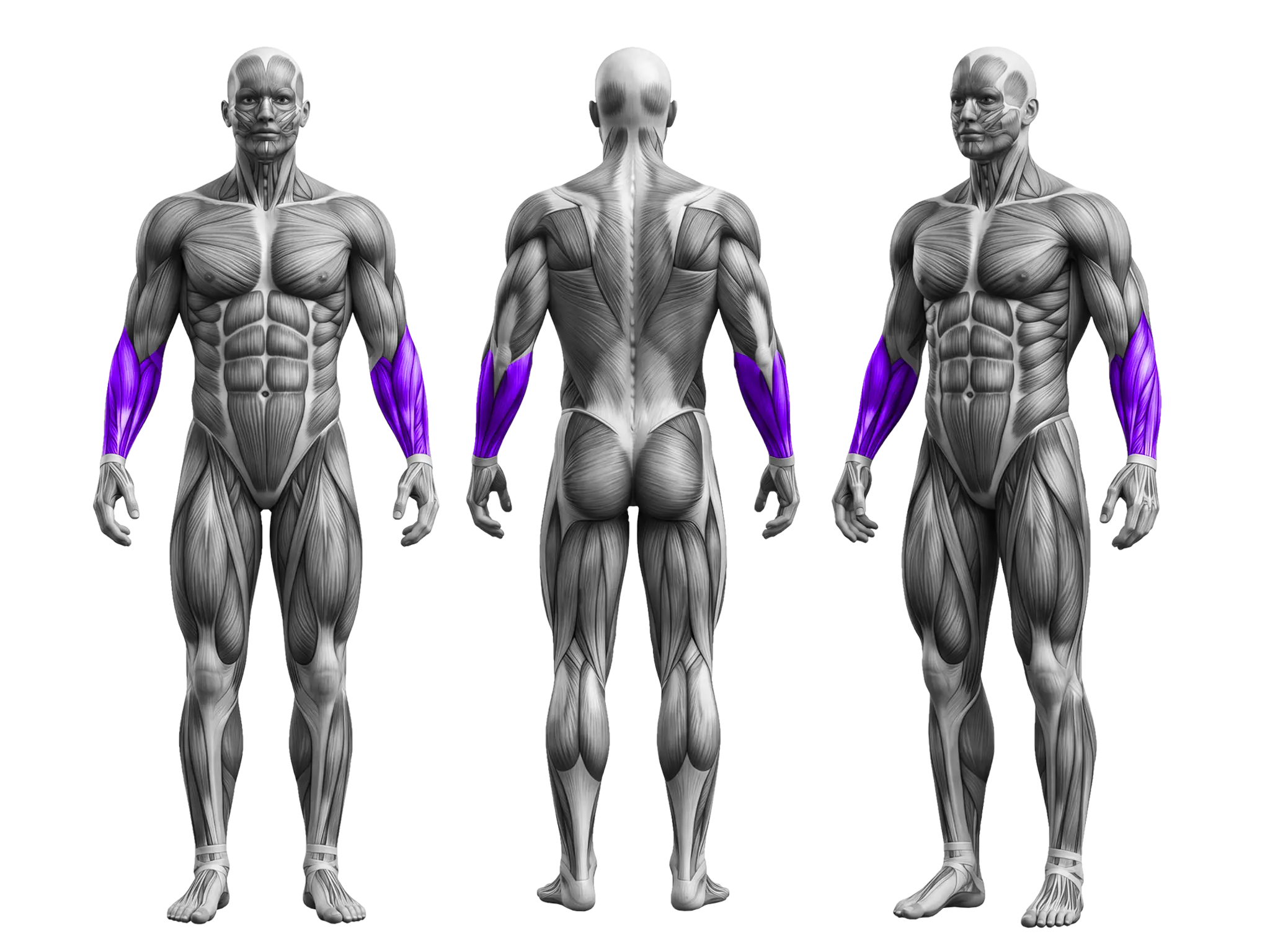
Target Muscles
Biceps Brachii
Primary
Brachialis
Assisting
Brachioradialis & Forearm Flexors
Assisting
Recommended Equipment

Straight Barbell with PlatesA straight bar loaded with plates, held underhand — palms facing up — with your hands about shoulder-width apart. The standard Olympic bar is 20 kg on its own; if that's too much, use a lighter fixed-weight bar or a shorter studio bar.

Stand tall with your elbows pressed into your sides, and go up in the smallest plates available once every working set hits the top of your rep range with your body staying still.

Gym Alternative

A straight bar clipped to a low pulley, same grip, same elbow squeeze. The cable keeps tension on the biceps through the whole rep, including the bottom where a free bar goes light. Great when you want a cleaner, stricter feel with less weight.

Additional gym alternatives, best to worst:

Additional gym alternatives:

  1. EZ-Bar Curl — same exercise with the angled grip; use it if your wrists don't like a straight bar
  2. Incline Dumbbell Curl — arms hanging behind the body; the deepest biceps stretch there is
  3. Preacher Curl — upper arms locked to a pad; removes every bit of swing
Home Alternative

A dumbbell in each hand, palms facing up, elbows pressed into your sides. Curl both at once or one at a time, squeeze for a second at the top, lower over three seconds, and straighten your arms fully at the bottom.

Dumbbells actually have one advantage over the bar: your hands can rotate freely, so your wrists sit wherever they're comfortable. Everything else is the same — elbows pinned, body still, full stretch at the bottom.

Additional home alternatives:

Additional home alternatives:

  1. Seated Dumbbell Curl on a chair — removes all body swing
  2. Concentration Curl — sit, lean forward, press your upper arm against the inside of your thigh; the strictest curl you can do at home
  3. Resistance Band Curl — stand on the band, palms up, curl both arms