Consistency training
No perfect days. Just consistent ones.
Back to workout

Exercise Instructions

Standing Reverse EZ-Bar Curl

Exercise guide — Setup / Technique / Tips / Mistakes

Why this one is in the program

Flip your grip over and you change the muscle completely.

A normal curl, palms up, works the biceps. Turn your palms down and the biceps loses most of its leverage — now the work goes to the brachialis (the muscle sitting underneath your biceps) and the brachioradialis (the thick one on top of your forearm, just below the elbow).

Those two are what give an arm real thickness. The brachialis sits under the biceps and pushes it up, so building it makes your biceps look bigger. And a developed forearm is what makes an arm look trained even in a shirt. Most people never train either one directly.

And here's the key to doing it standing: squeeze your chest and press your elbows into your sides. That's what stops the cheating. Standing, there's nothing holding you in place — so you hold yourself. Lock the elbows against your ribs and the swing has nowhere to go.

Setup

  • Stand tall, feet about hip-width apart.
  • Take the EZ bar with an overhand grip — palms facing down — on the inner angled sections.
  • Hands about shoulder-width apart.
  • Let the bar hang at your thighs, arms nearly straight.
  • Squeeze your chest and press your elbows firmly into your sides.
  • Tighten your stomach and squeeze your glutes.
  • Pull your shoulders down and back. That's your start.

Why the setup does the work here

The elbow squeeze is the whole exercise. Tighten your chest and drive your elbows in against your ribs, like you're holding something under each arm. Now your upper arms physically can't swing forward or drift out — and without that movement, the forearms and brachialis have to do everything.

Set that squeeze before the first rep and keep it alive to the last one. The moment you relax it, your shoulders and body start helping, and the exercise gets easier without getting better.

The overhand grip is the target. Palms down, all the way through. If your wrists start rolling up as it gets hard, you've drifted back toward a normal curl.

Glutes and stomach tight. That's what stops the hips rocking. If your body is moving, the bar is too heavy.

Technique

  • Start with the bar at your thighs, palms down, arms nearly straight.
  • Curl the bar up smoothly — no jerk, no swing off the bottom.
  • Keep your elbows pressed into your sides the whole way.
  • Keep your wrists straight and firm — don't let them bend back.
  • Curl until your forearms are just past vertical and squeeze for one second.
  • Lower slowly, about 3 seconds, back to your thighs.
  • Keep your body completely still. The bar moves, you don't.

Why technique decides everything here

Keep the squeeze alive. Elbows pinned to your ribs, chest tight. Check it on the last three reps, because that's when it slips. If your elbows are drifting forward, the set is over.

Wrists straight. This is the one that surprises people. With an overhand grip your wrists want to fold backwards as the bar gets heavy. Keep them firm and in line with your forearms — bent wrists mean a weaker position and a sore wrist in a few weeks.

No body swing. The classic cheat is a small rock of the hips on every rep. It moves the bar and does nothing for the muscle. Glutes tight, stomach tight, stand still.

And control the way down. Three slow seconds. That's where a big share of the growth is, and letting the bar drop throws it away.

Common Mistakes

  • Letting the elbows drift forward or away from the body.
  • Losing the chest squeeze as the set gets hard.
  • Rocking the hips and torso to swing the bar up.
  • Letting the wrists bend back under the bar.
  • Rolling the grip up toward a normal curl.
  • Leaning back at the top to help.
  • Dropping the bar down with no control.
  • Stopping halfway and never straightening the arms.

Where people lose results

Losing the elbow squeeze. The number one fault, and it's the whole reason this exercise is written the way it is. The moment your elbows drift forward, your front shoulders start lifting the bar — it still moves, but your forearms and brachialis get far less. Fix: squeeze your chest, press the elbows into your ribs, hold it from rep one to the last.

Body swing. Standing exercises invite it. A little hip rock on every rep lets you use much more weight and trains much less. Fix: glutes and stomach tight, body frozen.

Bent wrists. The overhand grip puts real demand on your wrists. Let them fold back and you lose power and set yourself up for wrist pain. Fix: wrists straight and firm. If they still bend, the weight is too heavy.

Too heavy — and this is the exercise where it happens most. People load it like a normal curl. But with palms down your biceps barely helps, so you're genuinely much weaker here. Expect to use noticeably less weight than on a regular curl. That's not a problem, that's the point.

Too light. Clean form with a weight you could curl twenty more times trains nothing. The weight is right when both are true: your elbows stay pinned and your body stays still, and the last reps are a real fight.

The honest test: elbows glued to your sides, body motionless, wrists straight, one-second squeeze, three seconds down. If you can't do that for your full rep range, that's not your weight.

Stay in the 10–15 rep range. Nothing is above your body here, so the last set can go to failure — just keep the reps that got you there clean.
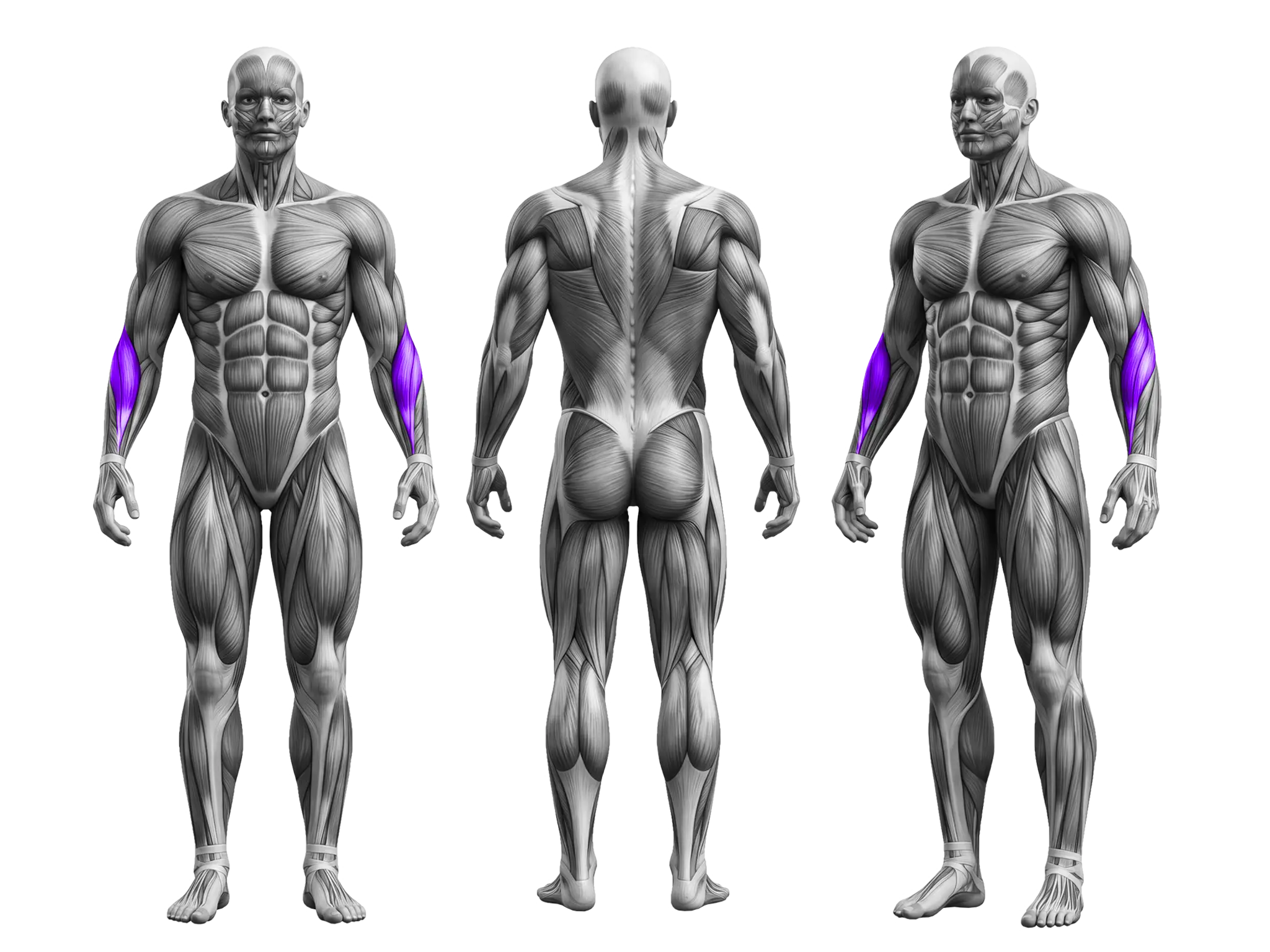
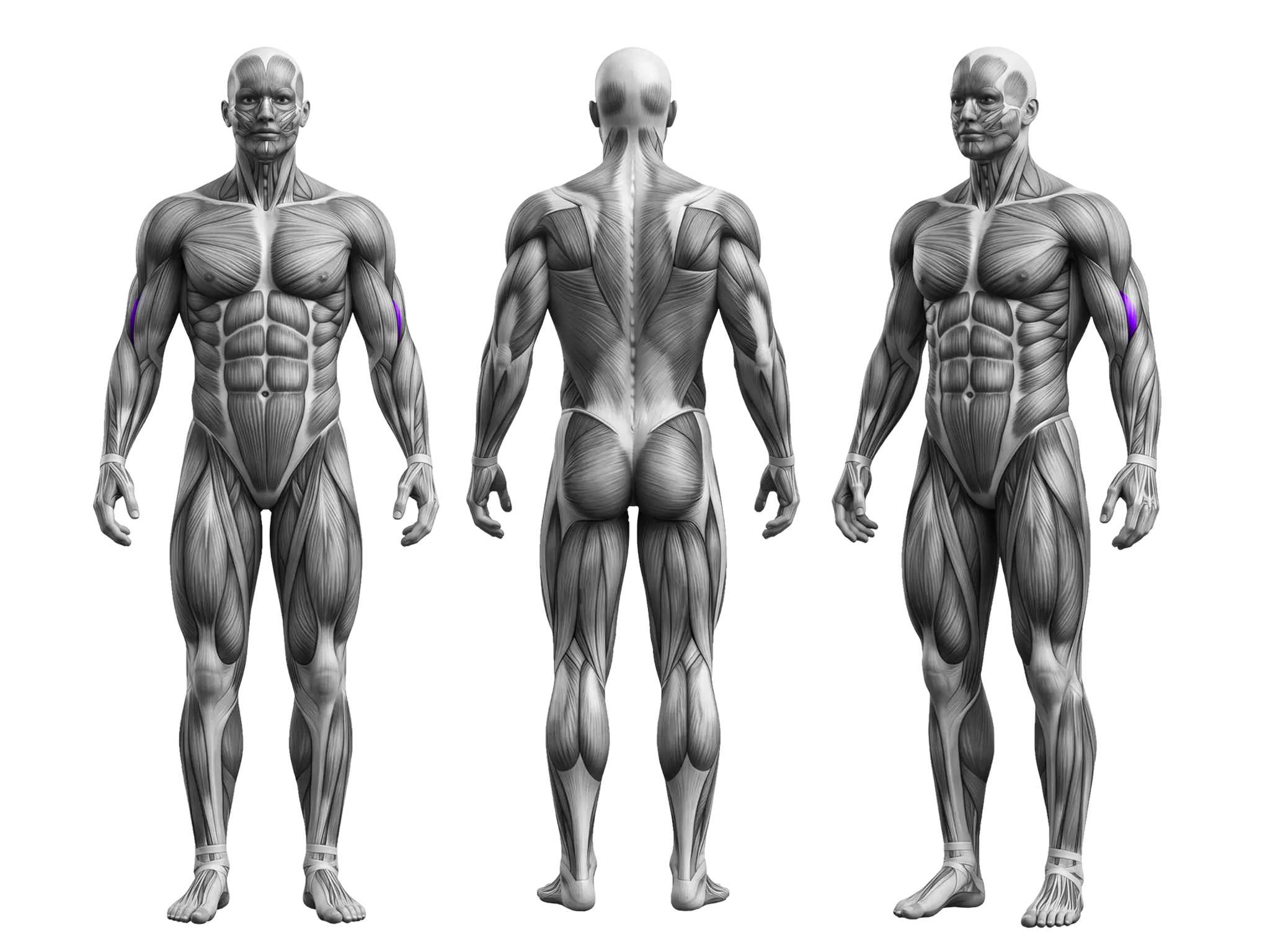
Target Muscles
Brachioradialis (Forearm)
Primary
Brachialis
Assisting
Biceps Brachii & Wrist Extensors
Assisting
Recommended Equipment

EZ Bar with Plates (and a preacher bench)
The short bar with the zigzag bends in the middle, loaded with small plates. Take it overhand — palms facing down — on the inner angled sections, hands about shoulder-width apart.

The angled grip is the reason we use an EZ bar here rather than a straight one. With palms down, a straight bar twists your wrists into a strained position and they'll give out long before your forearms do. The EZ bar's bends let your wrists sit at a friendlier angle so you can actually train the muscle.

Stand behind the preacher bench, chest pressed into the top of the pad, upper arms flat along it from armpit to elbow. Set the pad so the top edge sits just under your armpits. Then squeeze your chest and press your elbows inward — that lock is what makes the exercise work.

Load it light. With an overhand grip your biceps barely helps, so you'll use noticeably less weight here than on a normal curl. Go up in the smallest plates available.

Exercise Instructions

Standing Reverse EZ-Bar Curl

Exercise guide — Setup / Technique / Tips / Mistakes

Why this one is in the program

Flip your grip over and you change the muscle completely.

A normal curl, palms up, works the biceps. Turn your palms down and the biceps loses most of its leverage — now the work goes to the brachialis (the muscle sitting underneath your biceps) and the brachioradialis (the thick one on top of your forearm, just below the elbow).

Those two are what give an arm real thickness. The brachialis sits under the biceps and pushes it up, so building it makes your biceps look bigger. And a developed forearm is what makes an arm look trained even in a shirt. Most people never train either one directly.

And here's the key to doing it standing: squeeze your chest and press your elbows into your sides. That's what stops the cheating. Standing, there's nothing holding you in place — so you hold yourself. Lock the elbows against your ribs and the swing has nowhere to go.

Setup

  • Stand tall, feet about hip-width apart.
  • Take the EZ bar with an overhand grip — palms facing down — on the inner angled sections.
  • Hands about shoulder-width apart.
  • Let the bar hang at your thighs, arms nearly straight.
  • Squeeze your chest and press your elbows firmly into your sides.
  • Tighten your stomach and squeeze your glutes.
  • Pull your shoulders down and back. That's your start.

Why the setup does the work here

The elbow squeeze is the whole exercise. Tighten your chest and drive your elbows in against your ribs, like you're holding something under each arm. Now your upper arms physically can't swing forward or drift out — and without that movement, the forearms and brachialis have to do everything.

Set that squeeze before the first rep and keep it alive to the last one. The moment you relax it, your shoulders and body start helping, and the exercise gets easier without getting better.

The overhand grip is the target. Palms down, all the way through. If your wrists start rolling up as it gets hard, you've drifted back toward a normal curl.

Glutes and stomach tight. That's what stops the hips rocking. If your body is moving, the bar is too heavy.

Technique

  • Start with the bar at your thighs, palms down, arms nearly straight.
  • Curl the bar up smoothly — no jerk, no swing off the bottom.
  • Keep your elbows pressed into your sides the whole way.
  • Keep your wrists straight and firm — don't let them bend back.
  • Curl until your forearms are just past vertical and squeeze for one second.
  • Lower slowly, about 3 seconds, back to your thighs.
  • Keep your body completely still. The bar moves, you don't.

Why technique decides everything here

Keep the squeeze alive. Elbows pinned to your ribs, chest tight. Check it on the last three reps, because that's when it slips. If your elbows are drifting forward, the set is over.

Wrists straight. This is the one that surprises people. With an overhand grip your wrists want to fold backwards as the bar gets heavy. Keep them firm and in line with your forearms — bent wrists mean a weaker position and a sore wrist in a few weeks.

No body swing. The classic cheat is a small rock of the hips on every rep. It moves the bar and does nothing for the muscle. Glutes tight, stomach tight, stand still.

And control the way down. Three slow seconds. That's where a big share of the growth is, and letting the bar drop throws it away.

Common Mistakes

  • Letting the elbows drift forward or away from the body.
  • Losing the chest squeeze as the set gets hard.
  • Rocking the hips and torso to swing the bar up.
  • Letting the wrists bend back under the bar.
  • Rolling the grip up toward a normal curl.
  • Leaning back at the top to help.
  • Dropping the bar down with no control.
  • Stopping halfway and never straightening the arms.

Where people lose results

Losing the elbow squeeze. The number one fault, and it's the whole reason this exercise is written the way it is. The moment your elbows drift forward, your front shoulders start lifting the bar — it still moves, but your forearms and brachialis get far less. Fix: squeeze your chest, press the elbows into your ribs, hold it from rep one to the last.

Body swing. Standing exercises invite it. A little hip rock on every rep lets you use much more weight and trains much less. Fix: glutes and stomach tight, body frozen.

Bent wrists. The overhand grip puts real demand on your wrists. Let them fold back and you lose power and set yourself up for wrist pain. Fix: wrists straight and firm. If they still bend, the weight is too heavy.

Too heavy — and this is the exercise where it happens most. People load it like a normal curl. But with palms down your biceps barely helps, so you're genuinely much weaker here. Expect to use noticeably less weight than on a regular curl. That's not a problem, that's the point.

Too light. Clean form with a weight you could curl twenty more times trains nothing. The weight is right when both are true: your elbows stay pinned and your body stays still, and the last reps are a real fight.

The honest test: elbows glued to your sides, body motionless, wrists straight, one-second squeeze, three seconds down. If you can't do that for your full rep range, that's not your weight.

Stay in the 10–15 rep range. Nothing is above your body here, so the last set can go to failure — just keep the reps that got you there clean.
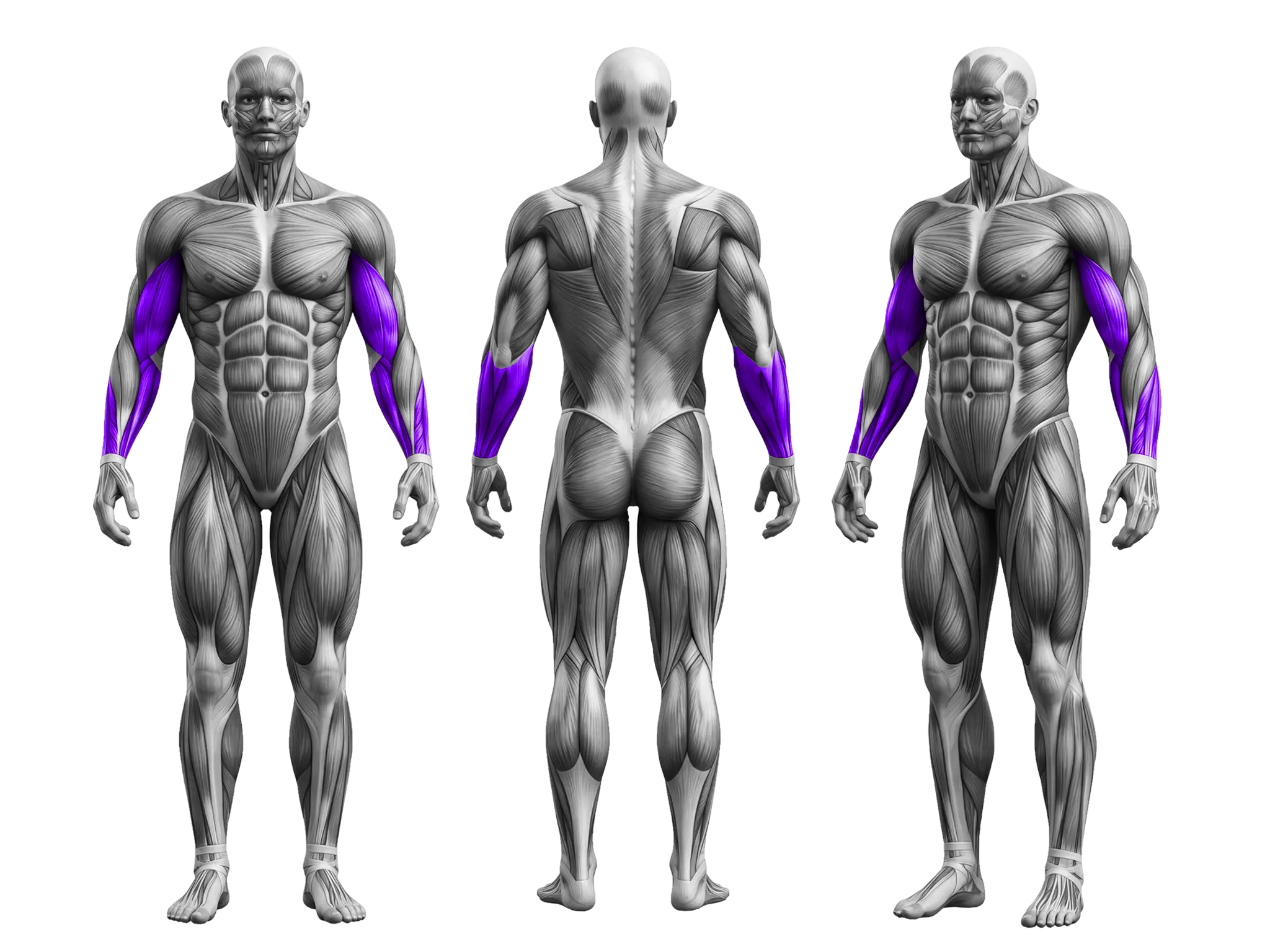
Target Muscles
Brachioradialis (Forearm)
Primary
Brachialis
Assisting
Biceps Brachii & Wrist Extensors
Assisting
Recommended Equipment

EZ Bar with Plates (and a preacher bench)
The short bar with the zigzag bends in the middle, loaded with small plates. Take it overhand — palms facing down — on the inner angled sections, hands about shoulder-width apart.

The angled grip is the reason we use an EZ bar here rather than a straight one. With palms down, a straight bar twists your wrists into a strained position and they'll give out long before your forearms do. The EZ bar's bends let your wrists sit at a friendlier angle so you can actually train the muscle.

Stand behind the preacher bench, chest pressed into the top of the pad, upper arms flat along it from armpit to elbow. Set the pad so the top edge sits just under your armpits. Then squeeze your chest and press your elbows inward — that lock is what makes the exercise work.

Load it light. With an overhand grip your biceps barely helps, so you'll use noticeably less weight here than on a normal curl. Go up in the smallest plates available.

Gym Alternative
Reverse Cable Curl

A straight bar on a low pulley, same overhand grip, same elbow squeeze. The cable keeps tension on the muscle through the whole rep, including the bottom where a bar goes light. Great option when you want a cleaner feel with less weight.

Additional gym alternatives, best to worst:

Additional gym alternatives:

  1. Reverse Dumbbell Curl — one dumbbell per hand, palms down; each side works alone
  2. Hammer Curl — palms facing each other; hits the same two muscles with much less wrist strain
  3. Reverse Preacher Curl — same grip on a preacher bench; removes every bit of swing
Home Alternative
Standing Dumbbell Hammer Curl

A dumbbell in each hand with your palms facing each other, thumbs up. Curl straight up, elbows pinned to your sides, squeeze for a second, lower over three seconds.

The hammer grip hits the same two muscles as the reverse curl — brachialis and brachioradialis — but it's much kinder on your wrists, which makes it the better home choice. Elbows glued to your ribs, no swinging; if your body is moving, the dumbbells are too heavy.

Additional home alternatives:

Additional home alternatives:

  1. Reverse Dumbbell Curl — same movement, palms facing down; closer to the gym version
  2. Seated Hammer Curl on a chair — removes all body swing
  3. Resistance Band Hammer Curl — stand on the band, palms facing each other